

One AI System Just Beat Nearly Every Radiologist It Faced—And It's Free to Download
Alibaba's open-source RADAR model diagnosed 146 diseases from abdominal CT scans with expert-level accuracy, outperforming 23 of 26 specialist radiologists and cutting reading time by more than 30%.
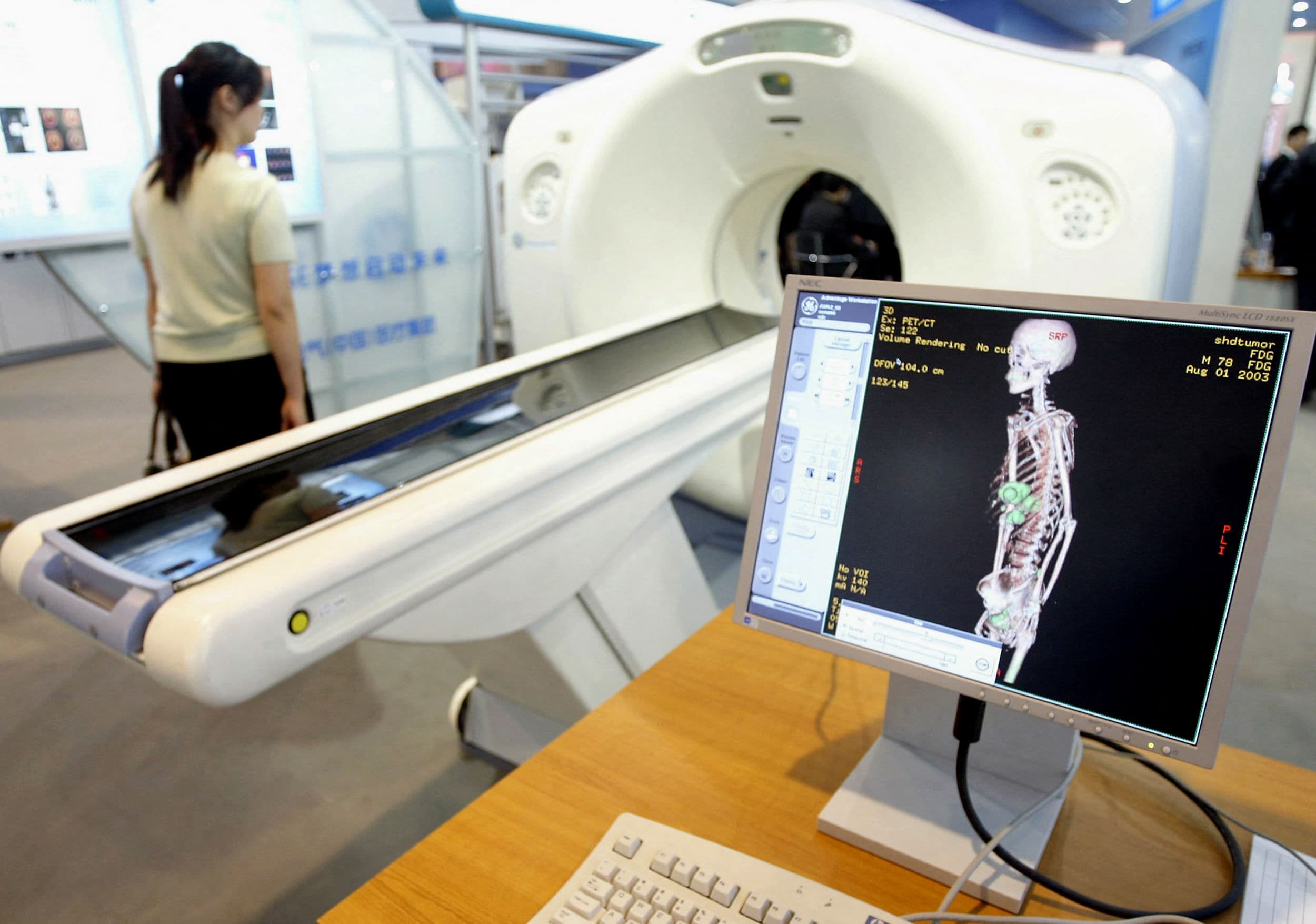
The radiology AI landscape shifted dramatically this week when Alibaba's DAMO Academy released RADAR, a generalist diagnostic system that screens abdominal CT scans for 146 diseases across 18 organs—and made it freely available for research use. Published September 18 in Science, the model achieved a mean area under the curve (AUC) of 0.913 across all evaluated findings in external validation at eight clinical centers on approximately 40,000 examinations, a performance threshold the researchers characterized as "outstanding" for clinical applications.
In head-to-head comparison, RADAR outperformed 23 of 26 specialist radiologists ranging from junior residents to attending-level physicians. When radiologists used RADAR as an AI second reader, their disease-detection sensitivity improved by 10 percentage points while reading time per case dropped by over 30%. Junior radiologists assisted by RADAR reached accuracy levels comparable to unaided senior physicians, according to the published results.
A Single System for Multi-Disease Diagnosis
Unlike narrow AI tools designed to detect specific conditions, RADAR represents a generalist approach: one system covering 18 organs and 146 distinct diseases from a single abdominal CT scan. The model was trained on 420,000 contrast-enhanced abdominal CT examinations generating 15 million anatomy-aware image-text pairs, sourced primarily from clinical centers in China's Zhejiang Province.
The technical architecture relies on organ-level fine-grained alignment, decomposing CT volumes organ-by-organ and matching each anatomical unit to corresponding radiology report sentences. Alibaba released the code on GitHub and HuggingFace under an Apache 2.0 license, with model weights available under Creative Commons licensing that permits research use but prohibits commercial deployment without separate agreement.
The release comes as the healthcare sector faces a projected shortage of 750,000 radiologists by 2050, according to workforce projections cited in the research.
Regulatory and Demographic Limitations
Despite the performance benchmarks, RADAR currently lacks FDA clearance for US clinical deployment. The model has been validated exclusively for contrast-enhanced abdominal CT scans and has not been tested on non-contrast CT, different contrast phases, pediatric imaging, or other body regions.
Bias considerations also loom large. The training dataset is geographically concentrated in China, with no validation across non-Asian patient demographics. Ben Glocker of Imperial College London has documented racial and sex-related performance gaps in foundation radiology models trained on geographically concentrated datasets, suggesting US hospitals serving diverse patient populations should treat the published accuracy figures as upper bounds pending demographic-specific validation.
Zhang Ling, a senior algorithm expert at DAMO Academy, led the research effort. The work builds on a 2023 Nature review by Moor and colleagues examining generalist medical AI systems.
Market Implications for Radiology AI
The open-source release at expert-performance levels poses a direct challenge to the commercial radiology AI market, which has traditionally operated on per-scan fee models for narrow, disease-specific detection tools. Vendors now face pressure to justify pricing against a free alternative covering 146 conditions.
Harrison.ai released Harrison.Rad 1.5 in June 2024, a complementary system covering plain-film X-rays across chest, musculoskeletal, abdominal, spine, pelvic, and mammography applications. That model passed the FRCR 2B Short Case exam but does not cover 3D CT volumetric diagnosis, suggesting the generalist radiology AI landscape may be fragmenting by imaging modality rather than disease category.
For US healthcare providers, the immediate clinical value remains constrained by regulatory pathways. Companies pursuing FDA clearance for multi-disease systems face a De Novo pathway with no clear predicates, requiring prospective clinical trial evidence and extended timelines. Until then, RADAR's impact will be felt primarily in research settings and international markets with different regulatory frameworks.
Sources
Companies in this article

Google Search
Follow Health AI Central on Google
Choose Health AI Central as a preferred source, and Google is more likely to show our reporting in Top Stories.
Reporting & accountability
How we maintain accuracy
Health AI Central separates reported facts, analysis, and public-source data. Readers can review our standards, request a correction, or consult the relevant research methodology before relying on a claim.