

Korean Hospital Pioneers Continuous Kidney Disease Monitoring Through AI-Powered Smartwatches
Seoul St. Mary's Hospital launches 6-month clinical trial combining genomic data, health records, and Samsung wearables to predict chronic kidney disease risk in real-time.
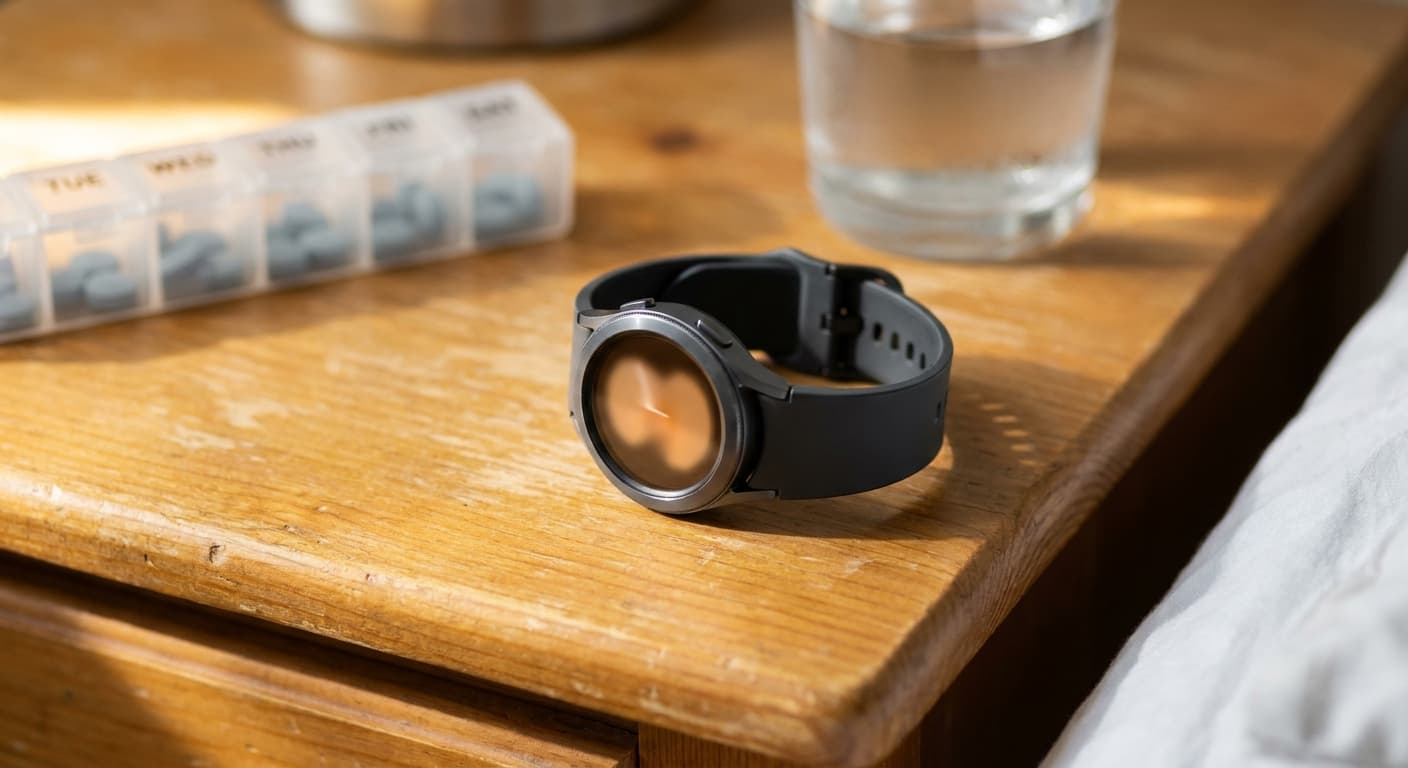
Illustration: AI-generated
A major South Korean medical center has launched a clinical validation study that could fundamentally change how chronic kidney disease is monitored—shifting from periodic checkups to continuous, AI-driven risk assessment delivered through consumer smartwatches.
Seoul St. Mary's Hospital, part of the Catholic University of Korea medical system, initiated the study in October with 50 participants who will wear Samsung Galaxy Watches connected to an AI platform called PHAIR. The 6-month trial aims to validate whether integrating electronic medical records, health checkup data, genomic information, and real-time wearable metrics can provide meaningful continuous disease risk monitoring beyond traditional point-in-time assessments.
From Snapshots to Continuous Surveillance
The study represents a departure from conventional chronic disease management, which typically relies on intermittent clinical encounters and laboratory tests. Participants will use the app and wearable devices for three months, during which the system will collect physical activity, sleep patterns, and heart rate data. At the three-month mark, kidney function blood tests will be conducted to validate the AI predictions.
Professor Lee In-seok from the hospital's Gastroenterology Department is leading the research, which focuses on what the team calls "phenome data"—comprehensive biological characteristics shaped by the interaction of genetic and environmental factors. By combining this multidimensional data, the PHAIR platform attempts to generate personalized health management guidance that adapts to each patient's evolving risk profile.
The study will evaluate not just clinical accuracy but also practical considerations including app usability, user satisfaction, and overall utility as a health management tool.
Privacy-Preserving Multi-Hospital AI
A critical technical innovation enabling the project is federated learning, which allows AI models to be trained across multiple hospitals without directly sharing patient data. This addresses one of the most significant barriers to clinical AI deployment: maintaining patient privacy while leveraging large, diverse datasets.
The research is funded by the Ministry of Science and ICT and the Institute for Information and Communications Technology Planning and Evaluation through their "AI-Based Personalized Care Service Convergence Leading Project." Collaborating organizations include Seoul St. Mary's Hospital, the Catholic University of Korea Department of Medical Informatics, Digital Farm, and Pyeonghwa Is.
Seoul St. Mary's broader AI ambitions extend beyond kidney disease. The Department of Medical Informatics is also developing lung cancer risk prediction models. In June, the hospital signed a memorandum of understanding with Asan Medical Center, National Cancer Center, Chung-Ang University Hospital, and Konkuk University Hospital to advance medical AI cooperation.
Implications for Chronic Disease Management
If validated, this approach could have significant implications for the estimated 10-15% of adults globally affected by chronic kidney disease. The model demonstrates how consumer wearables can be elevated from fitness tracking devices to clinical monitoring tools when integrated with sophisticated AI platforms and comprehensive medical data.
For healthcare providers, the system could extend clinical oversight between outpatient visits, potentially enabling earlier intervention when kidney function begins to decline. For health technology companies, the project establishes a technical blueprint for deploying multi-institutional health AI while addressing data privacy concerns—a persistent challenge in commercial health AI adoption.
The study's outcomes, expected after the 6-month period concludes, will provide critical evidence on whether continuous, AI-driven disease monitoring can transition from research concept to practical clinical tool.
Sources
Google Search
Follow Health AI Central on Google
Choose Health AI Central as a preferred source, and Google is more likely to show our reporting in Top Stories.
Reporting & accountability
How we maintain accuracy
Health AI Central separates reported facts, analysis, and public-source data. Readers can review our standards, request a correction, or consult the relevant research methodology before relying on a claim.