

Inside Sutter Health's Blueprint for Enterprise AI: From Radiology Workflows to Patient Chatbots
Northern California's 3.5-million-patient health system is deploying ambient scribes, AI-powered imaging, and clinical decision support tools while building governance frameworks to maintain clinician and patient trust.
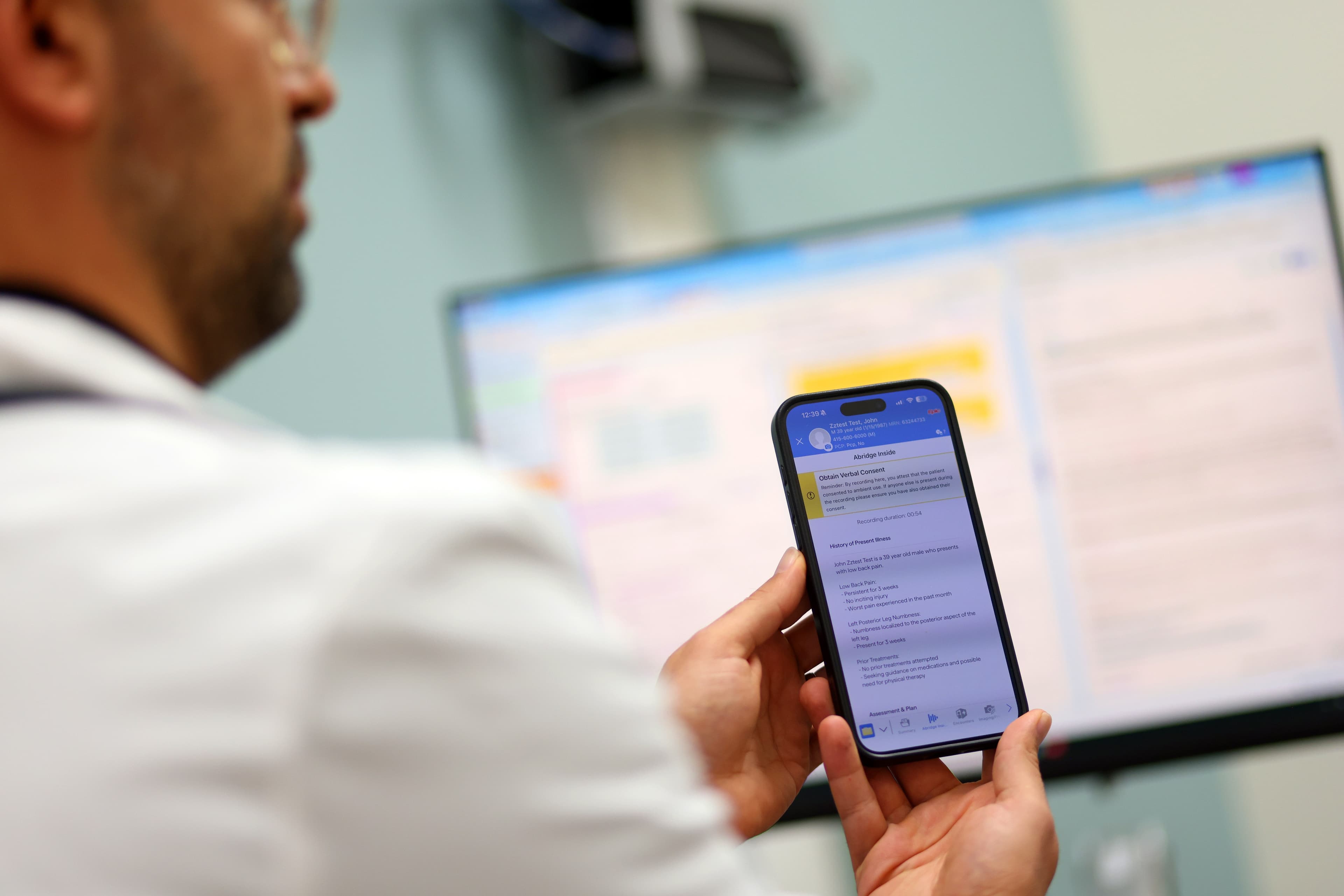
Sutter Health is deploying artificial intelligence across its Northern California healthcare system as a present-day solution to clinician burnout, administrative overload, and diagnostic efficiency challenges. The organization, which serves 3.5 million patients, has rapidly scaled its AI deployment through strategic partnerships and the appointment of its first Chief AI Officer, signaling a governance-first approach to technology adoption.
A Multi-Vendor Strategy Anchored in Clinical Workflow
Sutter's AI expansion centers on partnerships with Aidoc for radiology and disease detection, and OpenEvidence for clinical decision support. In January 2026, Sutter designated Aidoc as its West Coast clinical AI hub and expanded the partnership beyond acute disease detection to include radiology imaging review and preliminary report drafting—a shift that positions Aidoc as an AI operating system rather than a point solution.
The OpenEvidence partnership, announced in February 2026, provides clinicians with an AI-powered medical search engine designed to deliver evidence-based clinical answers. Sutter has also deployed ambient scribes for clinical documentation, chart summarization tools, and a patient-facing chatbot connected to its electronic health record system.
These tools address administrative burden by automating documentation and streamlining radiology workflows. Sutter aims to reduce clerical tasks that contribute to physician burnout while maintaining diagnostic accuracy and patient safety.
Governance and Trust as Core Pillars
Dr. Ashley Beecy, Sutter's inaugural Chief AI Officer, was named to the Reuters Trailblazing Women in Healthcare 2026 list. Board certified in internal medicine, cardiovascular medicine, echocardiography, and clinical informatics, Beecy holds a degree in computer systems engineering from Boston University and an MD from Albert Einstein College of Medicine, with prior roles at IBM and Citi risk management.
Under Beecy's leadership, Sutter has established governance frameworks that prioritize evaluation before deployment, transparency, continuous monitoring, and outcome reporting. This structured approach is designed to build trust among clinicians and patients, addressing concerns about algorithmic bias, data privacy, and the "black box" nature of some AI systems.
Sutter's commitment extends beyond current deployments. The organization launched a San Francisco innovation center in 2024 focused on AI and digital health partnerships, and is planning the Bay Area's first new medical school in over a century with Santa Clara University—a program centered on AI technologies.
What This Means for the Clinical AI Market
Sutter's multi-vendor strategy—partnering with Aidoc and OpenEvidence while developing internal tools—reflects a broader trend among large health systems: a preference for best-of-breed solutions over single-vendor lock-in. For AI vendors, this suggests interoperability and seamless EHR integration are essential for enterprise adoption.
For Aidoc, the expanded partnership demonstrates platform scalability, moving beyond acute disease detection into comprehensive radiology workflow automation. This evolution from point solution to operating system could differentiate the company in a fragmented clinical AI market where many competitors remain focused on narrow use cases.
As healthcare systems nationwide grapple with AI adoption, Sutter's governance-first, clinician-centered approach offers a potential model—one that balances technological innovation with the trust and transparency required for sustainable implementation.
Sources
Companies in this article
 AidocTel Aviv, Israel · Founded 2016Aidoc empowers health systems to improve patient outcomes and operations with enterprise-grade healthcare AI.View company profile →
 OpenEvidenceMiami, FL, USA · Founded 2023OpenEvidence is the most widely used medical AI platform among U.S. physicians, trusted by hundreds of thousands of verified clinicians for point-of-care clinical decisions. The platform delivers evidence-based answers sourced from partnerships with NEJM, JAMA, NCCN, Cochrane, Wiley, and leading medical societies.View company profile →
Google Search
Follow Health AI Central on Google
Choose Health AI Central as a preferred source, and Google is more likely to show our reporting in Top Stories.
Reporting & accountability
How we maintain accuracy
Health AI Central separates reported facts, analysis, and public-source data. Readers can review our standards, request a correction, or consult the relevant research methodology before relying on a claim.