

AI Wasn't Enough: Why RadNet Just Spent $350M on Human Radiologists Instead
The imaging giant's massive Onrad acquisition signals that healthcare's staffing crisis has overtaken technology as the industry's most urgent problem.
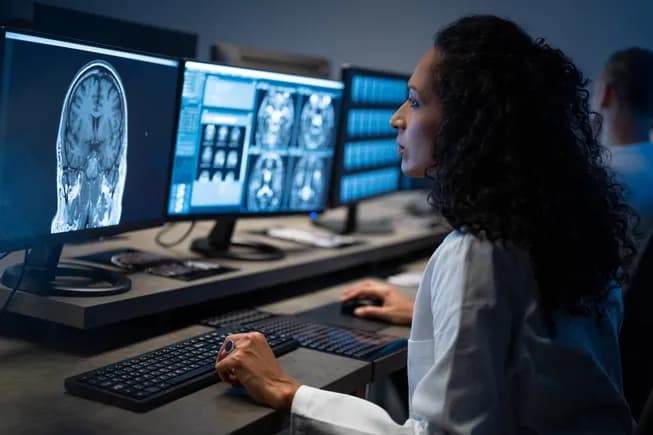
RadNet's $350 million acquisition of teleradiology provider Onrad marks a strategic pivot that reveals an uncomfortable truth for the healthcare AI industry: artificial intelligence tools cannot solve problems rooted in fundamental workforce shortages. The deal, announced this week, represents the imaging center operator's expansion into radiology professional services—a move driven by what hospitals increasingly describe as a critical "choke point" in their operations.
The Shift from AI to Staffing Solutions
Just 18 months ago, RadNet CEO Howard Berger fielded inbound calls from hospitals interested in AI tools and joint venture opportunities. Today, those conversations have transformed into urgent requests for radiology interpretation and staffing solutions. This shift underscores a market reality: healthcare systems need radiologists to read images now, not just software to make existing radiologists more efficient.
The acquisition brings Onrad's network of over 130 radiologists into RadNet's ecosystem, serving more than 270 U.S. customers—96% of them hospitals. Onrad's services include 24-hour final interpretations and hospital-based radiology support, with teleradiology representing 81% of its revenue. RadNet expects the deal to add $190-200 million in annual revenue and $60-65 million in adjusted EBITDA in the first year, with future growth projected to exceed 10%.
Addressing the Radiologist Supply Gap
The transaction structure—$350 million upfront plus 5 million RadNet shares, with up to $210 million in additional earnout payments tied to 2027 earnings targets—reflects confidence in sustained demand for remote radiology services. That demand stems from a widening gap between radiologist supply and demand, driven by training pipeline constraints, retirement trends, and an aging population requiring more imaging services.
RadNet's move follows its 2024 acquisition of radiology AI company Gleamer for €230 million, suggesting the company views technology and human expertise as complementary rather than substitutable. Onrad itself has pursued consolidation, having previously acquired competitor Direct Radiology from Philips.
Creating a Third Operating Segment
The Onrad acquisition establishes "Radiology Professional Services" as RadNet's third operating segment, alongside its existing imaging center and digital health businesses. This diversification positions RadNet to address multiple pain points across the imaging value chain—from patient scheduling and scanning to AI-enhanced interpretation and final reporting.
For health systems struggling to maintain imaging operations, the appeal is clear: a single vendor that can provide technology infrastructure, AI workflow tools, and the radiologists to actually read the studies. For standalone AI vendors, however, the deal suggests that technology-only solutions may face headwinds in a market where workforce availability trumps efficiency gains.
The transaction also raises questions about the future structure of radiology services. As remote interpretation becomes standard practice, the traditional model of hospital-employed radiologists may give way to distributed networks of specialists working across multiple facilities—a shift with implications for care continuity, subspecialty expertise availability, and professional practice patterns.
RadNet's bet is that hospitals will pay a premium for integrated solutions that address their most immediate operational constraints. Whether that proves correct will depend on how effectively the company can blend its AI capabilities with Onrad's human workforce—and whether technology can eventually reduce, rather than simply supplement, the need for radiologist headcount.
Sources
Companies in this article
 GleamerGleamer develops AI-powered clinical decision support tools for radiology across all imaging modalities. The company's Gleamer Copilot platform helps radiologists detect fractures, measure anatomical structures, identify thoracic pathologies, and automate reporting workflows.View company profile →
Google Search
Follow Health AI Central on Google
Choose Health AI Central as a preferred source, and Google is more likely to show our reporting in Top Stories.
Reporting & accountability
How we maintain accuracy
Health AI Central separates reported facts, analysis, and public-source data. Readers can review our standards, request a correction, or consult the relevant research methodology before relying on a claim.