

AI Cracks the Code of Brain Cancer's Deadliest Trick: Why Glioblastoma Cells Aren't as Random as We Thought
A new deep learning method reveals that the most lethal brain tumors follow predictable patterns, opening the door to therapies that could reprogram cancer cells into less dangerous forms.
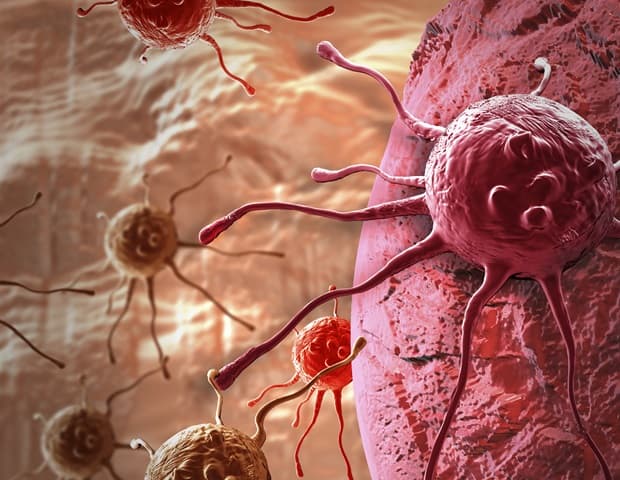
For decades, glioblastoma has defied treatment through what scientists believed was random cellular chaos—tumor cells constantly shape-shifting to evade therapy. Now, researchers have discovered something unexpected: the deadliest brain cancer follows rules. Using artificial intelligence to analyze over 1 million patient-derived cells, an international team has mapped the hidden architecture governing how glioblastoma cells transform, challenging fundamental assumptions about cancer plasticity and revealing potential therapeutic vulnerabilities.
From Chaos to Order: Mapping the Brain Cancer Landscape
The collaborative effort between EMBL Heidelberg, the German Cancer Research Center (DKFZ), the Wellcome Sanger Institute, and UCL Cancer Institute produced the largest glioblastoma molecular atlas to date. The research team, led by Omer Bayraktar, Oliver Stegle, and Moritz Mall, analyzed DNA, epigenetic marks, and RNA from 12 patients to create an unprecedented view of tumor behavior.
At the heart of their discovery is scDORI (single-cell Deep learning for Regulatory Inference), a deep learning method that infers gene regulatory networks at single-cell resolution. Rather than finding the expected randomness, scDORI revealed that glioblastoma cells follow stereotypical, predictable paths between different states. Every tumor studied displayed a specific spatial architecture of cancer cell states, suggesting an underlying regulatory framework that governs cellular plasticity.
The team validated their computational findings using patient-derived organoids grown on 3D scaffolds, confirming that these patterns reflect genuine biological organization rather than computational artifacts. The researchers also employed an additional machine-learning approach to map the spatial location of each cell state within tumors, providing a comprehensive three-dimensional understanding of glioblastoma organization.
The Safeguard Regulator: A New Therapeutic Target
Perhaps most significantly for future treatment development, the researchers identified MYT1L as a key regulator that acts as a "safeguard," arresting cells in low-plasticity states. When the team experimentally overexpressed MYT1L, they observed reduced cellular plasticity and decreased tumor malignancy. In mouse models, tumors with modified MYT1L expression resulted in better survival compared to controls.
This discovery transforms tumor heterogeneity from an insurmountable obstacle into a source of actionable insights. The identification of a structured, predictable, and hierarchical regulatory program governing cellular plasticity suggests that genetic or pharmacological interventions targeting specific regulators could reprogram tumor cells into less dangerous forms.
Implications for Precision Oncology
Glioblastoma remains the most common malignant brain tumor in adults and is nearly always incurable, largely due to the cellular plasticity that enables treatment evasion. Current therapies fail because they cannot account for the tumor's ability to adapt and transform.
This new framework provides a quantitative, rule-based understanding of glioblastoma progression that could inform future treatment strategies. Rather than attempting to kill all cancer cells—an approach that inevitably fails as some cells transform to evade therapy—clinicians might one day manipulate the regulatory programs that govern cell state transitions, effectively reprogramming tumors into less aggressive forms.
The research, funded by a Wellcome Leap grant and published in Nature (DOI: 10.1038/s41586-026-11177-0), represents a scalable approach that could be applied to other cancers and brain disorders. While clinical applications remain years away, the scDORI method could potentially revolutionize how precision oncology platforms and drug discovery tools are developed. For patients facing a diagnosis that has long been considered a death sentence, this research offers a glimpse of a future where glioblastoma might become manageable rather than inevitably fatal.
Sources
Google Search
Follow Health AI Central on Google
Choose Health AI Central as a preferred source, and Google is more likely to show our reporting in Top Stories.
Reporting & accountability
How we maintain accuracy
Health AI Central separates reported facts, analysis, and public-source data. Readers can review our standards, request a correction, or consult the relevant research methodology before relying on a claim.