

Johns Hopkins Partners with AI Platform to Reimagine Medical Training for the Algorithm Age
The institution that shaped modern medical education a century ago is now collaborating with OpenEvidence to prepare physicians for AI-augmented clinical practice while preserving core diagnostic reasoning skills.

AI Giants Team Up to Deliver Free Medical Decision Support to 100 Developing Nations
Anthropic and OpenEvidence are launching a global health equity initiative to bring evidence-based clinical tools to physicians in resource-limited settings across Africa, Asia, and Latin America.

Memorial Sloan Kettering's Genomic Expertise Gets AI Wings as OpenEvidence Targets 1.12 Million Clinicians
A $15 billion clinical AI company is embedding the cancer center's precision oncology knowledge base directly into physician workflows, aiming to democratize expert genomic interpretation beyond academic medical centers.

Clinical Documentation Giant Abridge Makes Bold Play for Revenue Cycle Dominance with Pre-Bill AI Tool
The ambient documentation leader is leveraging its foothold in 300 U.S. health systems to tackle the $450 million coding automation market with claim review technology that catches billing errors before submission.
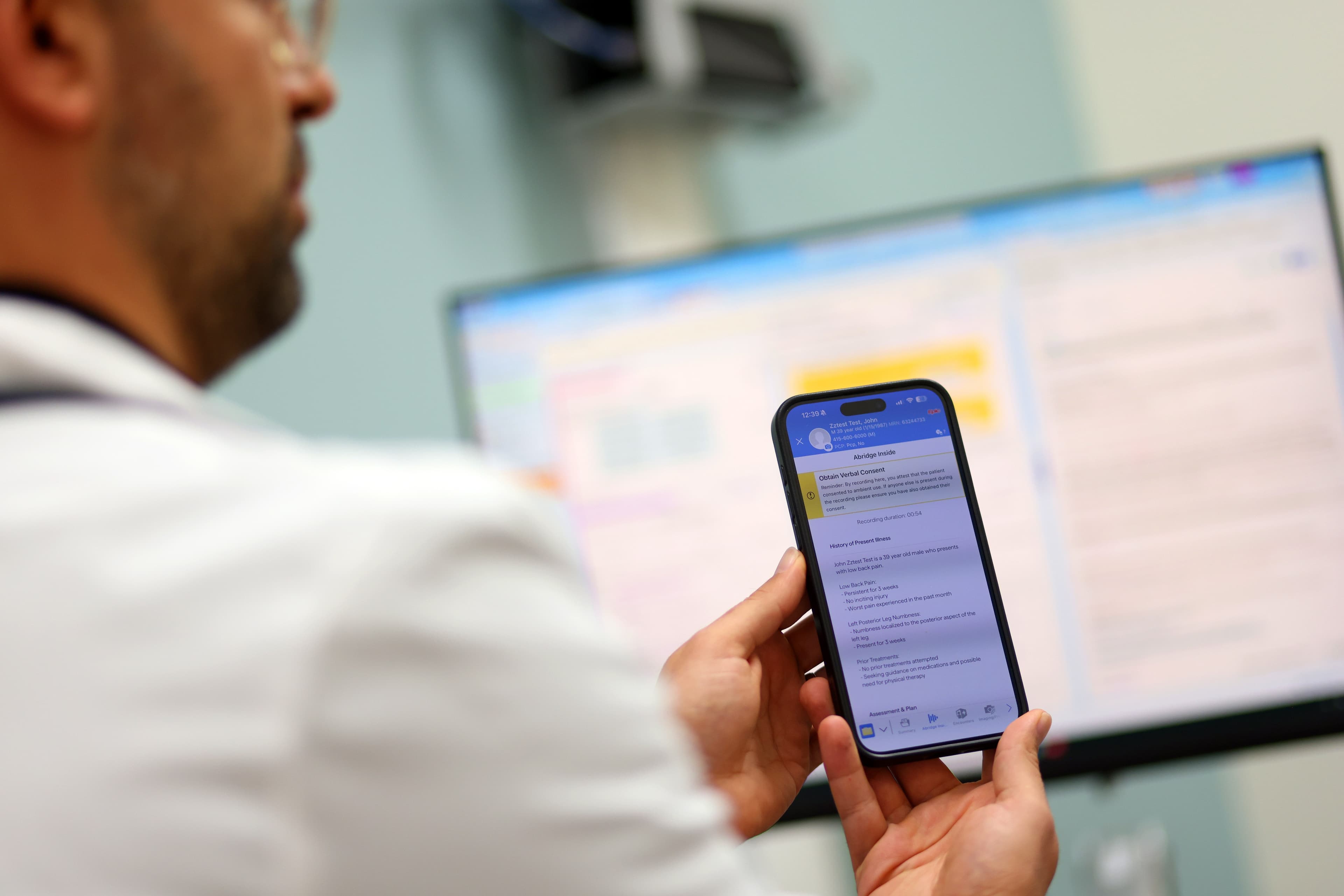
Inside Sutter Health's Blueprint for Enterprise AI: From Radiology Workflows to Patient Chatbots
Northern California's 3.5-million-patient health system is deploying ambient scribes, AI-powered imaging, and clinical decision support tools while building governance frameworks to maintain clinician and patient trust.

Medical AI Achieves Perfect Score on Clinical Benchmark as OpenEvidence Unveils Four-Model Suite for Physicians
Darwin model leads new family of specialized clinical AI tools designed to balance speed and depth across different healthcare workflows, now available free to verified clinicians.

OpenAI's Epic Integration Reveals the Minimum Bar for Healthcare AI—And Why It May Not Be Enough
ChatGPT's new EHR connection uses industry-standard SMART on FHIR for read-only patient data access, but deeper-integrated competitors may already hold the workflow advantage.

Epic Deploys Unreleased AI Model to Hunt Security Flaws as Clinical Decision Support Battle Heats Up
The EHR giant is using Anthropic's Claude Mythos through Project Glasswing to scan hundreds of millions of lines of code while embedding UpToDate directly into its AI assistant.
The $15 Billion Question: Why AI Medical Tools Are Flooding Clinics Faster Than Scientists Can Vet Them
As AI-powered clinical decision support systems race toward a forecast $15 billion market by 2033, mounting evidence of inaccuracies, hallucinations, and 90% clinician override rates exposes a critical gap between deployment speed and safety validation.

Healthcare's AI Awakening: Why Major Hospitals Are Ditching One-Size-Fits-All Algorithms
Leading medical centers are customizing AI platforms with their own clinical protocols, following the financial sector's playbook for institutional compliance and control.

Specialized Medical AI Tools Stumble in Head-to-Head Test Against General Chatbots
A landmark Nature Medicine study reveals that clinical AI platforms marketed as safer alternatives to ChatGPT actually performed worse on medical questions, igniting fierce debate about the future of healthcare AI.

AI Screening Tool Outperforms Cardiologists at Detecting Silent Heart Disease from Standard ECGs
FDA-cleared EchoNext analyzes routine electrocardiograms to identify six structural heart conditions before symptoms appear, achieving 77% accuracy compared to 64% for specialist physicians.

OpenEvidence Launches Voice Mode and Closes $250M Series D at $12 Billion Valuation
OpenEvidence has launched a hands-free Voice Mode for its AI-powered medical search platform and disclosed a $250 million Series D round at a $12 billion valuation, backed by Google Ventures, Nvidia, Thrive Capital, and Mayo Clinic.

Europe's Clinical AI Market Faces a Reckoning as U.S. Platforms Pull Back
OpenEvidence's termination of access for UK and EU clinicians is not an isolated business decision — it reflects a deeper structural challenge facing European healthcare systems that have become dependent on U.S.-developed AI tools without building equivalent domestic capabilities.