

AI Screening Tool Outperforms Cardiologists at Detecting Silent Heart Disease from Standard ECGs
FDA-cleared EchoNext analyzes routine electrocardiograms to identify six structural heart conditions before symptoms appear, achieving 77% accuracy compared to 64% for specialist physicians.
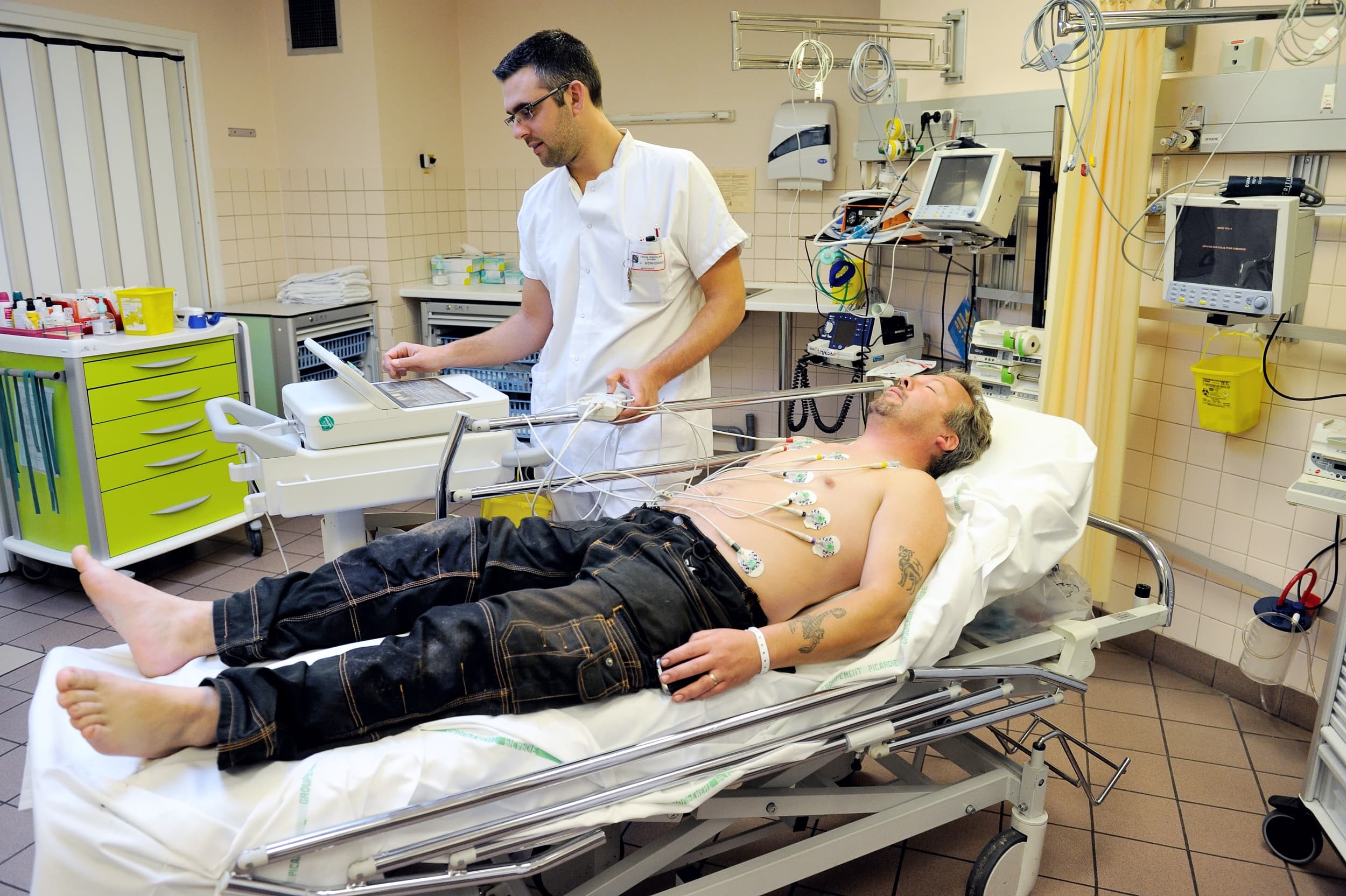
A new artificial intelligence tool has received FDA clearance to detect multiple forms of structural heart disease from standard electrocardiograms, potentially transforming how millions of Americans are screened for life-threatening cardiac conditions during routine medical visits.
EchoNext, developed by Pathway Labs in collaboration with NewYork-Presbyterian and Columbia University Irving Medical Center, received 510(k) clearance on June 23, 2026, to identify six cardiac conditions from 12-lead ECGs already performed in everyday clinical practice. The clearance marks the first time the FDA has authorized an AI system capable of screening for multiple structural heart diseases simultaneously from electrocardiogram data.
Bridging the Gap Between Routine Screening and Definitive Diagnosis
The technology addresses a critical weakness in cardiovascular care: while echocardiography remains the gold standard for diagnosing structural heart disease, it requires specialized equipment, trained technicians, and significantly higher costs than ECGs. Meanwhile, standard ECG interpretation—even by experienced cardiologists—frequently misses structural abnormalities that haven't yet produced symptoms.
EchoNext was trained on more than 700,000 paired ECGs and echocardiograms from the NewYork-Presbyterian health system and validated across more than 20 hospitals involving over 500,000 patients throughout the United States and Canada. In head-to-head testing, the AI achieved 77% accuracy in identifying structural heart problems compared to 64% accuracy among 13 cardiologists reviewing the same 3,200 ECGs.
The system screens for left-sided heart failure, right-sided heart failure, valvular disease, severe cardiac hypertrophy consistent with infiltrative cardiomyopathy, pulmonary hypertension, and cardiomyopathy—conditions that collectively represent leading causes of cardiovascular mortality but often remain undiagnosed until patients experience acute symptoms.
From Academic Research to Point-of-Care Distribution
Dr. Pierre Elias, founder and CEO of Pathway Labs and medical director for AI at NewYork-Presbyterian, published validation results in Nature Medicine one day before FDA clearance. The peer-reviewed study documented detection of previously undiagnosed heart failure in a 45-year-old man with an ejection fraction of approximately 10%, ultimately leading to a heart transplant.
Pathway Labs has partnered with OpenEvidence, a clinical decision platform reportedly used by more than half of U.S. clinicians, to distribute EchoNext nationwide. Travis Zack, chief medical officer at OpenEvidence, emphasized the importance of point-of-care integration over exclusive academic medical center deployment.
Clinical Implications for Underserved Settings
The tool's highest utility lies in settings where ECGs are routine but echocardiography access is limited—rural hospitals, community health centers, emergency departments, and primary care practices in under-resourced areas. EchoNext functions as a triage layer, identifying which patients among millions receiving routine ECGs warrant follow-up echocardiography for definitive diagnosis.
For patients over 50 or those with risk factors including hypertension, diabetes, chronic kidney disease, or family history of cardiomyopathy, the technology offers earlier detection before symptom onset, when treatment outcomes are significantly better. The system does not replace echocardiography or specialist evaluation but increases the likelihood that high-risk individuals are identified and referred appropriately from routine clinical encounters.
The FDA clearance establishes a regulatory and commercial benchmark for multi-condition cardiac AI screening tools, potentially accelerating competitive development in this category while setting evidence standards for validation across hundreds of thousands of patients.
Sources
Companies in this article
 OpenEvidenceMiami, FL, USA · Founded 2023OpenEvidence is the most widely used medical AI platform among U.S. physicians, trusted by hundreds of thousands of verified clinicians for point-of-care clinical decisions. The platform delivers evidence-based answers sourced from partnerships with NEJM, JAMA, NCCN, Cochrane, Wiley, and leading medical societies.View company profile →
Reporting & accountability
How we maintain accuracy
Health AI Central separates reported facts, analysis, and public-source data. Readers can review our standards, request a correction, or consult the relevant research methodology before relying on a claim.