

OpenAI's Epic Integration Reveals the Minimum Bar for Healthcare AI—And Why It May Not Be Enough
ChatGPT's new EHR connection uses industry-standard SMART on FHIR for read-only patient data access, but deeper-integrated competitors may already hold the workflow advantage.
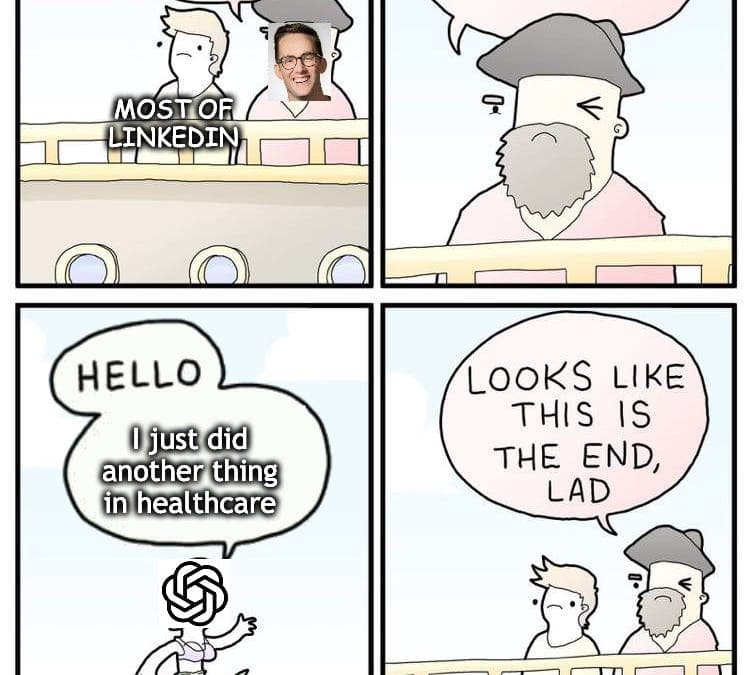
OpenAI has taken its first significant step toward vertical specialization in healthcare, launching an Epic EHR integration for ChatGPT for Healthcare after eight months of offering primarily horizontal product features. The integration, announced in August 2025, provides clinicians with read-only access to patient data including appointment notes, laboratory results, medications, and specialist documentation—all within the ChatGPT interface.
According to a monthly review by Health API Guy, the move positions OpenAI to compete directly with clinical AI tools like OpenEvidence, though the company still trails behind ambient scribes and clinical decision support platforms that have built more sophisticated, bidirectional integrations.
The Technical Foundation: SMART on FHIR as Entry Point
The integration likely relies on SMART on FHIR standards, the same framework OpenAI used for its patient-facing Epic integration launched in July 2025. This approach aligns with data elements from the United States Core Data for Interoperability (USCDI) standards and represents what the analysis describes as "table stakes" for horizontal AI companies entering healthcare.
Epic's fhir.epic.com platform allows vendors to register applications without requiring EHR vendor gatekeeping, meaning individual hospitals retain control over which AI tools to deploy. OpenAI simultaneously launched a Healthcare Public Data plugin that provides structured access to PubMed, DailyMed, and CMS Coverage datasets, complementing the patient-specific data available through the Epic connection.
The company now operates three distinct healthcare products: ChatGPT for Healthcare (enterprise), ChatGPT for Clinicians (a product-led growth offering free for verified clinicians), and Health in ChatGPT (consumer-facing). The Epic integration applies to the enterprise healthcare product, which initially launched in January 2025 with only SharePoint ingestion capabilities.
The Competitive Landscape: Read-Only vs. Bidirectional Workflows
While OpenAI's integration marks progress, competitors have already moved beyond basic SMART on FHIR implementations. OpenEvidence launched basic SMART integration with Sutter Health in February 2025 and added patient-context capabilities with an enterprise-wide deployment at Cedars-Sinai in May 2025. Meanwhile, UpToDate maintains four distinct applications in Epic's Showroom and announced a partnership to power Epic's Art feature at the company's user group meeting.
The read-only limitation of OpenAI's current integration means clinicians cannot document findings or place orders directly through the ChatGPT interface, requiring them to return to the EHR for any clinical action. This contrasts with ambient scribes like Abridge, which have built bidirectional clinical copilot workflows with integrations that extend beyond SMART on FHIR standards.
The analysis suggests this architectural choice reflects a fundamental tension for horizontal AI companies: SMART on FHIR enables reusability across health systems, but deeper, EHR-specific integrations that would provide true workflow transformation may contradict the horizontal business model that makes these companies attractive to investors.
What It Means for Healthcare Stakeholders
For clinicians, the integration enables access to patient-specific context without manual chart review, potentially improving efficiency in clinical decision-making. However, the workflow interruption required to return to the EHR for documentation or ordering limits the transformative potential compared to more deeply integrated solutions.
Health systems benefit from the SMART on FHIR architecture's flexibility—they can evaluate and deploy AI tools without vendor lock-in—but also inherit the burden of independently assessing, contracting, and implementing each solution. The read-only nature reduces immediate clinical risk while simultaneously limiting workflow innovation.
The strategic question remains whether SMART on FHIR provides sufficient competitive differentiation for horizontal AI platforms, or whether purpose-built clinical AI tools with non-reusable, EHR-specific development will ultimately capture greater market share by delivering superior workflow integration.
Sources
Companies in this article
 OpenEvidenceMiami, FL, USA · Founded 2023OpenEvidence is the most widely used medical AI platform among U.S. physicians, trusted by hundreds of thousands of verified clinicians for point-of-care clinical decisions. The platform delivers evidence-based answers sourced from partnerships with NEJM, JAMA, NCCN, Cochrane, Wiley, and leading medical societies.View company profile →
 AbridgePittsburgh, PA, USA · Founded 2018Abridge transforms patient-clinician conversations into contextually aware, clinically useful, and billable AI-generated notes for healthcare systems.View company profile →
Reporting & accountability
How we maintain accuracy
Health AI Central separates reported facts, analysis, and public-source data. Readers can review our standards, request a correction, or consult the relevant research methodology before relying on a claim.