
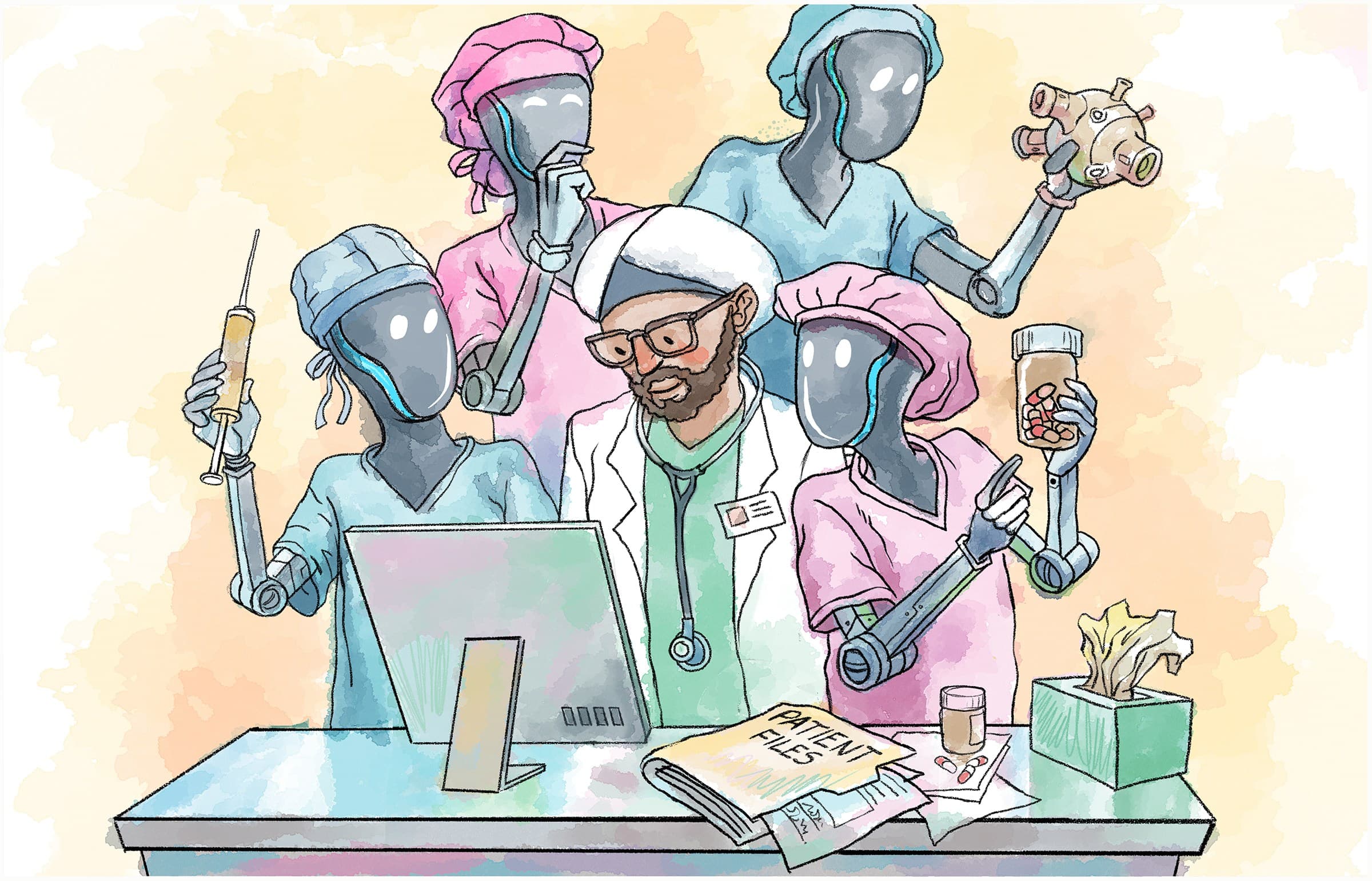
California Bans Autonomous AI Medical Decisions in First-of-Its-Kind Healthcare Law
Assembly Bill 1979 prohibits healthcare facilities from allowing artificial intelligence to independently prescribe medications or order tests, requiring licensed clinicians to maintain independent judgment over algorithmic recommendations.

University of Texas System Scales AI Medical Scribes Across Eight Institutions After Pilot Shows 73% Clinician Adoption Surge
Following a successful trial, the UT System is deploying Abridge's ambient documentation platform enterprise-wide to support nearly 12 million annual patient visits.

The AI Arms Race Inflating Your Hospital Bills: How Bots Are Fighting Bots Over Medical Codes
Blue Cross alleges hospitals used AI to generate $653 million in extra charges, while providers say they're defending against insurer algorithms that deny claims.

Clinical Documentation Giant Abridge Makes Bold Play for Revenue Cycle Dominance with Pre-Bill AI Tool
The ambient documentation leader is leveraging its foothold in 300 U.S. health systems to tackle the $450 million coding automation market with claim review technology that catches billing errors before submission.

Veterans Affairs Rolls Out AI Medical Scribes to Thousands of Clinicians After Pilots Show 95% Patient Satisfaction
Following successful trials at 79 medical centers, the VA is expanding ambient documentation technology that has saved 450,000 hours of clinician time while veterans opt out less than 1% of the time.

Healthcare AI Delivers Growing Returns: How One Platform Doubled Efficiency Gains Over 150 Days
WashU Medicine and BJC Health's expansion of Abridge to 4,000 clinicians reveals that AI documentation benefits compound with sustained use, challenging traditional healthcare technology ROI models.
OpenAI's Epic Integration Reveals the Minimum Bar for Healthcare AI—And Why It May Not Be Enough
ChatGPT's new EHR connection uses industry-standard SMART on FHIR for read-only patient data access, but deeper-integrated competitors may already hold the workflow advantage.

The Transparency Gap: Why 70% of Patients Demand to Know When AI Touches Their Care
New survey reveals widespread patient expectations for AI disclosure clash with current healthcare practices, as lawsuits challenge undisclosed use of clinical documentation platforms.

Health Systems Deploy AI Agents at Scale—Then Face the Maintenance Bill
Epic's 2024 conference revealed dramatic efficiency gains from agentic AI workflows, but early adopters warn of hidden operational costs in monitoring, governance, and talent that threaten sustainability.

From Scribe to Strategist: How One AI Company Is Racing to Become Healthcare's Universal Copilot
Abridge's clinical decision support tool has achieved over 50% adoption among eligible clinicians, with usage tripling in two months as the company pivots from documentation to comprehensive AI assistance.

Breaking Down Babel: AI Scribes That Understand When Patients Switch Languages Mid-Sentence
Sunoh.ai's ambient documentation technology captures clinical conversations across multiple languages simultaneously, addressing communication barriers for 26 million Americans with limited English proficiency.
The $15 Billion Question: Why AI Medical Tools Are Flooding Clinics Faster Than Scientists Can Vet Them
As AI-powered clinical decision support systems race toward a forecast $15 billion market by 2033, mounting evidence of inaccuracies, hallucinations, and 90% clinician override rates exposes a critical gap between deployment speed and safety validation.

Why Most Hospital AI Pilots Never Make It to the Finish Line, According to a Leading Deployment Expert
Nabla's enterprise sales director reveals the hidden implementation gaps that doom ambient documentation tools after promising demos.

AI Medical Scribes Take a Clinical Leap: From Note-Taking to Real-Time Patient Care Alerts
Abridge and Kaiser Permanente unveil Care Signals, transforming ambient documentation into active clinical decision support that flags medication issues and care gaps during patient visits.

AI Scribe Maker Suki Teams with Telehealth Giant Teladoc to Tackle Virtual Care Documentation Crisis
Strategic webinar partnership signals accelerating convergence of ambient AI documentation and telehealth platforms as providers seek workflow relief.
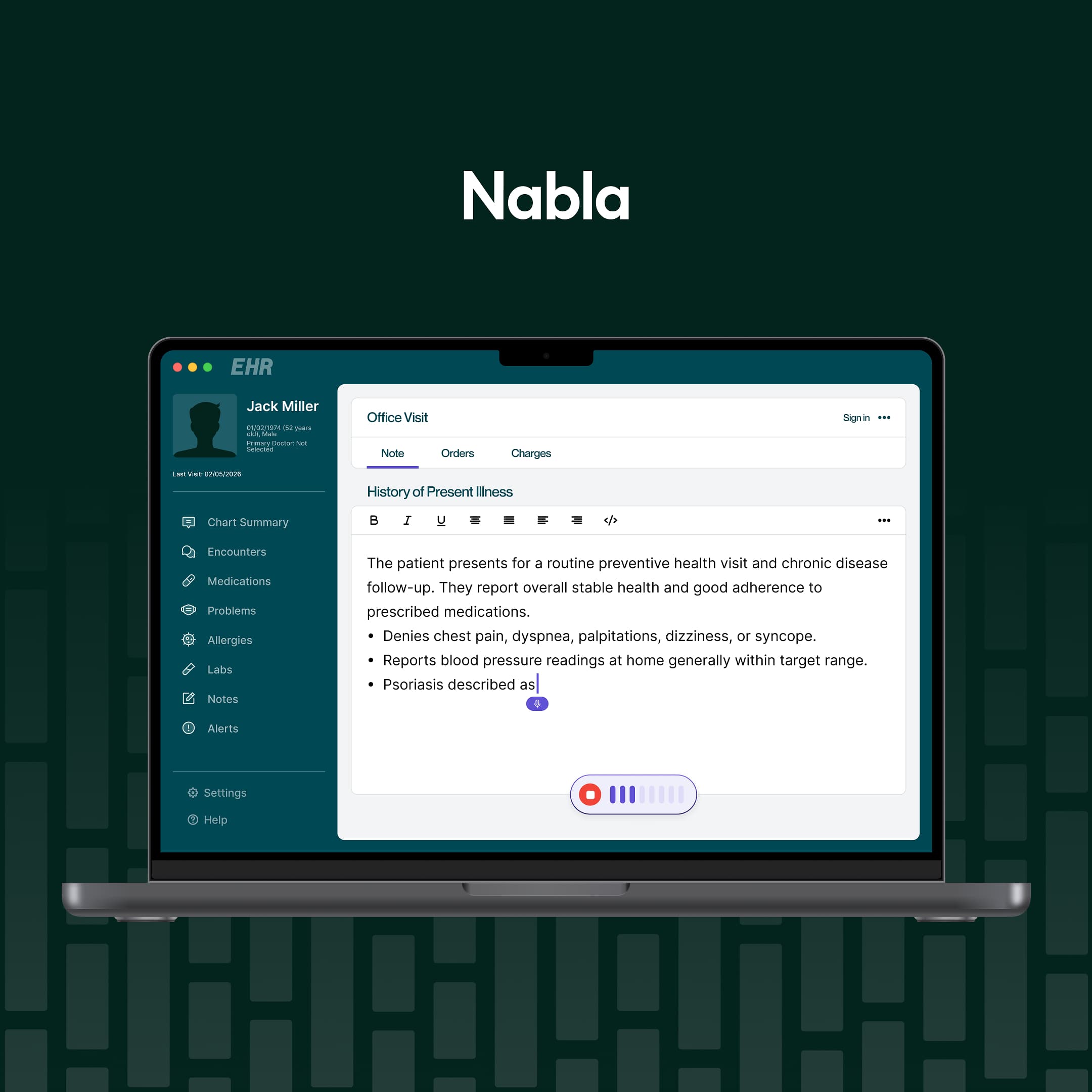
Privacy Meets Performance: How Nabla's Edge Computing Strategy Is Redefining Clinical Voice AI
The health tech company's new Mac-native dictation app processes all voice data locally on Apple Silicon, eliminating cloud dependencies while integrating seamlessly into Epic workflows.

Why a Leading AI Scribe Company Just Made Its Most Strategic Acquisition Yet
Abridge's purchase of agentic AI startup Altrina signals a major shift from documentation to full clinical workflow automation across healthcare systems.

Epic's Growing Dominance in Healthcare IT: Why 71% of Hospital Leaders Now Put One Vendor First
A new survey of 112 health system executives reveals how Epic's expansion into AI and enterprise software is reshaping the competitive landscape—but imaging AI may offer a last frontier for specialized vendors.

Epic Systems Loses Top AI and Interoperability Leaders as Ambient Documentation Market Heats Up
The departure of senior executives overseeing AI strategy and interoperability at the dominant EHR vendor creates openings for competitors like Nabla in the rapidly expanding clinical documentation automation space.

Ambient AI Leader Nabla Taps Enterprise Veteran to Challenge Market Rivals as Clinical Documentation Wars Heat Up
Nabla appoints Brian Manning as CEO to drive enterprise expansion while founder pivots to AI research, signaling strategic shift from product innovation to aggressive commercialization in the clinical documentation market.
Mayo Clinic Physician Deploys AI to Tackle the Hundreds-of-Pages Problem in Patient Records
Internal medicine doctor tests Google Cloud-powered system that automatically extracts diagnoses, medications, and test results from sprawling EHR files before patient visits.

OpenAI's $39 Billion Gamble: Inside the Race to Deploy ChatGPT Across America's Hospitals
Despite securing eight major health systems and mobilizing 260 physicians for quality control, the AI giant faces mounting evidence that its chatbot fails to recognize medical emergencies over half the time.
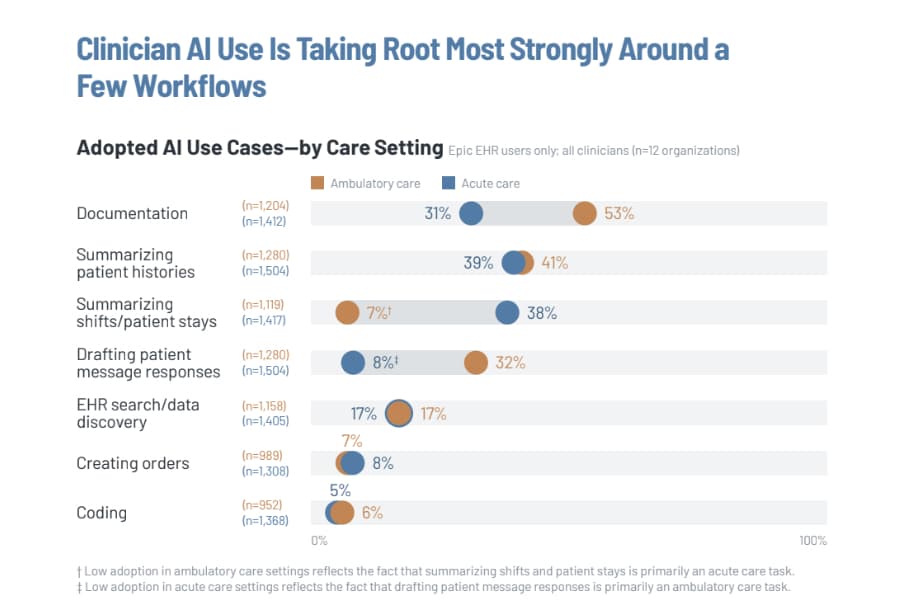
The Four-Tool Ceiling: Why Healthcare AI Adoption Hits a Wall After Early Wins
New KLAS data from Epic's installed base reveals a sharp satisfaction plateau at four AI tools and a dangerous training gap that threatens patient safety and ROI.

Mayo Clinic Faces Explosive Whistleblower Claims Over AI Patient Consent Violations
Former employee alleges retaliation after raising concerns about ethics and privacy safeguards in healthcare AI deployment

Why Nurses Are Now Calling the Shots in Healthcare AI Development
As OpenAI enters the clinical market, specialized vendors are betting that nurse-centered design will be their competitive edge against tech giants.

Nvidia, Abridge collaborate to develop healthcare-specific AI model
The partnership aims to create a purpose-built foundation model for clinical conversations, moving beyond adapted general-purpose AI to address unique medical communication challenges.

Europe's Clinical AI Market Faces a Reckoning as U.S. Platforms Pull Back
OpenEvidence's termination of access for UK and EU clinicians is not an isolated business decision — it reflects a deeper structural challenge facing European healthcare systems that have become dependent on U.S.-developed AI tools without building equivalent domestic capabilities.

Abridge Expands AI Nursing Platform to More Than 250 Health Systems
Abridge has announced general availability of Abridge for Nurses across its network of more than 250 health system partners, extending ambient AI documentation beyond physicians to the nursing workforce for the first time at scale.

Ambient AI Reduces Open Charts by 90% at UToledo Health
UToledo Health has published results from its deployment of Nabla's ambient AI scribe, showing a reduction in open charts from more than 400 to under 30 — a 90% decrease — alongside measurable improvements in physician-patient connection scores.