

California Bans Autonomous AI Medical Decisions in First-of-Its-Kind Healthcare Law
Assembly Bill 1979 prohibits healthcare facilities from allowing artificial intelligence to independently prescribe medications or order tests, requiring licensed clinicians to maintain independent judgment over algorithmic recommendations.
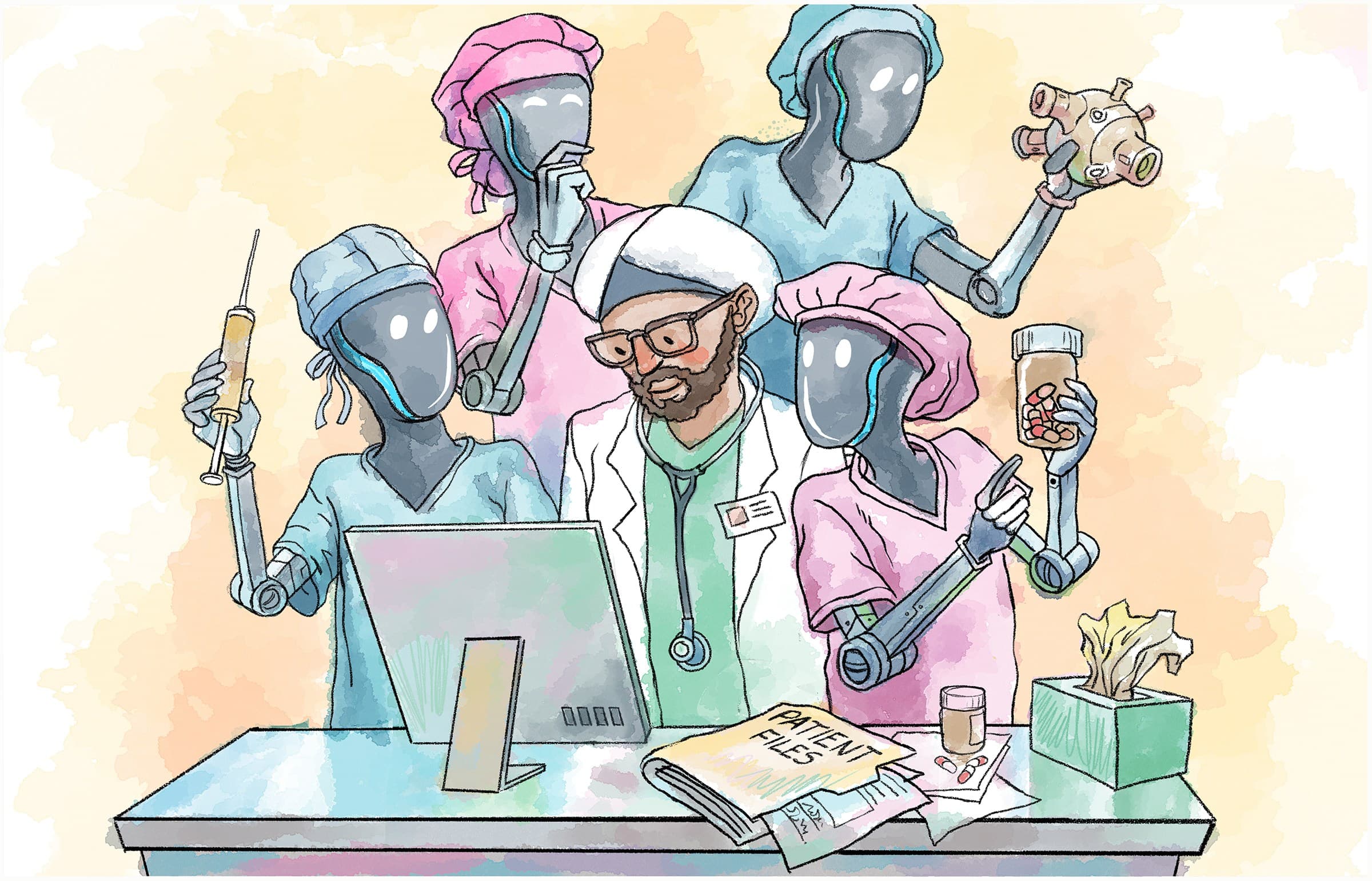
California has become the first state to legally prohibit artificial intelligence from independently performing medical tasks, establishing a regulatory framework that distinguishes between AI as a clinical support tool and AI as a replacement for licensed healthcare professionals. Governor Gavin Newsom signed Assembly Bill 1979 in October 2024, with the law taking effect January 1, 2026.
New Legal Boundaries for Healthcare AI
The legislation, sponsored by Assemblymember Mia Bonta and the California Nurses Association, explicitly bars healthcare facilities from allowing AI systems to independently perform tasks requiring professional licensure—including prescribing medications, ordering diagnostic tests, or making treatment decisions. Licensed clinicians must maintain and document independent judgment when using algorithmic tools, creating a legal distinction between decision support and decision replacement.
The law emerged from mounting concerns about algorithmic systems supplanting clinical expertise, particularly at Kaiser Permanente. The National Union of Healthcare Workers filed a complaint with state and federal authorities in July 2024 alleging that Kaiser implemented a mental health patient assessment algorithm without licensed clinician oversight. Kaiser has also deployed AI-based sepsis risk prediction algorithms—which internal 2020 research suggested reduced deaths by 16 percent—and algorithmic guidance systems for advice nurses fielding patient calls.
A Wall Street Journal investigation highlighted the liability risks inherent in algorithm-guided care, reporting a case where a Vallejo Kaiser advice nurse followed an AI recommendation and a patient subsequently died. An arbitrator ruled the nurse responsible for failing to override the algorithmic guidance, illustrating the legal gray zone that AB 1979 seeks to clarify.
Industry Response and Clinical Adoption
The California Hospital Association and California Medical Association, representing 50,000 physicians, remained neutral on the final bill after initially opposing earlier versions. Healthcare attorney Henry Norwood of Kaufman Dolowich in San Francisco predicts the law will trigger increased malpractice litigation claiming over-reliance on AI recommendations.
Clinical decision support tools appear to fall within the law's permitted uses. UC Davis Health currently uses AI for spine surgery guidance and diagnostic scan analysis, while Dr. Donaldo Hernandez, a Santa Cruz hospitalist, uses Open Evidence to develop treatment guidelines for conditions like iron deficiency. Documentation platforms such as Abridge, which generates appointment summaries and chatbot responses, also operate as supportive rather than autonomous systems.
Implications for Healthcare Delivery
The legislation creates legal protection for AI tools that augment rather than replace clinical judgment, while establishing liability exposure for systems that function autonomously. Clinicians using algorithmic recommendations must now document their independent assessment, potentially making providers more conservative in AI adoption to avoid malpractice claims.
A companion bill, AB 2575, would have provided workplace protections for healthcare professionals pressured to follow AI guidance against their clinical judgment. Governor Newsom vetoed that measure on technical grounds, leaving the question of institutional pressure unresolved even as the prohibition on autonomous AI takes effect.
The law positions California as a regulatory trendsetter in healthcare AI governance, establishing a framework that other states may adopt as artificial intelligence becomes increasingly embedded in clinical workflows.
Sources
Companies in this article

Reporting & accountability
How we maintain accuracy
Health AI Central separates reported facts, analysis, and public-source data. Readers can review our standards, request a correction, or consult the relevant research methodology before relying on a claim.