

Your Gut Microbiome Could Predict Cognitive Decline 30 Years Early, UCLA Study Suggests
Researchers link specific bacterial metabolites to accelerated brain aging in young and middle-aged adults, opening new frontiers for preventive neurology.
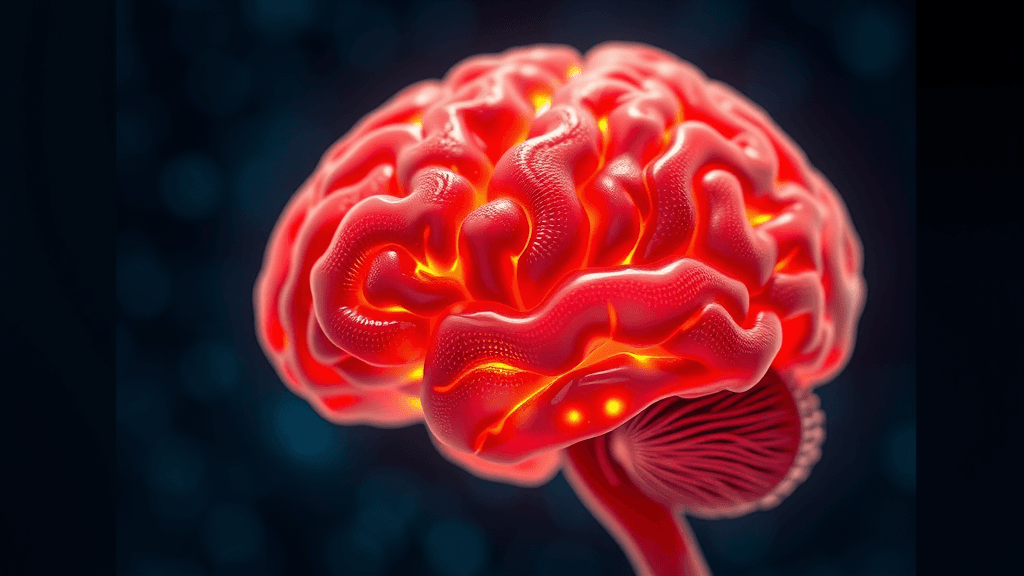
The possibility of detecting Alzheimer's disease and cognitive decline decades before the first memory lapses has long been a holy grail of neurology. Now, UCLA Health researchers report they may have found an unexpected window into future brain health: the trillions of bacteria living in our digestive tracts.
In a study published in eBioMedicine, scientists analyzed brain scans and gut microbiome samples from nearly 1,500 young and middle-aged adults, discovering that specific bacterial metabolites correlate with signs of accelerated brain aging—potentially offering a biological early-warning system for cognitive decline long before clinical symptoms emerge.
Machine Learning Reveals "Older" Brains in Younger Bodies
The research team employed resting-state functional connectivity imaging, a technique that measures communication patterns between brain regions while participants are at rest, to develop what they call a "Brain Aging Index" (BAI). Using machine learning algorithms, researchers estimated each participant's "brain age" based on neural connectivity patterns, then compared it to their chronological age.
Across three independent study cohorts, individuals with higher BAI scores—meaning their brains appeared functionally older than their actual age—demonstrated measurably worse performance on working memory and executive function tests. They also reported more depression symptoms, suggesting the accelerated aging signature has real-world cognitive and emotional consequences even in relatively young populations.
The Gut-Brain Connection Takes Center Stage
The breakthrough came when researchers analyzed stool samples from a subset of participants. Those with elevated BAI scores showed distinct patterns in their gut microbiome composition and metabolic byproducts. Specifically, higher brain aging correlated with increased levels of certain fat molecules and cholesterol-related compounds, alongside decreased levels of estetrol, a hormone metabolite.
Dr. Arpana Church, the study's senior author and co-director of the Goodman-Luskin Microbiome Center at UCLA Health, noted that these metabolic markers implicate several biological pathways critical to brain health: immune system function, blood vessel integrity, neuronal communication, and cellular energy production.
The findings suggest that gut bacteria may influence brain aging through their metabolic activities, producing compounds that either protect or accelerate neurological decline through these interconnected systems.
From Discovery to Clinical Application
While the results are promising, important caveats remain. The study design was cross-sectional—a snapshot in time—rather than longitudinal tracking of individuals over years or decades. This means researchers observed associations but cannot yet prove that gut microbiome changes cause accelerated brain aging, or whether interventions targeting the microbiome could slow or reverse the process.
Nevertheless, the research opens intriguing possibilities for preventive neurology. If validated through interventional trials, microbiome-targeted therapies such as dietary modifications, probiotics, or metabolite supplementation could offer accessible strategies for individuals identified as having accelerated brain aging in their 30s, 40s, or 50s—decades before traditional dementia symptoms would appear.
For the emerging field of precision medicine, the convergence of AI-driven brain age estimation, microbiome sequencing, and metabolomics represents a potential paradigm shift: moving cognitive health interventions from reactive late-life treatment to proactive midlife prevention, guided by biological markers most people cannot see or feel.
The challenge now is determining whether these gut-based biomarkers can predict future cognitive outcomes in longitudinal studies, and whether modifying the microbiome can actually change the trajectory of brain aging—questions that will require years of additional research to answer definitively.
Sources
Google Search
Follow Health AI Central on Google
Choose Health AI Central as a preferred source, and Google is more likely to show our reporting in Top Stories.
Reporting & accountability
How we maintain accuracy
Health AI Central separates reported facts, analysis, and public-source data. Readers can review our standards, request a correction, or consult the relevant research methodology before relying on a claim.