

Your Body's Organs Don't Age Together—And AI Can Now Measure the Difference
New proteomic clocks powered by artificial intelligence reveal that organs age at dramatically different rates, opening doors to precision interventions that could prevent Alzheimer's, heart disease, and other age-related conditions before symptoms appear.
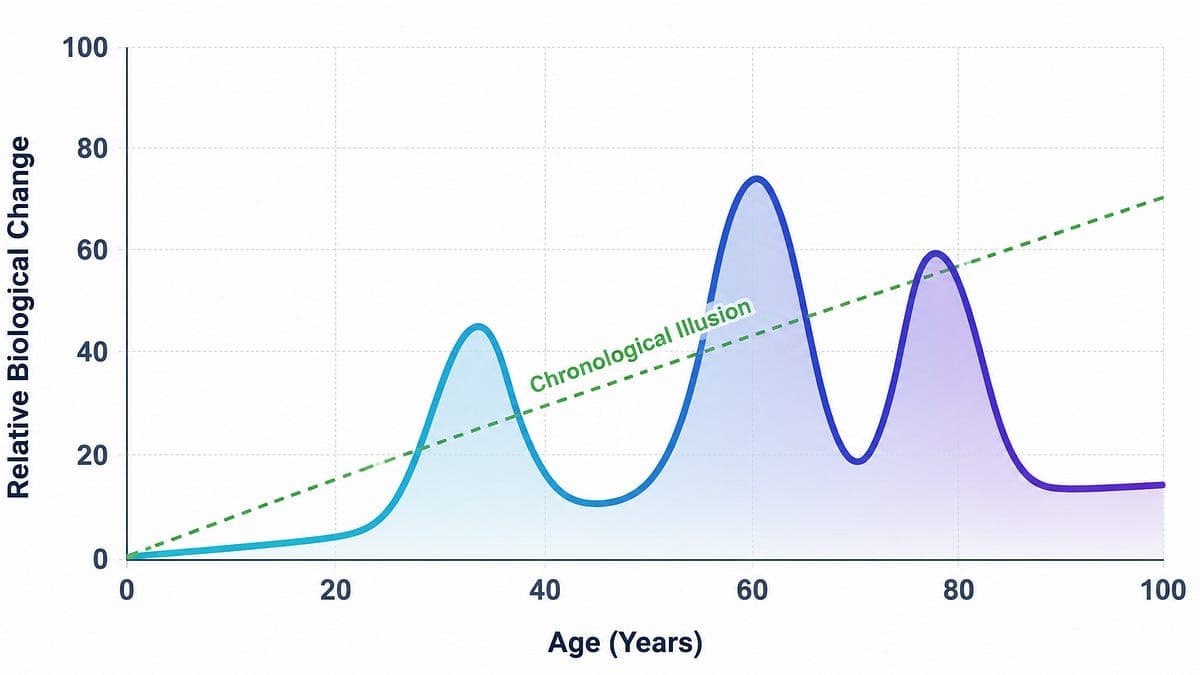
Medicine has long relied on a simple metric to assess aging: chronological age. But a groundbreaking review published in Nature Medicine reveals that this tells only a fraction of the story. Researchers Eric Topol and Tony Wyss-Coray demonstrate that our organs age asynchronously—some racing ahead while others lag behind—and that AI-powered proteomic analysis can now measure these differences with unprecedented precision.
The implications are profound: by identifying which organs are aging fastest in individual patients, clinicians could intervene years before disease manifests, fundamentally shifting medicine from reactive treatment to proactive prevention.
The End of Linear Aging
For decades, scientists assumed aging progressed steadily over time. Large-scale proteomic studies analyzing thousands of proteins have shattered this assumption, revealing that aging occurs in three distinct waves at approximately ages 34, 60, and 78. Even more striking, research tracking 1,800 participants born in 1946 found a roughly 10-year spread in organ aging pace when participants reached age 63, with assessments covering six organs and the immune system.
Current technology can analyze up to 11,000 proteins from a single blood sample, using AI algorithms to generate organ-specific aging profiles. A recent study of more than 60,000 individuals examining over 40 cell types found that approximately 25% showed accelerated aging in at least one cell type—a finding with immediate clinical relevance.
Predicting Disease Before It Strikes
The predictive power of these biological clocks is remarkable. Accelerated aging of brain astrocytes correlates with a 12.6-fold higher risk of Alzheimer's disease compared to individuals with slow astrocyte aging. When combined with genetic markers, the risk stratification becomes even more dramatic: individuals who are APOE4 homozygotes with accelerated astrocyte aging face nearly 40-fold increased Alzheimer's risk.
Critically, astrocyte age predicted Alzheimer's risk independent of APOE4 status, suggesting these biological clocks capture aging processes beyond genetics. The brain and immune system emerged as "master regulators" most strongly correlated with survival, with normal aging in these systems associated with approaching 100% survival over 15-17 years.
From Research to Clinical Reality
The technology is rapidly moving from laboratory to clinic. Multiple companies are in beta testing phases, and Topol's team is launching a randomized controlled trial testing aggressive lifestyle interventions with 24/7 coaching in high-risk Alzheimer's patients. The trial will measure both p-tau217 (an established Alzheimer's biomarker) and brain aging clocks at baseline and one-year follow-up.
The field has evolved through six generations since Steve Horvath pioneered DNA methylation clocks over 15 years ago, with protein-based clocks representing the latest advancement. Importantly, these organ clocks respond to modifiable factors including alcohol intake, smoking, physical activity, education, socioeconomic status, and life adversity—meaning interventions can potentially slow or reverse accelerated aging.
The Precision Medicine Promise
For healthcare providers, organ and cell clocks enable risk stratification that goes far beyond traditional chronological age and genetic markers. A patient with accelerated arterial aging could receive targeted cardiovascular interventions years before symptoms appear. Immune system aging—currently unmeasurable in standard clinical practice—can now be quantified and potentially addressed.
The convergence of high-throughput proteomics with AI analytics represents a fundamental shift toward truly personalized medicine, where prevention strategies are tailored not just to genetic risk but to each individual's unique biological aging profile. As these technologies approach clinical implementation, they promise to transform how we understand, measure, and ultimately intervene in the aging process itself.
Sources
Reporting & accountability
How we maintain accuracy
Health AI Central separates reported facts, analysis, and public-source data. Readers can review our standards, request a correction, or consult the relevant research methodology before relying on a claim.