

American Heart Association Names Five Breakthrough Technologies Competing to Reshape Cardiac and Neurological Care
From AI-powered ECG analysis to music-based stroke rehabilitation, finalists will present market-ready innovations at Chicago's Scientific Sessions 2026 in November.
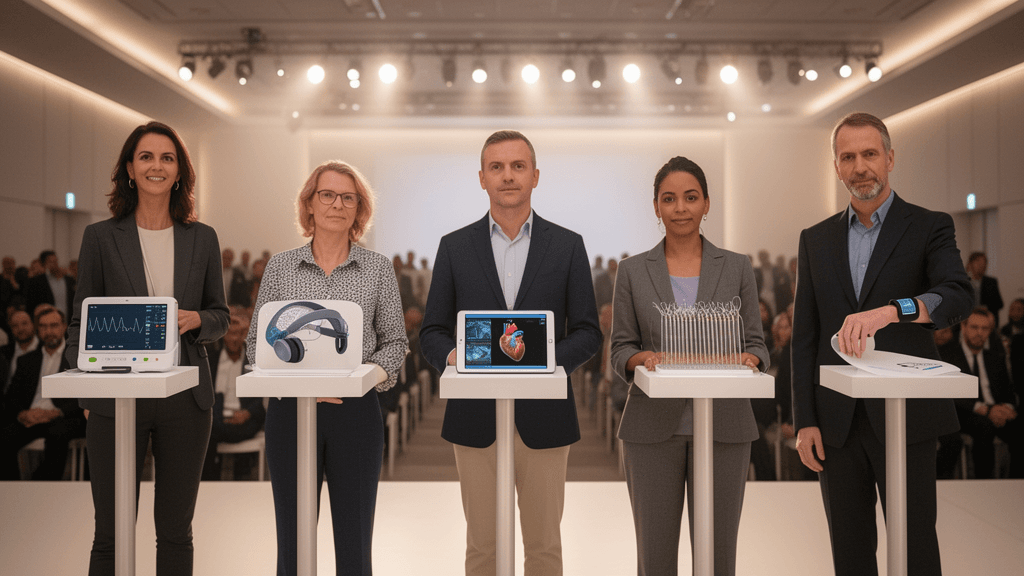
The American Heart Association has selected five health technology companies as finalists in its 2026 Health Tech Competition, setting the stage for a showcase of innovations targeting cardiovascular disease and brain health. The finalists—HEARTio, MEGI, MedRhythms, Seerlinq, and Vascudyne—will present their market-ready technologies during Scientific Sessions 2026, taking place November 6-9, 2026, at McCormick Place in Chicago. Competition pitches are scheduled for November 7 and 8, with winners announced on November 8.
The competition, hosted by the American Heart Association's Center for Technology & Innovation, drew a record number of global submissions and addresses a critical gap between validated health technology prototypes and actual clinical adoption. Finalists were selected through multi-stage review by volunteer experts evaluating three core criteria: strength of clinical and pilot data, scientific and technological innovation, and alignment with market needs.
AI Diagnostics and Digital Health Platforms Lead the Field
Three of the five finalists leverage artificial intelligence to transform existing diagnostic tools and care delivery. Pittsburgh-based HEARTio has developed investigational AI software that analyzes standard ECG readings to estimate obstructive coronary artery disease without requiring dyes, radiation, incisions, or catheters. Chicago's MEGI offers an AI-powered digital health platform specifically designed for women's heart health, maternal care, and hypertension management.
Bratislava-based Seerlinq takes a different approach to AI diagnostics, using fingertip photoplethysmography to non-invasively estimate cardiac filling pressure for home-based heart failure monitoring. The technology can reportedly detect deterioration weeks before hospitalization becomes necessary, potentially preventing costly emergency interventions.
Bioengineering and Digital Therapeutics Round Out Innovation Portfolio
The remaining two finalists represent distinct technological approaches. Portland, Maine-based MedRhythms has developed digital neurotherapeutics that combine sensors, software, and music for gait rehabilitation following neurological injury. The technology uses rhythmic auditory stimulation to support recovery outside traditional clinic settings.
St. Paul, Minnesota's Vascudyne offers a bioengineering solution: blood vessels that regenerate into a patient's own tissue. The technology eliminates the need for vein harvesting in coronary bypass procedures and can grow with pediatric patients who have congenital defects, potentially sparing them repeated surgeries.
Expert Panel to Evaluate Clinical Readiness
The judge panel includes cardiologists, digital health executives, academic leaders, and investors from Stanford University, Yale School of Medicine, Weill Cornell Medicine, Kaiser Permanente, and University of Texas Southwestern Medical Center. Lee A. Shapiro, J.D., volunteer chair of the American Heart Association and managing partner and co-founder at Chicago-based investment firm 7wireVentures, leads the competition.
The American Heart Association explicitly notes that finalist status does not constitute endorsement of the technologies. The competition's focus on market-ready solutions with existing clinical or pilot data reflects growing emphasis on evidence-based adoption pathways in the digital health sector.
Sources
Reporting & accountability
How we maintain accuracy
Health AI Central separates reported facts, analysis, and public-source data. Readers can review our standards, request a correction, or consult the relevant research methodology before relying on a claim.