

Why the Simplest Brain Scanning AI Just Beat the Most Advanced Algorithms
A landmark multi-cohort study reveals that basic convolutional networks outperform complex transformer models in predicting brain age across diverse patient populations, upending assumptions about AI complexity in neuroimaging.
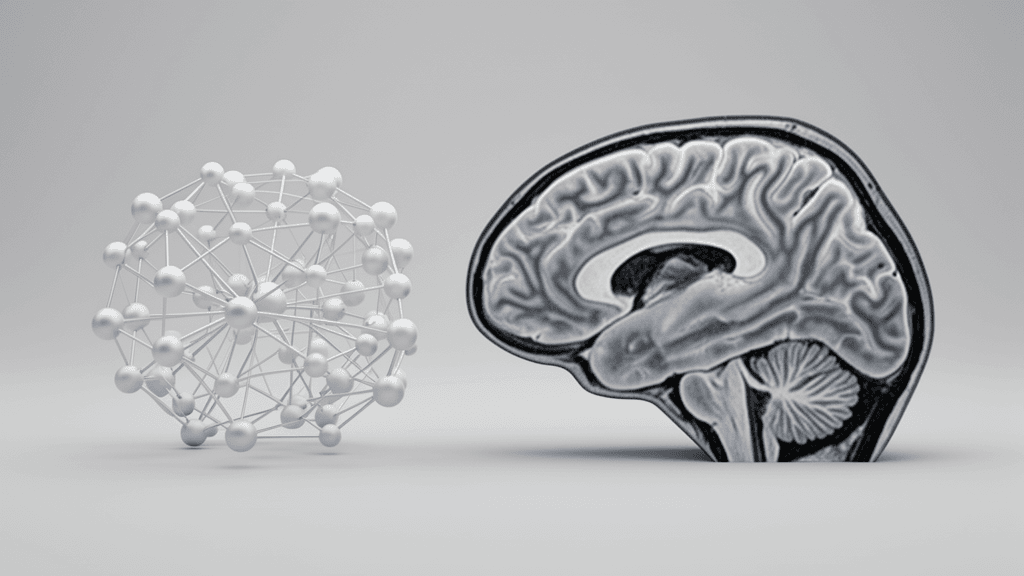
In a finding that challenges the healthcare AI industry's race toward ever-more-complex algorithms, researchers have demonstrated that a straightforward neural network architecture significantly outperforms sophisticated transformer models in predicting brain age and sex from MRI scans. The discovery, published in Brain Informatics, suggests that simpler may indeed be better when it comes to clinical neuroimaging tools.
Led by Radhika Juglan and colleagues, the multi-cohort study compared three distinct 3D neural network architectures—Simple Fully Convolutional Network (SFCN), DenseNet121, and the Swin Transformer—for their ability to predict age and sex from brain MRI scans. The team trained their models on 47,390 participants from the UK Biobank, then validated performance across three independent cohorts: the Dallas Lifespan Brain Study (132 participants), Parkinson's Progression Markers Initiative (108 healthy controls), and Information eXtraction from Images dataset (319 participants).
The Simpler Model's Surprising Edge
The SFCN architecture demonstrated remarkable consistency across diverse imaging centers. For sex classification, it achieved a perfect AUC of 1.00 in the internal UK Biobank test set, with external validation performance ranging from 0.85 to 0.91 across the three independent cohorts. Age prediction showed similarly robust results, with a mean absolute error (MAE) of just 2.66 years and Pearson's correlation of 0.89 in internal testing, and external validation MAE ranging from 4.98 to 5.81 years with correlations between 0.55 and 0.70.
The Swin Transformer, despite its hierarchical structure and self-attention mechanisms designed to capture complex patterns, struggled significantly with generalizability. In the Dallas Lifespan Brain Study cohort, it produced an MAE as high as 7.35 years—substantially worse than the simpler SFCN. Statistical analysis using DeLong tests for classification and Wilcoxon signed-rank tests with Bonferroni correction confirmed that SFCN significantly outperformed both DenseNet121 and Swin Transformer across all external cohorts for age prediction.
What the Brain Reveals
The researchers employed Gradient x Input attribution maps to understand which brain regions drove the models' predictions. The analysis revealed consistent attention patterns across the brainstem, central subcortical structures, limbic lobe, insular cortex, cerebellum, temporal lobe, and occipital lobe. For sex classification, the strongest correlations with regional brain volumes appeared in the Lingual Gyrus, posterior Cingulate Gyrus, and right anterior Parahippocampal Gyrus. Age predictions showed highest correlations in the Brain Stem, Ventral Striatum, and Planum Polare in the temporal lobe.
The study found no significant age-related bias in sex classification and minimal sex-based differences in age prediction performance, suggesting the model could be applied equitably across demographic groups.
Clinical Implications for Neurodegenerative Disease
The findings carry significant weight for clinical translation of brain age prediction tools. The researchers note potential applications in monitoring Alzheimer's disease, Parkinson's disease, and Multiple Sclerosis—conditions where accelerated brain aging serves as a critical biomarker. The SFCN's superior generalizability across independent imaging centers addresses a fundamental barrier that has prevented many neuroimaging AI tools from reaching routine clinical practice.
For the health AI industry, the study delivers a counterintuitive message: computational efficiency and architectural simplicity may offer better returns than complexity when cross-site reliability is paramount. As brain age prediction tools move toward clinical deployment for neurodegenerative disease monitoring, this research establishes a validated baseline architecture and underscores the critical importance of rigorous multi-cohort external validation over architectural sophistication.
Sources
Google Search
Follow Health AI Central on Google
Choose Health AI Central as a preferred source, and Google is more likely to show our reporting in Top Stories.
Reporting & accountability
How we maintain accuracy
Health AI Central separates reported facts, analysis, and public-source data. Readers can review our standards, request a correction, or consult the relevant research methodology before relying on a claim.