

Voice AI Takes Over Cataract Surgery Counseling as Bausch + Lomb Bets on Automated Patient Education
Ophthalmology giant partners with Hippocratic AI to deploy voice agents for hour-long preoperative calls, freeing clinical staff while standardizing IOL education across practices.
Cataract surgery may be one of the most common procedures in medicine, but the preoperative patient education process remains stubbornly time-intensive—consuming 30 to 60 minutes of clinical staff time per patient. Now, Bausch + Lomb is betting that voice-based artificial intelligence can handle these conversations just as effectively, announcing plans to launch Orphia, an AI agent developed with Hippocratic AI, later this year.
The service will conduct comprehensive preoperative phone calls covering surgical education and intraocular lens (IOL) options, addressing a significant operational bottleneck in ophthalmology practices while potentially improving the quality and consistency of patient counseling.
Offloading the Administrative Burden Without Sacrificing Education
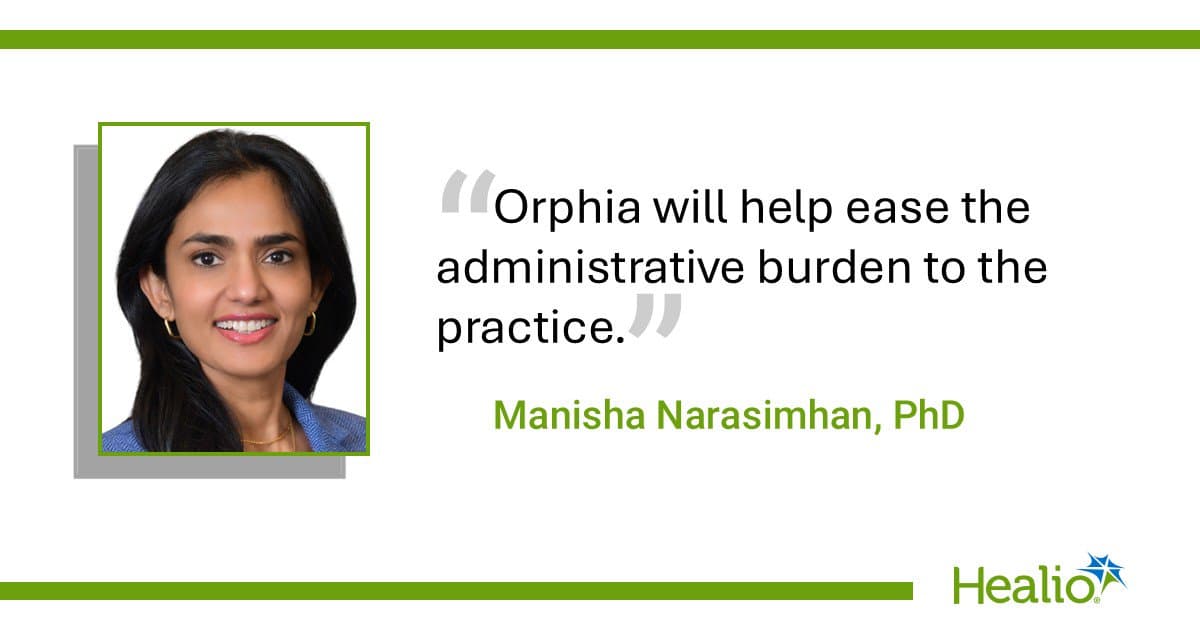
According to Manisha Narasimhan, PhD, President of Digital Health Services at Bausch + Lomb, the current model places an unsustainable burden on practice staff. "These calls typically take 30 to 60 minutes," she noted, emphasizing that Orphia aims to free clinicians for higher-value interactions requiring empathy and trust-building.
The AI agent takes a brand-agnostic approach to IOL education, meaning it doesn't push specific products but rather provides standardized information about available options. This positions the technology as a neutral educational tool rather than a sales mechanism—a critical distinction for maintaining clinical credibility and patient trust.
Vance Thompson, MD, Founder of Vance Thompson Vision, endorsed the approach, highlighting a key advantage: patients can access the information multiple times before their surgeon consultation. This repeated exposure may improve comprehension and informed decision-making around premium IOL selection, a choice that frequently leads to postoperative dissatisfaction when expectations aren't properly set.
Beyond Cataract Surgery: A Scalable Model for Eye Care
While Orphia's initial deployment focuses on cataract surgery, Bausch + Lomb and Hippocratic AI envision broader applications across eye care conditions. The partnership validates a healthcare-specific AI agent model that goes beyond general administrative tasks to handle specialized surgical education—a more complex use case requiring clinical accuracy and nuanced communication.
For Hippocratic AI, the Bausch + Lomb collaboration represents a strategic entry into procedure-specific patient engagement, differentiating the company from competitors focused primarily on ambient clinical documentation or general-purpose medical AI. The ophthalmology vertical offers a compelling proof point: high-volume procedures with standardized education protocols that can be systematically automated.
The Informed Consent Question
The deployment raises important questions about the future of informed consent and shared decision-making in surgical care. While AI agents can deliver comprehensive, standardized information without time pressure, the technology's success will depend on how practices integrate it into existing workflows and whether patients perceive the AI interactions as genuinely helpful or merely cost-cutting measures.
Bausch + Lomb's emphasis on brand-agnostic content suggests awareness of these concerns, positioning Orphia as an educational supplement rather than a replacement for surgeon-patient conversations. As voice AI continues to penetrate healthcare operations, Orphia represents a test case for whether patients will accept automated counseling for significant medical decisions—and whether the efficiency gains justify potential trade-offs in personalized care.
Sources
Companies in this article

Reporting & accountability
How we maintain accuracy
Health AI Central separates reported facts, analysis, and public-source data. Readers can review our standards, request a correction, or consult the relevant research methodology before relying on a claim.