
Million-Heart Dataset Deal Positions Australian Startup at Forefront of AI Cardiac Diagnostics Race
EchoIQ's exclusive access to up to one million echocardiogram scans represents one of the largest cardiovascular imaging datasets secured for AI development in the Asia-Pacific region.
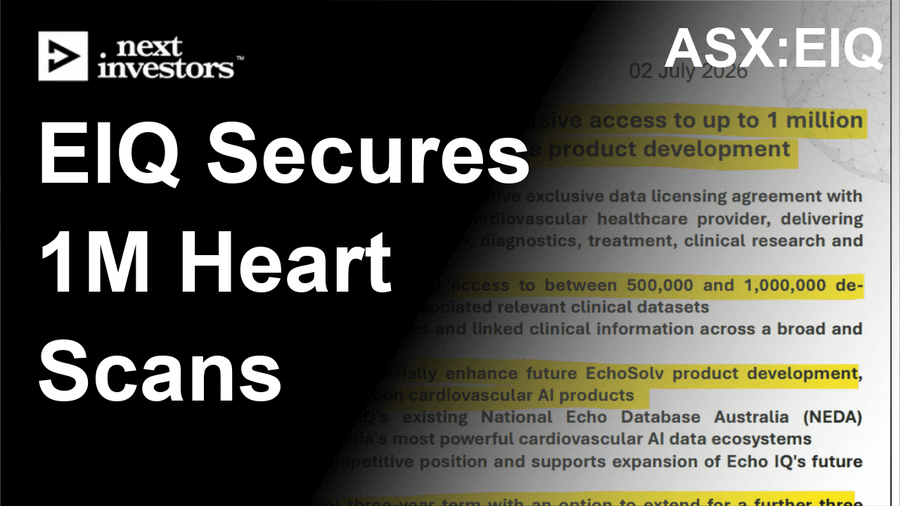
Australian medical technology company EchoIQ has secured exclusive rights to between 500,000 and one million echocardiogram scans from an undisclosed Australian cardiovascular imaging provider. The partnership gives the ASX-listed company access to one of the largest single-source cardiac imaging datasets in the region, potentially accelerating development of its AI-powered diagnostic platform designed to automate echocardiography analysis.
The deal highlights an emerging reality in medical AI: access to large, high-quality datasets is becoming as valuable as the algorithms themselves. For EchoIQ, the exclusive arrangement creates a significant competitive advantage in the increasingly crowded field of AI-assisted cardiac diagnostics.
Data as Strategic Asset
The cardiovascular imaging dataset represents more than training material—it's a strategic asset that could determine which AI diagnostic tools ultimately succeed in clinical practice. Echocardiograms, ultrasound examinations of the heart, are among the most commonly performed cardiac imaging studies worldwide, yet their interpretation requires specialized expertise and can be time-consuming.
EchoIQ's platform aims to address these challenges by using machine learning to automatically analyze echocardiogram images, identifying cardiac abnormalities and potentially improving both diagnostic accuracy and workflow efficiency. The scale of the newly acquired dataset—potentially reaching one million scans—provides the volume and diversity necessary to train robust AI models capable of recognizing subtle patterns across varied patient populations.
The exclusive nature of the access agreement prevents competitors from leveraging the same data, potentially giving EchoIQ a first-mover advantage in developing AI tools trained on Australian patient populations.
Clinical Implications
For healthcare providers facing cardiologist workforce shortages, AI-assisted echocardiography interpretation tools could offer meaningful relief. Automated preliminary analysis could reduce reading times, improve diagnostic consistency, and allow specialists to focus on complex cases requiring human judgment.
However, the path from dataset access to clinical deployment requires rigorous validation. EchoIQ will need to demonstrate through peer-reviewed studies that its AI platform improves patient outcomes, maintains accuracy across diverse populations, and integrates seamlessly into existing clinical workflows.
The company's progress occurs against a backdrop of growing investment in cardiac imaging AI globally. Multiple startups and established medical device manufacturers are developing competing solutions, making speed to market and clinical validation critical success factors.
Broader Considerations
For patients, successful development and deployment of validated AI echocardiography tools could translate to faster diagnosis, improved detection rates for cardiac conditions, and potentially better clinical outcomes. The technology could prove particularly valuable in regional and rural settings where access to specialist cardiologists is limited.
The partnership also raises questions about data governance, patient privacy, and equitable access to AI-enhanced diagnostics. As exclusive dataset arrangements become more common, healthcare systems will need to balance innovation incentives with ensuring that resulting technologies benefit diverse patient populations.
EchoIQ's dataset acquisition represents a significant milestone in the company's development trajectory, but the ultimate measure of success will be clinical validation, regulatory approval, and real-world adoption by healthcare providers.
References
Reporting & accountability
How we maintain accuracy
Health AI Central separates reported facts, analysis, and public-source data. Readers can review our standards, request a correction, or consult the relevant research methodology before relying on a claim.