

Mayo Clinic's $35 Million Bet on AI Could Rewrite the Playbook for Catching Lung Cancer Early
New initiative harnesses records from 94,000 patients to develop AI models that detect cancer before traditional screening methods can spot it.
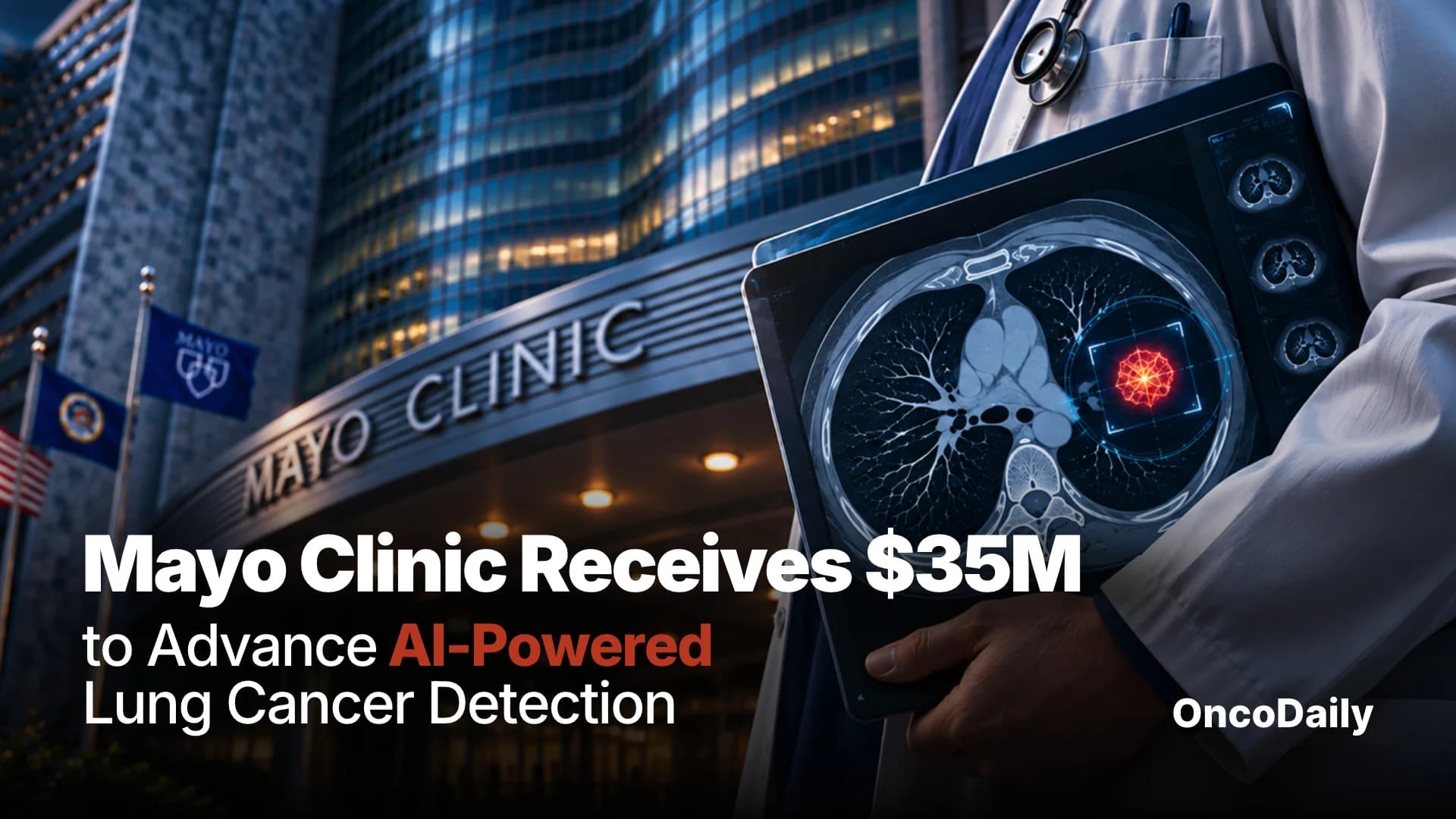
Mayo Clinic has launched a $35 million research program aimed at transforming lung cancer detection through artificial intelligence, with the goal of identifying the disease at its earliest biological stages—potentially before it becomes visible on conventional scans.
The initiative, funded by the Paul Angell Foundation and centered at Mayo Clinic Comprehensive Cancer Center, will utilize digitized longitudinal medical records from more than 94,000 lung cancer patients. Researchers plan to integrate this clinical data with genomic information, digital pathology, and medical imaging to build AI-powered risk prediction models capable of spotting biological warning signs that current screening methods may miss.
From Detection to Interception
The program's central focus is "cancer interception"—identifying biological changes during the earliest disease stages to disrupt progression before cancer becomes invasive. This represents a shift from optimizing existing screening protocols to preventing advanced disease altogether.
According to the American Cancer Society, lung cancer remains the deadliest malignancy in the United States, with an estimated 229,410 diagnoses and 124,990 deaths projected for 2026. That accounts for approximately one in five cancer deaths nationwide. While the National Lung Screening Trial demonstrated that low-dose CT screening reduces lung cancer mortality by roughly 20% compared to chest radiography, substantial gaps remain in identifying at-risk patients and classifying suspicious nodules.
Multimodal Data at Unprecedented Scale
The research initiative will pursue three primary objectives: developing AI-powered risk prediction models that integrate patient and tumor data, detecting early biological signals of disease, and translating these findings into new immune-based and targeted therapies.
Mayo Clinic's thoracic specimen registry, combined with its digitized clinical records, provides researchers with a comprehensive dataset spanning clinical history, genomic profiles, pathology slides, and imaging studies. This multimodal approach could enable AI systems to recognize patterns invisible to individual data streams alone.
"This transformational gift from the Paul Angell Foundation will allow us to harness the power of artificial intelligence to develop new approaches to detect lung cancer at its earliest stages," said Dr. Cheryl Willman, Director of Mayo Clinic Comprehensive Cancer Center, according to the announcement.
Sharon Angell, a Board of Directors member at the Paul Angell Foundation, emphasized the initiative's potential to address critical unmet needs in lung cancer care, particularly in expanding detection capabilities beyond current screening eligibility criteria.
Implications for Healthcare AI
For health AI companies and healthcare providers, the program establishes a benchmark for comprehensive AI model development in oncology. The integration of clinical, genomic, pathology, and imaging data at this scale could yield validated tools that enable earlier intervention and more personalized treatment strategies—potentially surpassing the 20% mortality reduction currently achieved with low-dose CT screening.
The emphasis on cancer interception rather than detection alone creates opportunities for novel diagnostic and therapeutic AI applications, positioning artificial intelligence not just as a tool for finding existing disease, but as a mechanism for preventing its progression entirely.
Sources
Follow Health AI Central
Keep up with health AI where you already read
On LinkedIn
The day’s strongest health AI stories in your feed, one or two each weekday.
On Google
Choose Health AI Central as a preferred source, and Google is more likely to show our reporting in Top Stories.
Reporting & accountability
How we maintain accuracy
Health AI Central separates reported facts, analysis, and public-source data. Readers can review our standards, request a correction, or consult the relevant research methodology before relying on a claim.