

Machine Learning Tackles a Hidden Women's Health Crisis: AI Achieves 90% Accuracy in Diagnosing Bladder Prolapse
New clinical decision support system standardizes cystocele classification on ultrasound, boosting radiologist accuracy and slashing interpretation time by nearly two-thirds.
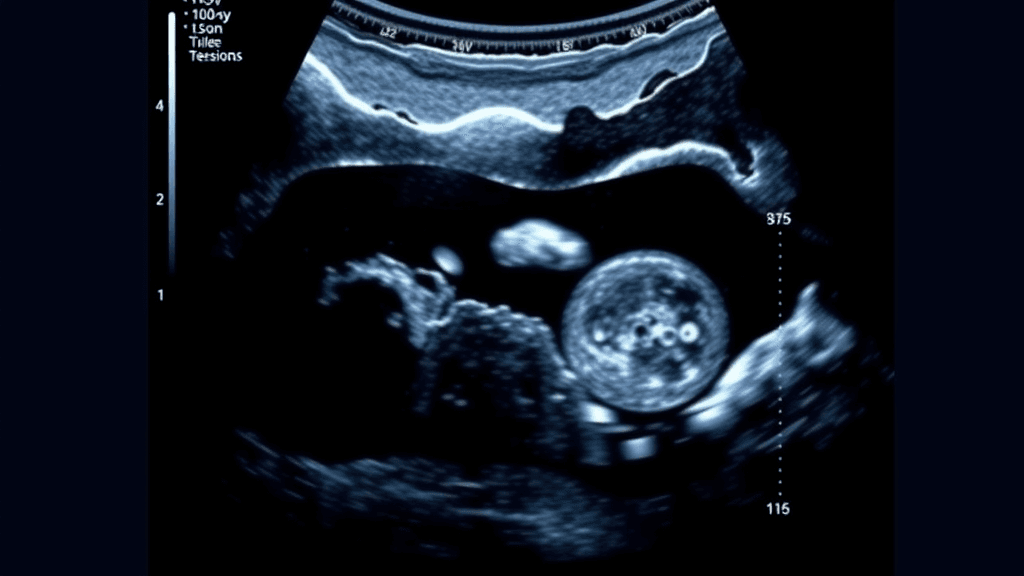
Pelvic floor disorders affect millions of women worldwide, yet diagnosis remains plagued by inconsistency and operator-dependent variability. Now, researchers from Northeastern University and Shengjing Hospital of China Medical University have developed an AI system that could bring standardization to one of women's health imaging's most challenging domains: cystocele assessment on dynamic ultrasound.
The Green-AttGRU system—named for its attention-enhanced gated recurrent unit architecture and the Green classification system it automates—achieved 90.2% accuracy in classifying bladder herniation severity in a prospective study of 193 patients. When radiologists used the AI as a clinical decision support tool, their diagnostic accuracy jumped by 4-9 percentage points while interpretation time dropped by 63%.
Automating the Entire Diagnostic Workflow
Unlike point-solution AI tools that address isolated tasks, Green-AttGRU tackles the complete diagnostic pipeline for dynamic transperineal ultrasound. The system automatically selects optimal imaging frames during Valsalva maneuver, localizes anatomical landmarks, and classifies cystocele severity according to the Green system's three-tier framework—all in a single end-to-end workflow.
The researchers trained their model on 688 retrospective cases from Shengjing Hospital before testing it on 193 prospective patients. The system demonstrated a 93.9% macro-averaged area under the curve (95% CI: 0.897-0.971) in standalone performance, suggesting robust discrimination across all three cystocele severity types.
Dramatic Improvements in Consistency and Speed
The most clinically significant findings emerged from the reader study, where four radiologists—two junior and two intermediate-level—evaluated 67 prospective cases both with and without AI assistance.
Inter-rater agreement, measured by Fleiss' kappa, jumped from 0.453 (moderate agreement) when radiologists worked unaided to 0.786 (substantial agreement) with AI support. Individual radiologist accuracy improved from a range of 76.1-82.1% to 85.1-88.1%, while macro-averaged F1 scores increased from 0.660-0.777 to 0.820-0.860.
The efficiency gains proved equally impressive. Median interpretation time dropped from 26.7 seconds per case to just 9.9 seconds—a 63% reduction that could significantly impact workflow in busy pelvic floor imaging services.
Addressing a Quietly Common Condition
Cystocele, the herniation of the bladder into the anterior vaginal wall, affects a substantial proportion of women who have given birth. Despite its prevalence, the condition remains underdiagnosed partly due to the operator-dependent nature of current assessment methods and the variability inherent in manual Green classification.
The study, conducted according to Declaration of Helsinki principles with ethics committee approval and written informed consent from all participants, was published in the Journal of Medical Systems. The researchers note that their single-center design represents a limitation, and multicenter validation will be necessary before widespread clinical deployment.
By serving as a "second opinion" that anchors radiologists to more consistent interpretations—particularly valuable for less experienced readers—Green-AttGRU demonstrates how AI can address overlooked areas of women's health where diagnostic standardization has remained elusive. The system's end-to-end automation and prospective validation framework may also provide a template for regulatory pathways, though commercialization will require broader validation across diverse patient populations and imaging protocols.
Sources
Google Search
Follow Health AI Central on Google
Choose Health AI Central as a preferred source, and Google is more likely to show our reporting in Top Stories.
Reporting & accountability
How we maintain accuracy
Health AI Central separates reported facts, analysis, and public-source data. Readers can review our standards, request a correction, or consult the relevant research methodology before relying on a claim.