

GE HealthCare Targets Radiology's Hidden Time Drain With Dual AI Workflow Tools
New natural-language assistant and AI-powered protocoling engine aim to reclaim the 1.3 hours radiologists lose daily to protocol management tasks.
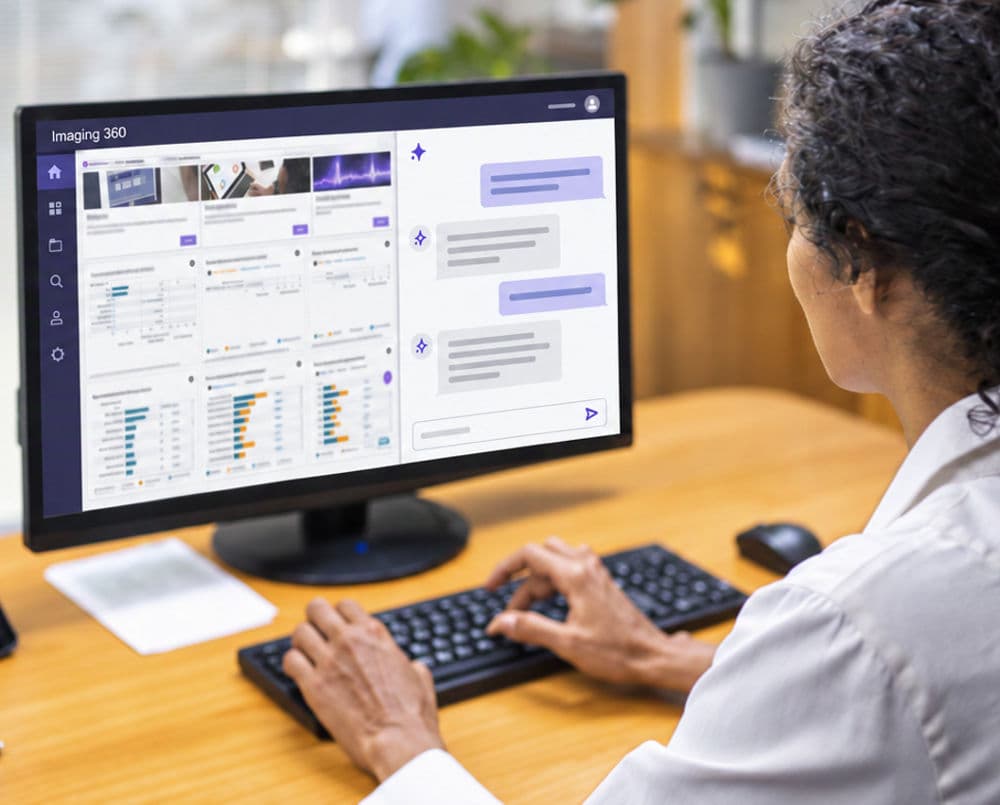
Radiologists face an invisible productivity tax: an average of 1.3 hours each day spent selecting and managing exam protocols rather than interpreting images. GE HealthCare is betting that AI can reclaim that time with two new operational tools announced at the Radiological Society of North America (RSNA) 2026 Annual Meeting in Chicago.
The company unveiled enhancements to its Imaging 360 platform that address protocol management from two angles—a natural-language AI assistant for protocol analytics and an AI-assisted protocoling engine for CT and MR exams. Both tools target the administrative burden that fragments radiologist attention across multi-site health systems while preserving human oversight at critical decision points.
Natural Language Meets Protocol Analytics
The Imaging 360 AI assistant introduces conversational query capabilities for protocol utilization and operational analytics, allowing imaging leaders, administrators, and protocol managers to interrogate their department's protocol data without technical expertise. The tool operates with read-only access and operational governance guardrails, explicitly scoped for operational analytics rather than clinical image interpretation or patient-specific diagnostics.
This approach positions the assistant as a management intelligence layer rather than a clinical decision tool, potentially sidestepping regulatory complexity while addressing a workflow pain point that has received less attention than diagnostic AI applications.
Vendor-Agnostic Protocoling Engine Enters the Workflow
The second capability embeds AI-assisted protocoling directly into existing enterprise imaging workflows and radiology information system (RIS) infrastructure. The vendor-agnostic, multi-modality decision-support application evaluates incoming exam orders and surfaces standardized protocol recommendations before patients reach the scanner.
Critically, the system requires human-in-the-loop clinician sign-off, maintaining radiologist authority over final protocol selection while reducing the cognitive load of evaluating protocol options across varying clinical scenarios. This design choice preserves medicolegal accountability while targeting the operational goal of reducing inter-site protocol variation.
The vendor-agnostic architecture represents a notable strategic positioning—GE HealthCare's protocoling engine can operate across competitor equipment, potentially embedding the company deeper into enterprise imaging operations regardless of scanner manufacturer mix.
Operational Efficiency With Clinical Guardrails
By quantifying the 1.3-hour daily protocol management burden through observational studies, GE HealthCare frames these tools as capacity-recovery mechanisms rather than purely technological innovations. Freed radiologist time could translate to faster report turnaround, expanded imaging volumes without proportional staffing increases, or reduced burnout from administrative tasks.
For patients, standardized protocoling may reduce exam variability and the need for repeat scans due to suboptimal protocols, potentially decreasing radiation exposure and contrast agent use while accelerating time to diagnosis. For health systems managing imaging operations across multiple sites, the tools offer a path to protocol standardization without replacing existing RIS infrastructure—lowering implementation barriers compared to rip-and-replace approaches.
The announcement positions GE HealthCare in the operational AI segment of radiology, targeting workflow efficiency rather than diagnostic interpretation and suggesting a potential shift from equipment-centric to workflow-centric revenue models in the enterprise imaging market.
Sources
Companies in this article

Follow Health AI Central
Keep up with health AI where you already read
On LinkedIn
The day’s strongest health AI stories in your feed, one or two each weekday.
On Google
Choose Health AI Central as a preferred source, and Google is more likely to show our reporting in Top Stories.
Reporting & accountability
How we maintain accuracy
Health AI Central separates reported facts, analysis, and public-source data. Readers can review our standards, request a correction, or consult the relevant research methodology before relying on a claim.