

Ambulance AI Slashes Heart Attack Response Time to 44 Minutes in South Korean Trial
A seven-month pilot program using AI-powered ECG interpretation in emergency vehicles enabled hospitals to prepare for cardiac patients before arrival, with one 90-year-old receiving life-saving intervention in under an hour.
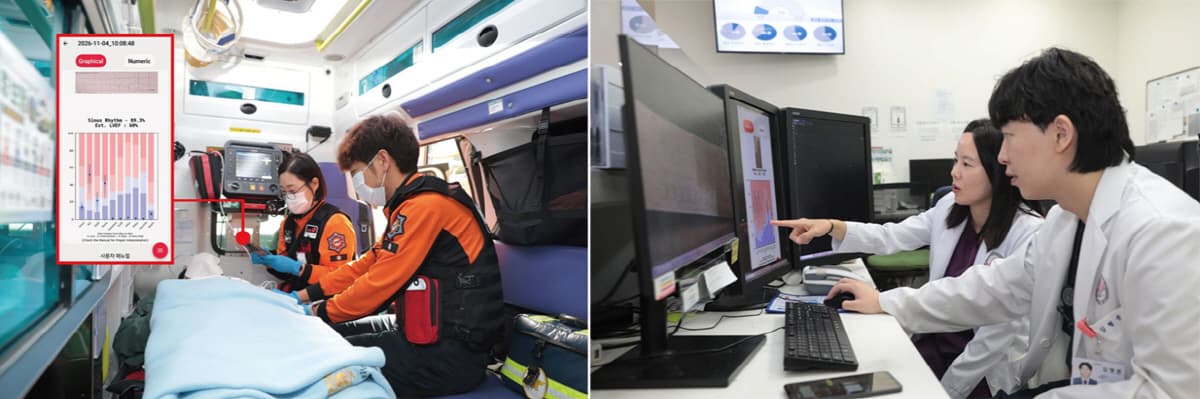
An AI-assisted electrocardiogram system deployed in South Korean ambulances has demonstrated the potential to dramatically compress treatment timelines for heart attack patients, according to results from a seven-month pilot program that analyzed nearly 900 emergency cases.
The collaboration between Hallym University Dongtan Sacred Heart Hospital and Gyeonggi-do Fire Disaster Headquarters equipped paramedics with Ministry of Food and Drug Safety-approved AI software capable of interpreting 12-lead ECGs captured at emergency scenes. Between March and September, the system processed 872 ECG readings, with 88 cases triggering advance hospital notification for suspected serious cardiovascular disease.
From Scene to Stent in Under an Hour
The clinical impact became evident in the case of a 90-year-old female patient experiencing acute myocardial infarction. After paramedics captured her ECG and the AI flagged a potential heart attack, the hospital received advance notice and mobilized its cardiology team. Professor Park Myeong-su confirmed the diagnosis six minutes after the patient's arrival and completed coronary angiography with stent placement 44 minutes post-arrival—a timeline that Professor Park Hang-a of the Emergency Medicine Department described as dramatically shortened compared to traditional workflows.
The system's workflow places AI in an assistive role: paramedics capture the ECG at the scene, the AI provides interpretation within seconds, and hospital emergency medicine staff review both the raw data and AI assessment before making final clinical decisions and preparing staff and equipment for the incoming patient.
Capturing Fleeting Cardiac Events
Beyond speed, the prehospital AI system demonstrated diagnostic value in cases where symptoms resolve before hospital arrival. A 60-year-old male patient presented a telling example: the AI-interpreted ECG captured at the scene showed ischemic changes consistent with variant angina and coronary artery stenosis, while the ECG performed after hospital arrival appeared normal. The comparison enabled clinicians to diagnose a condition that might otherwise have been missed due to the transient nature of the symptoms.
This capability addresses a longstanding gap in emergency cardiac care, where paramedics have traditionally lacked the authority or expertise to interpret ECGs independently, yet delays in contacting medical directors could cost precious minutes during time-sensitive cardiac events.
Nationwide Expansion Underway
The technology is now spreading beyond the initial pilot region, with implementations reported in Jeju, Seoul, and other areas across South Korea. The regulatory approval from the Ministry of Food and Drug Safety and the demonstrated real-world effectiveness establish a potential blueprint for similar deployments in other healthcare systems facing challenges with prehospital cardiac diagnostics.
The South Korean model emphasizes physician oversight of AI recommendations rather than autonomous decision-making, potentially offering a regulatory pathway that balances innovation with clinical accountability. For regions with limited access to interventional cardiology or extended transport times, the ability to activate hospital resources before patient arrival could prove valuable in reducing door-to-intervention times and improving outcomes in acute coronary syndromes.
Sources
Follow Health AI Central
Keep up with health AI where you already read
On LinkedIn
The day’s strongest health AI stories in your feed, one or two each weekday.
On Google
Choose Health AI Central as a preferred source, and Google is more likely to show our reporting in Top Stories.
Reporting & accountability
How we maintain accuracy
Health AI Central separates reported facts, analysis, and public-source data. Readers can review our standards, request a correction, or consult the relevant research methodology before relying on a claim.