

AI Uncovers Hidden Childhood Brain Cancer Subtypes That Could Explain Why Some Kids Survive and Others Don't
Machine learning analysis of over 1,000 medulloblastoma cases reveals four distinct molecular profiles with survival rates ranging from 50% to 95%, exposing critical gaps in current treatment protocols.
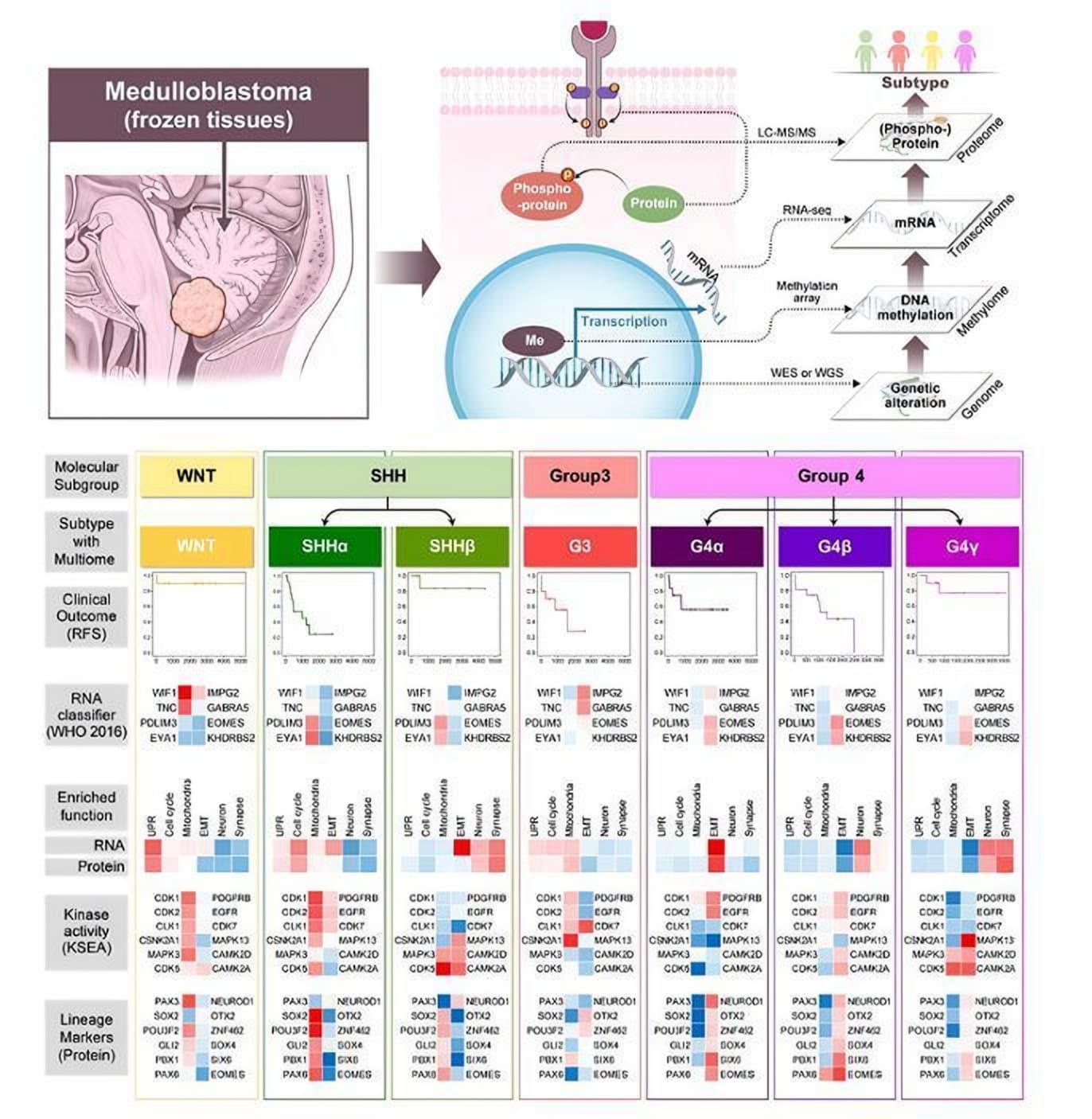
A groundbreaking study using artificial intelligence has revealed that medulloblastoma—one of the most common and aggressive brain cancers in children—comprises four distinct molecular subtypes. The discovery explains why some young patients respond dramatically to treatment while others with seemingly identical tumors do not, and challenges the adequacy of current diagnostic standards used worldwide.
The research, published in Nature Communications, analyzed 1,091 patient samples from multiple countries and identified molecular variations that the World Health Organization's current classification system fails to capture. Most significantly, the newly identified subtypes showed five-year survival rates spanning from 50% to 95%—a 45-percentage-point difference with profound implications for treatment strategies.
Why Current Classifications Fall Short
Medulloblastoma accounts for approximately 20% of all pediatric brain tumors and primarily affects children between ages three and eight. Until now, oncologists have relied heavily on histological examination—how tumor cells appear under a microscope—to guide treatment decisions. This approach groups together cancers that behave very differently at the molecular level.
Professor Cho Dong-wook of Kookmin University led the research in collaboration with Seoul National University Hospital, Samsung Medical Center, and international institutions. The team employed machine learning algorithms to identify patterns invisible to traditional diagnostic methods, revealing that tumors currently treated with similar protocols may require radically different therapeutic approaches based on their molecular characteristics.
This misclassification has real consequences: children with favorable molecular subtypes may be subjected to unnecessarily aggressive treatments with long-term side effects, while those with high-risk profiles might not receive sufficiently intensive intervention early enough.
From One-Size-Fits-All to Precision Pediatric Oncology
The identification of these four molecular subtypes creates an immediate pathway to precision medicine in pediatric neuro-oncology. Oncologists can now stratify patients into risk categories based on molecular characteristics rather than histology alone, tailoring treatment intensity to match the biological behavior of each child's specific tumor.
For children with favorable subtypes, this could mean avoiding cognitive impairment, growth delays, and secondary cancers associated with aggressive radiation and chemotherapy. For those with high-risk molecular profiles, it signals the need for intensified treatment from the outset. The molecular framework also enables selection of targeted therapies matched to subtype-specific vulnerabilities, potentially improving outcomes while reducing unnecessary toxicity.
The AI Advantage in Molecular Medicine
This research demonstrates the transformative potential of artificial intelligence in oncology diagnostics. Machine learning algorithms can detect complex molecular patterns across thousands of samples—a task impossible for human analysis alone. This computational approach represents a growing trend in precision medicine, where AI bridges vast genomic datasets and actionable clinical insights.
The implications extend beyond medulloblastoma. The methodology could be applied to other pediatric cancers where survival disparities suggest unrecognized molecular heterogeneity. For health technology companies developing AI-driven diagnostic platforms and molecular profiling tools, this study provides compelling validation of computational pathology's clinical value.
As precision medicine advances in pediatric oncology, this research marks a critical milestone: proof that AI can reveal molecular truth within tumors and translate that knowledge into better outcomes for children facing one of childhood's most feared diagnoses.
Sources
Reporting & accountability
How we maintain accuracy
Health AI Central separates reported facts, analysis, and public-source data. Readers can review our standards, request a correction, or consult the relevant research methodology before relying on a claim.