

Your Eyes May Reveal Dementia Risk Years Before Symptoms Appear, New AI Study Shows
Seoul researchers achieve breakthrough dementia prediction using routine eye photos instead of costly brain scans, potentially democratizing early detection.
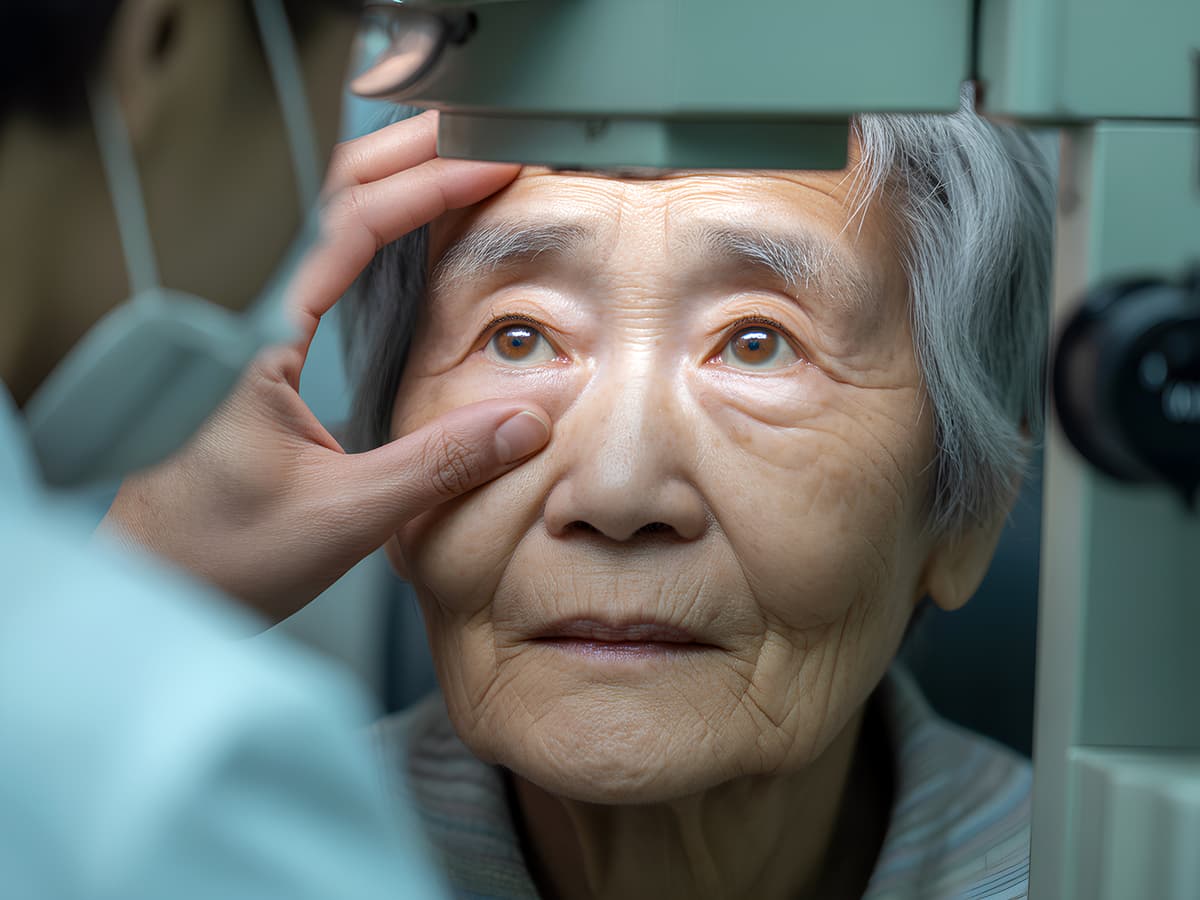
Dementia screening may soon become as simple as a routine eye exam. Researchers at Seoul National University Hospital have developed an artificial intelligence system that detects dementia risk using only retinal photographs—the same images captured during standard health checkups—achieving performance that reportedly surpasses existing clinical assessment tools without requiring expensive brain imaging.
The technology represents a potential shift in how healthcare systems identify at-risk individuals, transforming accessible eye exams into windows for neurological assessment.
AI Outperforms Traditional Risk Assessment
The AI model, developed in collaboration with health tech company Xaimed, demonstrated an AUROC of 0.750 for detecting current dementia and a C-index of 0.812 for predicting future onset, according to the research team. These metrics significantly exceeded the performance of the CAIDE score—a widely used clinical assessment tool—which achieved only 0.624 and 0.689 respectively in the same comparison.
When combined with traditional CAIDE scoring, the AI system improved prediction performance to 0.774 from 0.749, suggesting complementary value when integrated into existing clinical workflows.
The research team, led by Professor Park Sang-min from Family Medicine, research assistant professor Han Chang-ho, and doctoral researcher Kim Jae-won, trained their system on 108,008 fundus photographs from 36,322 individuals collected during health checkups between 2004 and 2016. The dataset was refined to include 2,868 images from 1,001 patients diagnosed with dementia.
Where the AI Looks: Optic Disc and Macula Hold Clues
The researchers tested 15 different AI architectures, ultimately finding that RETFound-MAE—a foundation model pretrained on millions of retinal images—delivered superior performance. Attention mapping analysis revealed the AI focused 5.72 times more intensely on the optic disc compared to surrounding retinal areas, while also prioritizing the connection region between the optic disc and macula.
These focal points suggest the AI has identified dementia-related biomarkers in specific retinal structures, though the biological mechanisms underlying these associations remain an area for further investigation. Statistical analysis confirmed that higher AI risk scores remained associated with dementia even after adjusting for age, sex, and other established risk factors, according to the researchers.
The findings were published in npj Digital Medicine in August 2026.
Implications for Accessible Screening
The technology could eliminate significant barriers to dementia screening. Brain MRI scans typically cost between $1,000 and $5,000 and require specialized neuroimaging facilities, limiting access for many populations. In contrast, fundus photography equipment is already widely deployed in routine health checkup settings, making retinal-based screening potentially available to millions without additional infrastructure investment.
For Xaimed, the collaboration with a premier academic medical center validates the commercial viability of retinal biomarker platforms in the growing dementia screening market. The company's use of foundation model architecture may create competitive advantages in a field where access to large-scale training datasets is increasingly critical.
Healthcare providers could use the system to stratify patient risk and guide early intervention strategies years before symptoms emerge, potentially improving outcomes through timely treatment initiation. The non-invasive nature and integration into existing checkup workflows may also increase screening uptake among individuals who might otherwise avoid evaluation.
Sources
Reporting & accountability
How we maintain accuracy
Health AI Central separates reported facts, analysis, and public-source data. Readers can review our standards, request a correction, or consult the relevant research methodology before relying on a claim.