

Epilepsy Patients Train Their Own AI: Penn Medicine's Breakthrough in Self-Learning Seizure Detection
A first-of-its-kind platform enables patients to improve seizure detection algorithms through smartphone feedback, bypassing the need for expert intervention and transforming passive monitoring into active collaboration.
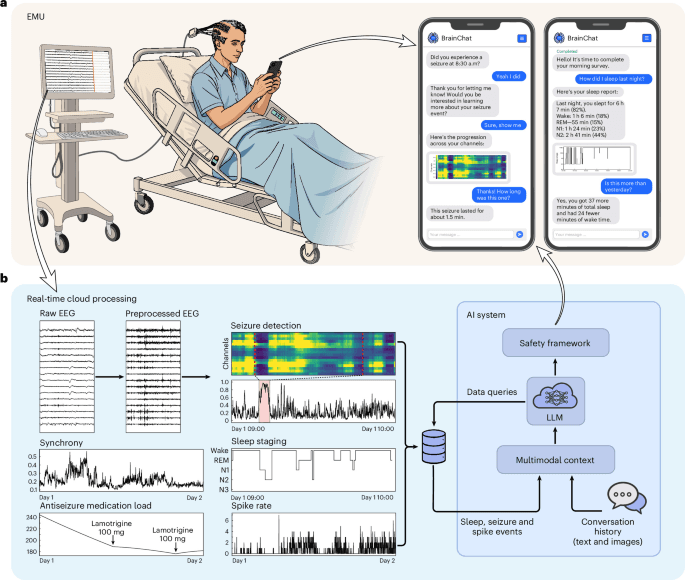
Epilepsy management is entering a new era where patients don't just wear monitoring devices—they actively teach them. Researchers at the University of Pennsylvania have developed and validated a platform that combines real-time EEG monitoring with large language model-based AI, creating a two-way conversation between implantable or wearable devices and the people who depend on them. The system, tested on 13 patients in an epilepsy monitoring unit, allows individuals to receive alerts about seizure risk, sleep patterns, and medication adherence while providing feedback that retrains seizure detection algorithms—all without requiring expert clinician input.
This innovation arrives at a critical moment for the 70 million people worldwide living with epilepsy, one-third of whom have medication-resistant seizures. Current FDA-approved epilepsy devices achieve only a median 75% seizure reduction at nine years, with approximately 30% of patients showing minimal or no improvement. The Penn Medicine platform addresses these limitations by transforming medical devices from passive monitors into interactive health partners.
How the System Works
The platform integrates three core components: real-time EEG data extraction software, HIPAA-compliant cloud analytics, and a smartphone app powered by GPT-4o-mini. During the study, patients exchanged 1,307 messages with the system over a median participation period of 4.87 days. The system initiated 68.9% of interactions, while patients initiated 31.1%, demonstrating genuine bidirectional engagement.
The AI processes multiple biomarkers including sleep quality (using the YASA algorithm), medication load, cognition, and seizure probability through models like SPaRCNet, WaveNet, and ONCET. Patients received surveys three times daily with 10–15 questions about mood, anxiety, sleep, energy, and overall well-being. Post-hoc analysis revealed that EEG phase synchrony inversely correlated with medication load (coefficient = −0.315, 95% CI −0.337 to −0.293), demonstrating the platform's ability to capture clinically meaningful relationships.
Patient Feedback Improves Algorithm Performance
The study's most striking finding emerged from pseudoprospective simulation: seizure detection algorithms improved precision based solely on patient feedback, without requiring expert intervention. This capability addresses a major bottleneck in adaptive medical AI deployment—the need for continuous expert annotation to retrain clinical algorithms. By enabling patients to validate or correct automated seizure detections through simple smartphone interactions, the system creates a self-improving feedback loop that could scale across large patient populations.
The 13-patient cohort included 11 with scalp EEG and two with intracranial EEG monitoring. The platform also tracked interictal spikes using SpikeNet and provided patients with actionable insights about seizure risk factors such as sleep deprivation and missed medications, addressing priorities identified in epilepsy patient literature.
Implications for Neurotech and Chronic Disease Management
For healthcare providers, this platform represents a shift from passive monitoring to active patient engagement, potentially reducing clinical workload through automated data annotation while improving seizure detection accuracy. The ability to monitor medication adherence, sleep quality, and seizure precipitants in real time enables more proactive intervention strategies.
For health tech companies, Penn Medicine has demonstrated a scalable, HIPAA-compliant architecture for integrating large language models with medical device data streams—a blueprint that could extend beyond epilepsy to other chronic conditions. The validation that patient feedback alone can retrain clinical algorithms suggests a pathway for FDA-regulated devices to incorporate continuous learning capabilities, creating competitive pressure on existing epilepsy device manufacturers like NeuroPace, LivaNova, and Medtronic to adopt similar patient engagement features.
The research team, led by William K. S. Ojemann and colleagues from Penn Medicine's Center for Neuroengineering, Department of Neurology, and Perelman School of Medicine, has positioned the institution at the forefront of human-AI collaborative care while establishing both technical and regulatory precedents for the next generation of adaptive neurotech.
Sources
Companies in this article

Reporting & accountability
How we maintain accuracy
Health AI Central separates reported facts, analysis, and public-source data. Readers can review our standards, request a correction, or consult the relevant research methodology before relying on a claim.