

Why Hospitals Miss Three-Quarters of Delirium Cases—and How AI Could Change That
A $3.4 million NIH-funded project aims to deploy machine learning and wearables to catch a condition affecting up to 40% of hospitalized seniors that clinicians routinely overlook.
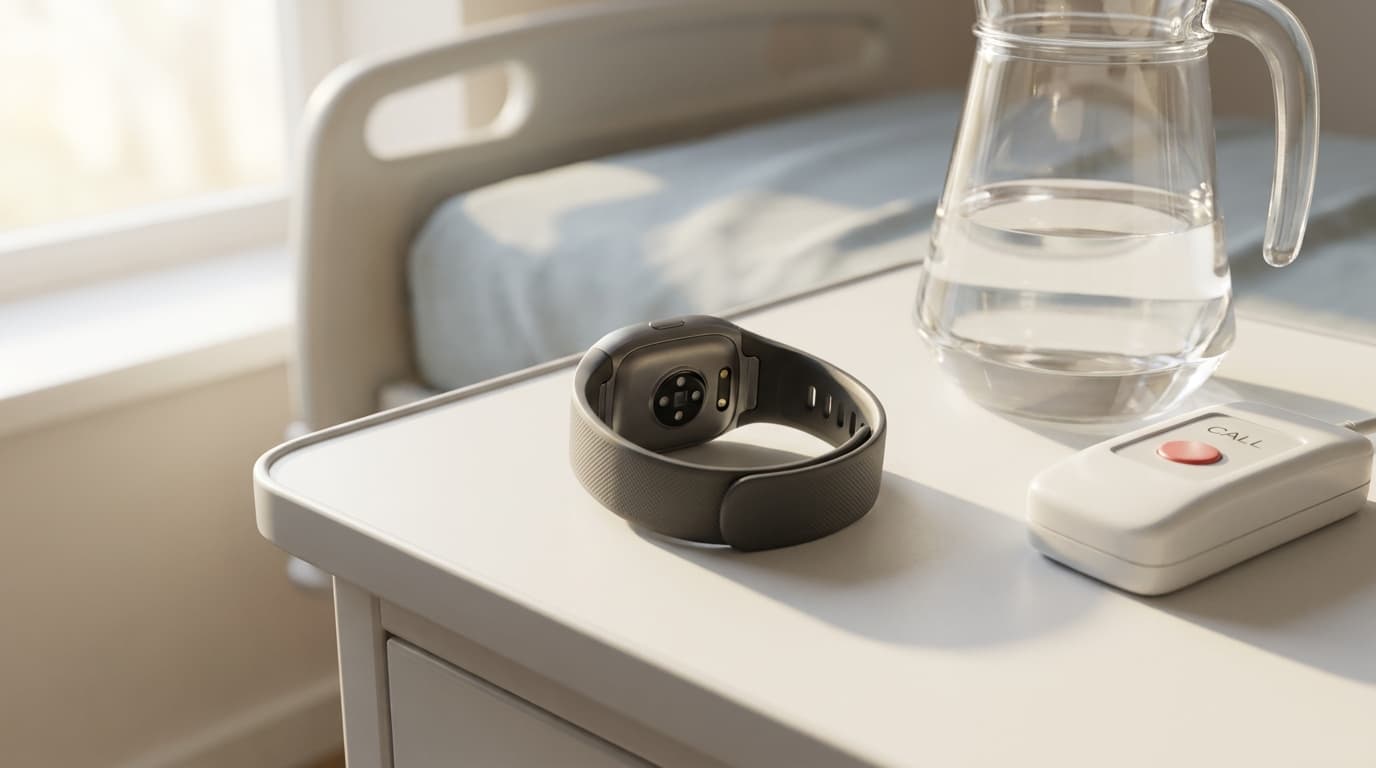
Illustration: AI-generated
Delirium in hospitalized older adults is both common and dangerous—yet clinicians miss it more than 75% of the time, even when screening programs are in place. Now, researchers at the Feinstein Institutes for Medical Research have secured a $3.4 million grant from the National Institutes of Health to develop AI-powered tools designed to detect and prevent this frequently overlooked condition before it leads to falls, cognitive decline, or worse.
The project will combine machine learning models trained on electronic health record (EHR) data with continuous monitoring from wearable devices to identify delirium in emergency departments and predict its onset during hospital stays. Led by Dr. Liron Sinvani, Dr. Alex Makhnevich, and Dr. Theodoros P. Zanos, the initiative addresses a critical gap in geriatric care: up to 40% of admitted patients may develop delirium, a condition linked to increased risk of Alzheimer's disease and related dementias.
A Diagnostic Blind Spot with Serious Consequences
Delirium—characterized by acute confusion, disorientation, and fluctuating awareness—poses significant risks for hospitalized seniors. Despite its prevalence, the condition remains underdiagnosed, contributing to preventable complications including falls, prolonged hospital stays, and long-term cognitive impairment. The research team notes that delirium is a significant risk factor for progression to Alzheimer's disease, making early detection particularly urgent for older adults.
The Feinstein Institutes project will leverage what it describes as the largest in-hospital wearable dataset in the United States, assembled by Northwell Health's Division of Health AI with support from Scott and Debbie Rechler. This dataset will enable the development of predictive models tailored to diverse patient populations and real-world clinical workflows in both emergency and inpatient settings.
Building on Proven Predictive Technology
The research builds on earlier work by Dr. Zanos, whose team published a 2023 study in Nature Communications demonstrating that AI-powered wearables could predict patient deterioration up to 17 hours in advance. That foundation positions the current project to extend predictive capabilities specifically to delirium, a condition requiring different clinical markers and intervention strategies.
Dr. Sinvani, a professor at the Institute of Health System Science, and Dr. Makhnevich, an associate professor in the Department of Medicine at the Zucker School of Medicine, co-direct the SinMak Lab for Aging Research, which will lead the clinical validation efforts. Dr. Zanos, a professor in the Division of Health AI and Institute of Bioelectronic Medicine, will oversee the machine learning development.
Implications for Clinical Practice
For healthcare providers, the AI tool promises to reduce clinician burden while improving patient safety and outcomes. Early detection could enable timely interventions that prevent delirium-related complications, shorten hospital stays, and reduce the risk of long-term cognitive decline in older patients.
For the health tech sector, the project offers a model for integrating EHR data with continuous wearable monitoring in acute care settings—an approach that could extend to other high-stakes, frequently missed diagnoses. The emphasis on workflow integration and validation across diverse populations addresses key barriers to clinical AI adoption.
The Feinstein Institutes for Medical Research, part of Northwell Health in Manhasset, New York, encompasses more than 50 research labs, 3,000 clinical research studies, and 5,000 researchers and staff.
Sources
Google Search
Follow Health AI Central on Google
Choose Health AI Central as a preferred source, and Google is more likely to show our reporting in Top Stories.
Reporting & accountability
How we maintain accuracy
Health AI Central separates reported facts, analysis, and public-source data. Readers can review our standards, request a correction, or consult the relevant research methodology before relying on a claim.