

Imaging AI Tackles Radiomics' Reproducibility Crisis to Predict Breast Cancer Treatment Response
A multicenter study of 686 patients demonstrates that stability-focused machine learning can identify which breast cancer patients will respond to chemotherapy before treatment begins, addressing a critical weakness in medical imaging AI.
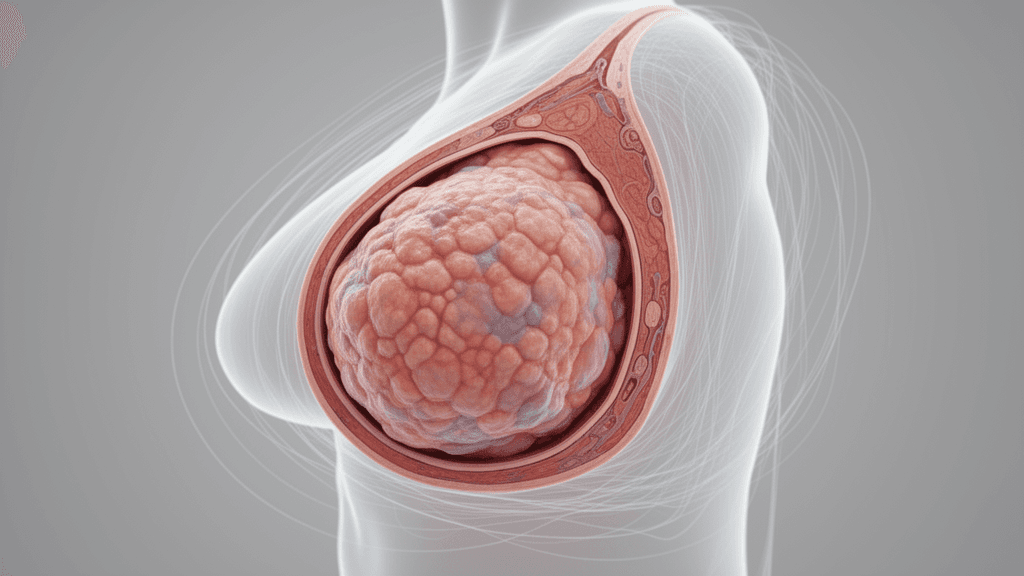
Predicting which breast cancer patients will benefit from chemotherapy before they endure months of potentially ineffective treatment has long been a clinical goal. Now, a multicenter study published in Breast Cancer Research suggests that a novel approach to analyzing MRI scans—one that prioritizes reproducible imaging features over sheer predictive power—may finally deliver on that promise while solving radiomics' longstanding stability problem.
The retrospective analysis of 686 patients with hormone receptor-positive, HER2-negative breast cancer demonstrated that stable radiomic features combined with extreme gradient boosting machine learning achieved high accuracy in predicting neoadjuvant chemotherapy response, with area under the curve (AUC) values of 0.855 in testing and 0.783 in external validation, according to the study by Sun and colleagues.
A New Framework for Radiomic Stability
The research team compared five different feature selection strategies, including conventional methods like LASSO regression and recursive feature elimination. Their novel stability-driven approach selected only features that appeared in at least 50% of data partitions across at least two conventional methods—essentially filtering for imaging biomarkers robust enough to survive multiple analytical perspectives.
This stability-first methodology addresses what the researchers frame as radiomics' "reproducibility challenge": the tendency of imaging AI models to identify features that perform well in development datasets but fail to generalize across different scanners, protocols, and patient populations. The best-performing model combined these stable features with XGBoost machine learning, achieving a mean AUC of 0.902 in training cohorts.
The predictive features originated primarily from intratumoral subregions and multiregional spatial interactions captured on pre-treatment dynamic contrast-enhanced MRI scans. Response was assessed using the Residual Cancer Burden index and Miller-Payne grading system across four cohorts spanning imaging-development, external imaging-validation, imaging-transcriptomic, and independent transcriptomic datasets.
Linking Images to Molecular Mechanisms
The study went beyond prediction to explore biological underpinnings through radiogenomic correlation analyses. Non-responders aligned with aggressive SNF3/SNF4 molecular subtypes characterized by activated cell-cycle, receptor tyrosine kinase, and PI3K-Akt/mTOR pathways, while responders corresponded to SNF1/SNF2 subtypes showing immune-active profiles, according to the research.
This molecular correlation suggests the radiomic features capture genuine biological differences rather than imaging artifacts—a critical validation step for any AI model intended for clinical deployment.
Clinical and Commercial Implications
For healthcare providers treating HR+/HER2− breast cancer—a common subtype—the validated model offers a non-invasive tool to stratify patients by chemotherapy response likelihood before initiating neoadjuvant treatment. This could enable personalized decisions about treatment escalation or de-escalation, potentially sparing predicted non-responders from ineffective chemotherapy toxicity.
For health AI companies developing radiomics platforms, the stability-driven feature selection methodology provides a technical framework that addresses reproducibility concerns that have hindered clinical translation. The approach prioritizes features robust across data partitions and selection methods, potentially withstanding real-world variability in imaging protocols.
However, the researchers' findings require prospective validation before clinical implementation. The retrospective design and focus on a single breast cancer subtype mean the model's performance in real-world treatment decision-making remains to be demonstrated.
The study positions stability-focused radiomics as a potential blueprint for moving breast cancer imaging AI from research to bedside—if the approach can prove itself in prospective trials where treatment decisions actually hinge on the predictions.
Sources
Google Search
Follow Health AI Central on Google
Choose Health AI Central as a preferred source, and Google is more likely to show our reporting in Top Stories.
Reporting & accountability
How we maintain accuracy
Health AI Central separates reported facts, analysis, and public-source data. Readers can review our standards, request a correction, or consult the relevant research methodology before relying on a claim.