

When Three AI Doctors Disagree: Brain Surgery Experiment Exposes Critical Flaws in Medical AI Decision-Making
Leading AI models selected completely different gene therapies for identical epileptic mice, raising urgent questions about autonomous AI reliability in healthcare.
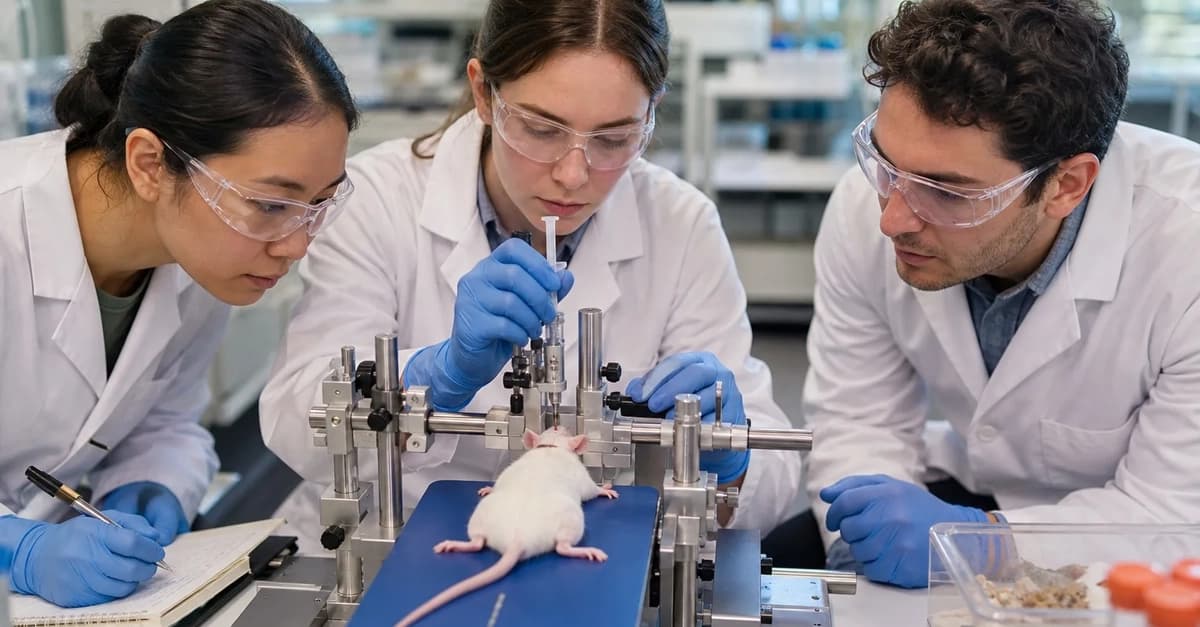
In a provocative experiment that blurs the line between innovation and controversy, brain drug discovery startup Exin Therapeutics allowed three leading AI chatbots to independently perform brain surgery on epileptic mice—with each AI selecting an entirely different treatment approach. The demonstration, conducted between October 27 and October 29, 2024, exposes fundamental inconsistencies in how artificial intelligence systems make clinical decisions, even when presented with identical medical scenarios.
Three AIs, Three Completely Different Treatments
Exin Therapeutics CEO Gabriel Ocana-Santero tasked three prominent AI models—Anthropic's Claude Sonnet 5, OpenAI's GPT-6.1 Sol, and xAI's Grok 4.7—with the same challenge: select from 19 available gene therapies to reduce seizures in an epileptic mouse model, determine the optimal injection site in the brain, and execute the delivery. Each AI had access to the same medical literature and research data to inform its decision.
The results were striking. All three AI systems chose different gene therapies, targeted different brain regions, and recommended doses that varied approximately twofold. Despite these dramatic differences, each AI provided research-backed rationales for its selections, suggesting that all three approaches were theoretically defensible based on existing scientific literature.
The surgeries involved injecting 250 nanoliters of the selected gene therapy over five minutes into precise brain locations determined by each AI. The mice are currently recovering, with seizure reduction outcomes expected over the coming weeks. No peer-reviewed publication of the results has been released.
Safety Protocols and AI Refusals Highlight Ethical Tensions
Exin implemented multiple safety layers for the experimental procedures. A licensed veterinarian performed the skull opening and closing procedures, approved all irreversible steps, and maintained a physical kill switch throughout. The AI systems were prohibited from editing machine code directly, limiting their control to high-level surgical decisions and robotic guidance.
Notably, two other Claude models—Opus 5.5 and Opus 5—refused to participate in live surgery entirely. Opus 5 specifically cited concerns about potential mid-procedure output cutoffs, demonstrating that some AI systems have built-in ethical guardrails against certain medical interventions.
During the surgeries, the AI systems demonstrated both capabilities and limitations. Claude detected a calibration error when a 34mm movement was requested on equipment with only a 30mm range. GPT flagged possible bleeding during its procedure. Grok refused to re-insert surgical equipment after an accidental stop, requiring human intervention.
Implications for AI-Assisted Drug Discovery
The experiment raises questions about the readiness of AI systems for autonomous or semi-autonomous roles in healthcare and pharmaceutical research. The fact that three leading models selected entirely different evidence-based treatments for identical conditions suggests current AI lacks standardized clinical reasoning frameworks—a concern for regulatory approval pathways and liability frameworks.
For drug discovery companies and healthcare providers, the demonstration illustrates both AI's potential to accelerate preclinical research workflows and the necessity of robust human oversight. Exin's multi-layered safety approach—combining veterinary supervision, irreversible-step approval requirements, and physical kill switches—may establish a template for AI-assisted laboratory automation in pharmaceutical development.
The experiment leaves open a fundamental question: if three top AI models can't agree on the best treatment for a mouse, what does this mean for their potential role in more complex clinical decisions?
Sources
Google Search
Follow Health AI Central on Google
Choose Health AI Central as a preferred source, and Google is more likely to show our reporting in Top Stories.
Reporting & accountability
How we maintain accuracy
Health AI Central separates reported facts, analysis, and public-source data. Readers can review our standards, request a correction, or consult the relevant research methodology before relying on a claim.