

UAE Emerges as Testing Ground for Hospital AI as Emirates Deploy Predictive Systems Across Emergency, Cancer, and Maternity Care
From AI mammogram readers to swallowable diagnostic capsules, the United Arab Emirates is rolling out artificial intelligence across its healthcare system in Abu Dhabi, Dubai, and Fujairah.
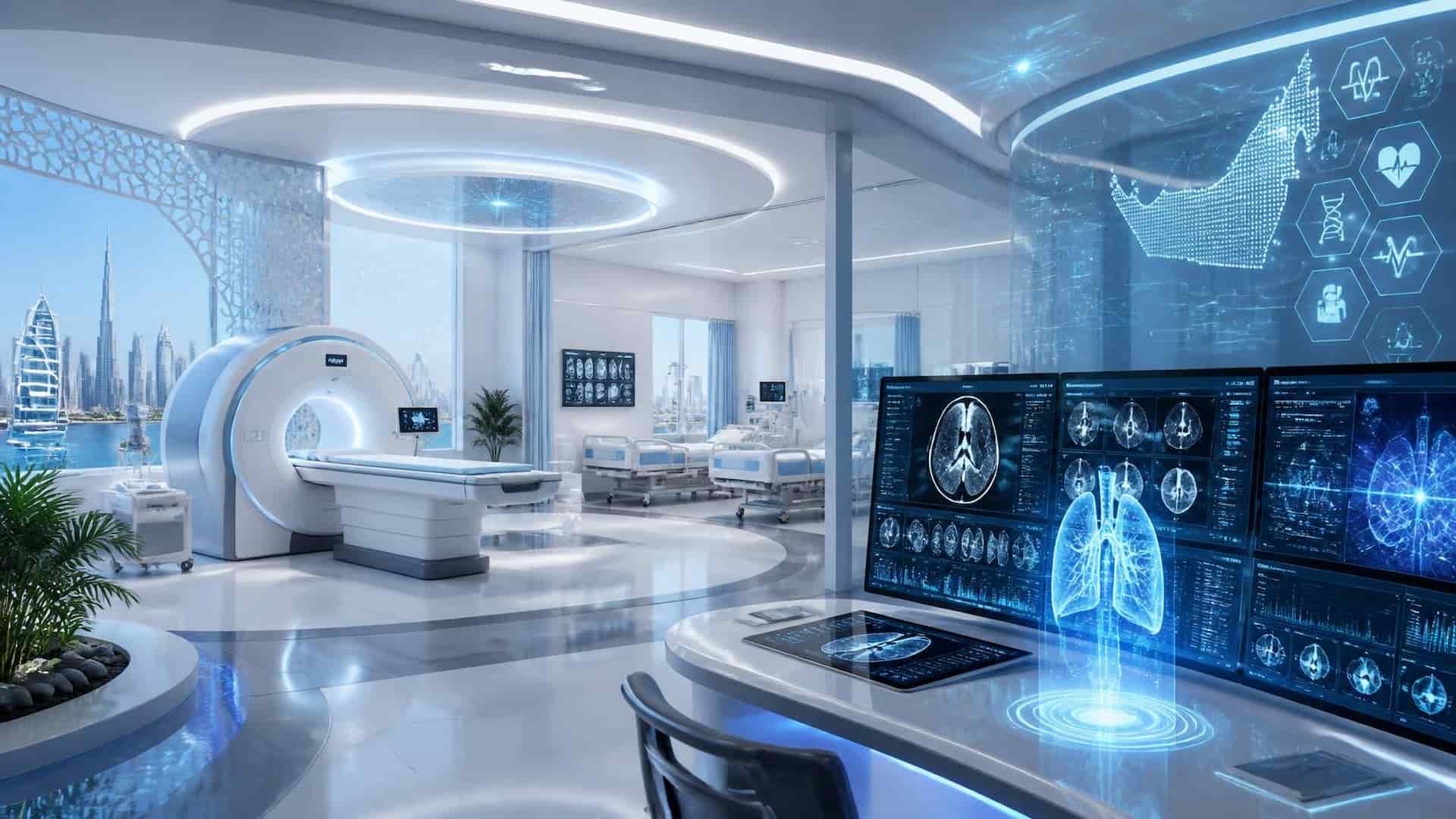
The United Arab Emirates is rapidly transforming into a live laboratory for healthcare artificial intelligence, deploying predictive algorithms and remote monitoring systems across multiple emirates in applications ranging from cancer detection to emergency triage. The expansion spans Abu Dhabi, Dubai, and Fujairah, with implementations touching nearly every stage of the care continuum—from screening and diagnosis through post-operative monitoring.
Abu Dhabi Leads with Multi-Specialty AI Deployment
Abu Dhabi's healthcare facilities are implementing some of the most diverse AI applications in the region. AI-powered mammogram analysis systems are now screening for breast tissue changes and cancer detection, while smart hospital wards deploy contactless sensors that continuously monitor patients' fall risk without requiring wearable devices.
The emirate has also introduced sepsis early warning algorithms designed to detect medical emergencies before they become critical, alongside wireless fetal monitoring systems that track pregnancy complications. For neonatal care, smart sensors monitor premature infants, and physicians are using non-invasive focused ultrasound treatment for liver tumors—a departure from traditional surgical approaches.
Dubai Focuses on Emergency Care and Pediatric Neurology
Dubai's AI healthcare strategy emphasizes acute care settings and specialized pediatric applications. Wireless patient monitoring systems have been deployed in Accident and Emergency departments, paired with digital triage tools designed to identify serious cases and reduce wait times for critical patients.
In pediatric medicine, Dubai facilities are using brain-monitoring systems coupled with predictive algorithms that anticipate epileptic seizures and convulsions, potentially allowing clinical teams to intervene before episodes occur.
Fujairah Adopts Capsule Diagnostics and Surgical Monitoring
Fujairah's implementations center on gastrointestinal diagnostics and post-operative care. The emirate has introduced capsule-based diagnostic systems—swallowable imaging devices that capture thousands of images as they travel through the digestive tract, offering a less invasive alternative to conventional endoscopy.
Healthcare facilities in Fujairah are also deploying post-operative complication monitoring systems designed to track surgical patients during recovery and flag potential issues before they require emergency intervention.
Remote Care Infrastructure Extends Specialist Access
Across the UAE, connected diagnostic equipment in remote areas is transmitting real-time audio and video to specialists in major hospitals, enabling remote consultations and extending specialist care beyond urban centers. This infrastructure aims to reduce geographic barriers to advanced medical expertise.
The comprehensive deployment represents a government-backed digital health transformation that positions the UAE as a high-value market for AI diagnostic tools, remote monitoring platforms, and predictive analytics systems. For healthcare providers, the multi-specialty rollout creates operational efficiency through earlier intervention and reduced diagnostic delays, though success depends on clinical validation, workflow integration, and equitable access across all emirates.
Sources
Reporting & accountability
How we maintain accuracy
Health AI Central separates reported facts, analysis, and public-source data. Readers can review our standards, request a correction, or consult the relevant research methodology before relying on a claim.