

The Stethoscope Gets a Software Subscription: Eko Health's FDA-Cleared Device Turns a 200-Year-Old Tool Into an AI Revenue Engine
Eko Health's CORE 300 combines analog and digital listening modes in a single $199 device, backed by a subscription model that could redefine how clinical AI reaches the point of care.
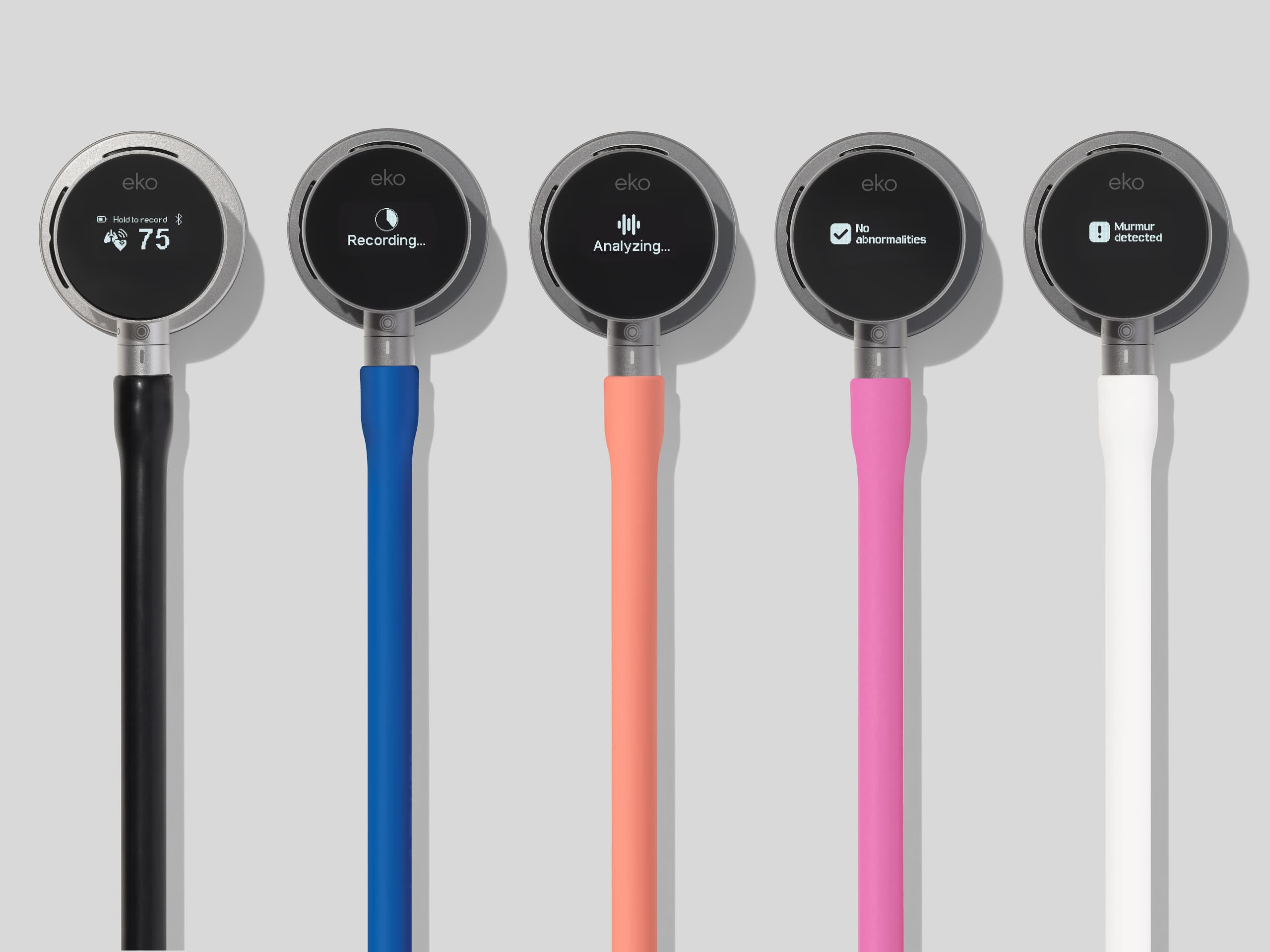
Eko Health has secured FDA 510(k) clearance for the CORE 300, a dual-mode stethoscope that allows clinicians to switch between traditional acoustic listening and AI-powered digital auscultation with a mechanical twist of the chestpiece. Priced at $199 with an annual software subscription of $119.99, the device represents a strategic pivot in clinical AI economics—transforming a centuries-old diagnostic instrument into a platform for recurring software revenue while scaling to an installed base that already exceeds 750,000 devices.
A Hardware Design That Eliminates the Analog-Digital Trade-Off
The CORE 300's defining feature is its ability to toggle between passive acoustic mode and digital amplification without requiring clinicians to switch devices or alter their examination workflow. The stethoscope offers up to 35x audio amplification with active noise cancellation, addressing a persistent challenge in high-noise clinical environments where traditional stethoscopes often fail to capture subtle cardiac or pulmonary sounds.
The device includes an integrated monochrome display that shows real-time phonocardiogram-calculated heart rates during auscultation, along with selectable digital bandpass filters for cardiac, pulmonary, or all-purpose assessments. Weighing 5.3 ounces and featuring interchangeable adult (45 mm) and pediatric (36 mm) diaphragms, the CORE 300 is designed for use across emergency departments, pediatric units, urgent care facilities, and rural skilled nursing environments. With a 120-hour continuous battery life and Bluetooth Low Energy connectivity, the device maintains reliability across extended shifts while enabling USB-C charging.
The Subscription Model That Converts Hardware Into a Platform
Eko's pricing structure—$199 for hardware and $119.99 annually for the Eko+ software subscription—reflects a deliberate strategy to lower capital barriers while capturing long-term value through AI software access. This model ties recurring costs to AI-powered decision support rather than hardware replacement cycles, creating predictable revenue streams for Eko while offering health systems a more accessible entry point than traditional capital equipment purchases.
With 750,000+ devices already delivered, Eko is building network effects that could establish proprietary standards for digital cardiac data capture and AI training datasets. The company has announced plans for international expansion, with regulatory filings underway in Canada, the United Kingdom, European Union markets, and across Asia-Pacific and Latin America regions.
Implications for Clinical AI at the Point of Care
The CORE 300 demonstrates a viable business model for point-of-care AI that bypasses the need for EHR integration or hospital IT infrastructure—a persistent barrier for many digital health solutions. By embedding AI capabilities directly into a device that clinicians already use daily, Eko sidesteps workflow disruption while creating a direct channel for software updates and feature expansion.
Connor Landgraf, Co-founder and CEO of Eko Health, positions the device as addressing critical workflow challenges by maintaining familiar examination patterns while adding AI-powered decision support. The passive acoustic fallback mode ensures functionality even when digital features are unavailable, a design choice that acknowledges the reliability requirements of resource-limited settings.
For competitors in the cardiac AI space, the CORE 300 sets a new benchmark—combining hardware accessibility, clinical workflow integration, and subscription economics at scale. The device's FDA clearance for both adult and pediatric populations broadens its addressable market while the international regulatory pathway provides a template for scaling clinical AI hardware globally.
Sources
Companies in this article

Reporting & accountability
How we maintain accuracy
Health AI Central separates reported facts, analysis, and public-source data. Readers can review our standards, request a correction, or consult the relevant research methodology before relying on a claim.