

How a 100-Patent Milestone Signals a New Era for AI-Powered Ultrasound at the Point of Care
Rivanna Medical's expanding intellectual property portfolio protects an AI platform that enables non-physicians to capture diagnostic-quality fracture images, with clinical studies showing performance on par with board-certified specialists.
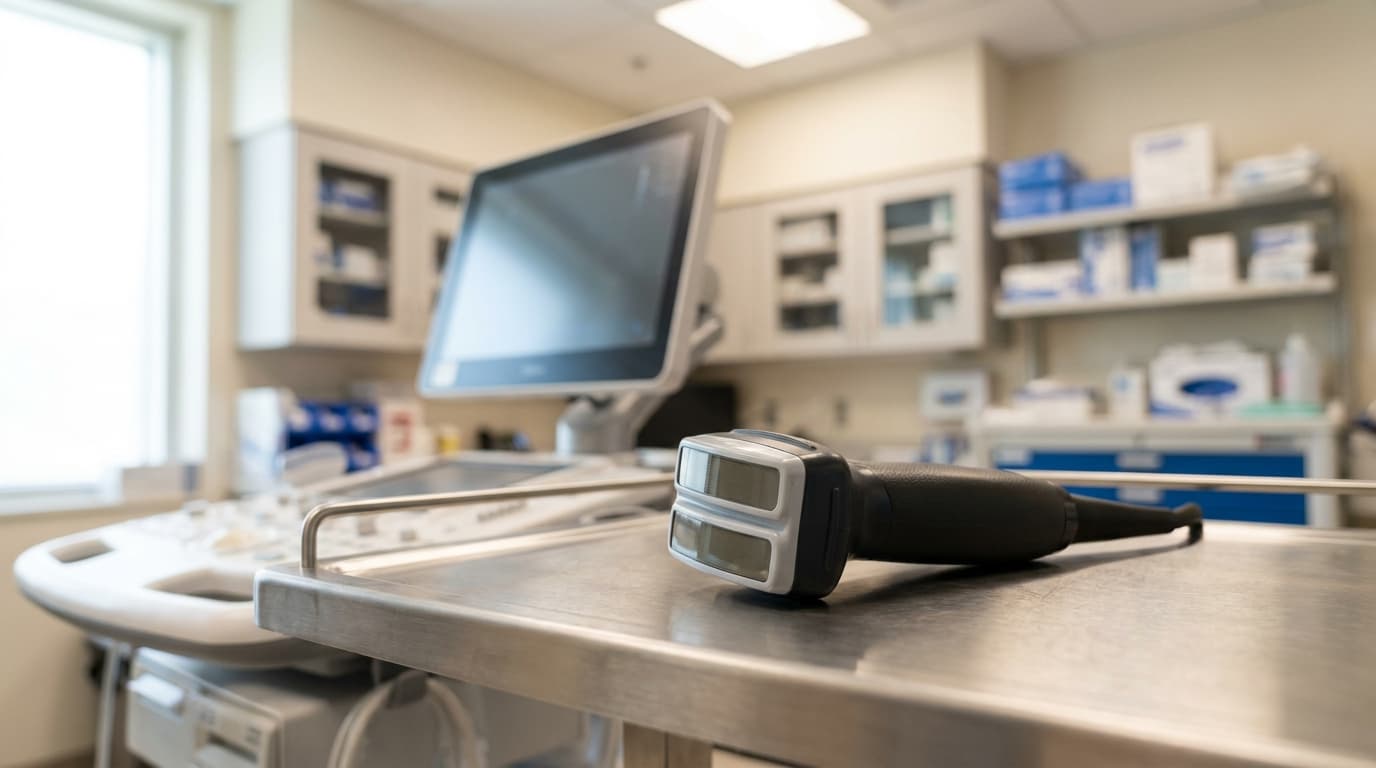
Illustration: AI-generated
Rivanna Medical has reached a significant intellectual property milestone, announcing its 100th patent filing as part of a vertically integrated AI ultrasound platform strategy. The company's latest patent application describes an AI-powered pathology detection pipeline featuring its BoneEnhance algorithm for automated fracture identification, designed to work across musculoskeletal, cardiac, lung, and obstetric imaging applications. With two FDA-cleared product lines already on the market and clinical validation expanding rapidly across academic medical centers, the announcement underscores how comprehensive IP protection is becoming central to competitive positioning in medical imaging AI.
Platform Architecture Spans Hardware, Algorithms, and Clinical Workflows
Rivanna's patent estate now encompasses more than 100 active issued and pending patents across over 20 patent families, with coverage in the United States, Europe, Japan, and China. The portfolio is growing approximately 30% year-over-year and protects not just software algorithms but also proprietary hardware designs and clinical workflow innovations. The 100th filing—U.S. patent application #64/080,862—details a computer-aided detection (CADe/x) system for automated pathology identification from volumetric ultrasound imaging.
Key protected technologies include the BoneEnhance anatomy segmentation algorithm, SpineNav-AI for automated spine recognition, SafeTrack instrument tracking, and a Dual-Array probe design. The company currently has two FDA-cleared product lines: Accuro 3S for needle and catheter placement guidance, and Accuro XV for musculoskeletal imaging. Development has been supported by the U.S. Department of Health and Human Services, ASPR, and BARDA under contract 75A50121C00035.
Clinical Validation Shows Non-Physicians Match Specialist Performance
A multi-site study published in the Journal of Emergency Medicine (Thom et al., 2026) demonstrated that non-physician operators using Rivanna's platform acquired extremity ultrasound images with quality statistically indistinguishable from board-certified emergency physicians. Mean image quality scores were 3.6 for non-physicians versus 3.7 for physicians (p = 0.24), with more than 90% of scans rated adequate for diagnostic interpretation.
The clinical study network expanded from 2 to 8 academic medical centers in four months, with 10 systems deployed and over 1,800 patients enrolled. Named participating institutions include UVA Health and UT Southwestern Medical Center. This rapid expansion suggests strong institutional interest in point-of-care ultrasound solutions that can be operated by non-specialist personnel.
Implications for Emergency and Austere Care Settings
The ability to enable non-physician operators to capture diagnostic-quality musculoskeletal images addresses critical workforce constraints in emergency departments and point-of-care settings. Automated fracture detection at the point of care could accelerate triage decisions without requiring ionizing radiation exposure—particularly relevant for pediatric populations and mass casualty scenarios where rapid screening is essential.
For the broader health technology sector, Rivanna's approach illustrates a capital-efficient development model where foundational platform investments support multiple clinical applications and regulatory clearances rather than single-purpose solutions. According to Will Mauldin, PhD, Co-founder and CEO, the vertically integrated IP strategy protects hardware, AI algorithms, and clinical workflows simultaneously, creating what the company views as a defensible competitive position in medical imaging AI.
Sources
Companies in this article

Reporting & accountability
How we maintain accuracy
Health AI Central separates reported facts, analysis, and public-source data. Readers can review our standards, request a correction, or consult the relevant research methodology before relying on a claim.