

Swedish Researchers Unveil AI That Screens Millions for Hip Fracture Risk a Decade in Advance
FRACTURE-ML machine learning tool maintained 81% sensitivity across 10 years in validation study of 3.5 million patients, offering population-scale alternative to specialist-dependent screening.
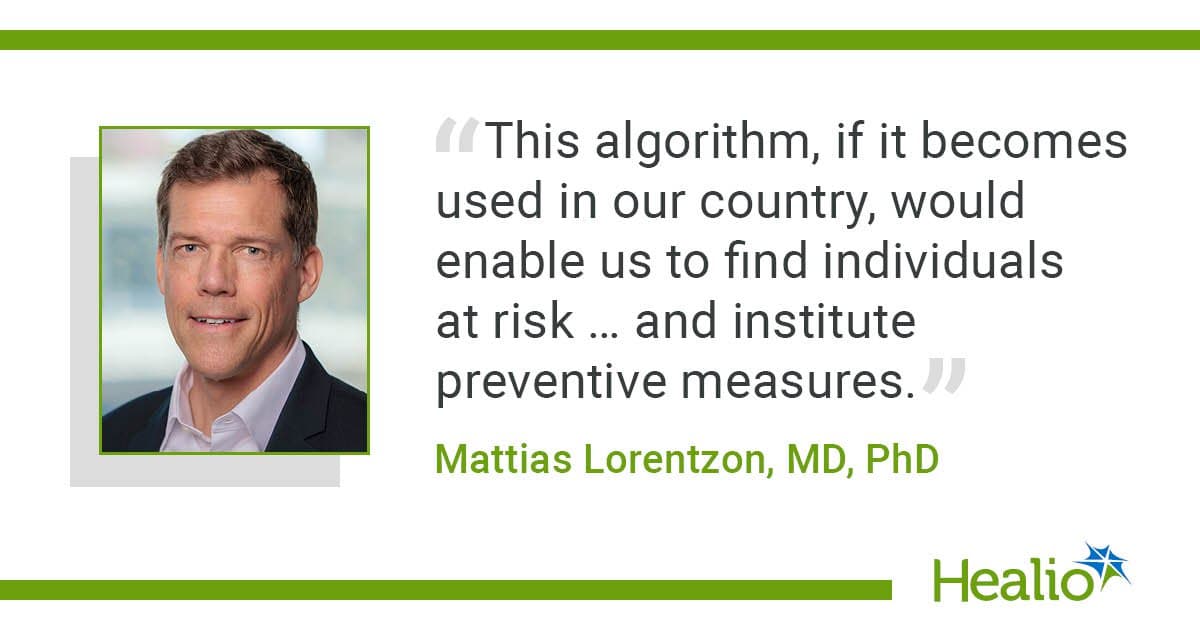
A new machine learning algorithm developed at the University of Gothenburg has demonstrated the ability to predict hip fracture risk across entire populations up to 10 years in advance, potentially transforming how healthcare systems identify at-risk individuals before they require specialist evaluation or bone density testing.
The clinical decision support tool, called FRACTURE-ML, maintained consistent accuracy when tested on more than 3.5 million Swedish patients aged 50 and older, according to research published in PLoS Medicine. The algorithm achieved sensitivity ranging from 0.81 to 0.83 and specificity from 0.71 to 0.81 across the full decade of follow-up, suggesting it could serve as an efficient first-line screening mechanism.
Population-Scale Validation Demonstrates Sustained Performance
Researchers divided a cohort of 3,542,647 patients from Swedish national registers (2011-2013) into discovery, development, and holdout groups to validate the tool's predictive capabilities. The study analyzed 139,980 potential predictors for hip fractures and followed patients for a mean duration of 9.04 years.
During the follow-up period, 142,327 hip fractures occurred among the cohort, while 754,051 patients (21.3%) died. The algorithm maintained performance metrics at one year of sensitivity 0.83 and specificity 0.81, declining only slightly to sensitivity 0.81 and specificity 0.71 at the 10-year mark.
Lead author Kristian F. Axelsson, MSc, MD, PhD, a postdoctoral researcher in the Department of Internal Medicine and Clinical Nutrition at the University of Gothenburg, developed the tool alongside Mattias Lorentzon, MD, PhD, professor of geriatric medicine at the university and chief physician at Sahlgrenska University Hospital's osteoporosis clinic.
The researchers employed three machine learning approaches—Cox regression, DeepSurv, and XGBoost algorithms—and excluded patients who had taken osteoporosis medication within the previous two years. Key risk factors identified included older age, female sex, higher medication burden, and greater comorbidities.
Implications for Healthcare Resource Allocation
The tool's sustained accuracy over a decade suggests potential for long-term risk stratification without requiring repeated bone density measurements for all patients. This could reduce dependence on specialist availability for initial fracture risk identification, enabling earlier intervention and more efficient allocation of healthcare resources.
FRACTURE-ML positions artificial intelligence as a triage mechanism rather than a treatment decision-maker, maintaining the physician-patient relationship while potentially improving access to preventive care. For health systems, the model demonstrates how registry-based data can power population-scale screening tools that integrate with existing infrastructure.
Challenges and Opportunities Ahead
The algorithm's reliance on comprehensive national registry data highlights both the promise and limitations of such approaches. While Sweden's integrated health data systems enabled this validation study, implementation in healthcare systems with fragmented data infrastructure may face significant barriers.
For patients, population-level screening could identify high-risk individuals earlier in the disease trajectory, potentially preventing debilitating hip fractures through timely preventive measures. The research suggests AI-enabled population health management in osteoporosis care may offer a scalable path forward as healthcare systems seek to balance algorithmic efficiency with clinical judgment in fracture prevention.
Sources
Follow Health AI Central
Keep up with health AI where you already read
On LinkedIn
The day’s strongest health AI stories in your feed, one or two each weekday.
On Google
Choose Health AI Central as a preferred source, and Google is more likely to show our reporting in Top Stories.
Reporting & accountability
How we maintain accuracy
Health AI Central separates reported facts, analysis, and public-source data. Readers can review our standards, request a correction, or consult the relevant research methodology before relying on a claim.