

Robotic Phlebotomist Wins FDA Nod as Healthcare Staffing Crisis Deepens
Vitestro's Aletta device achieved 94.5% first-stick success across 1,633 patients, enabling one supervisor to oversee three autonomous blood-draw units simultaneously.
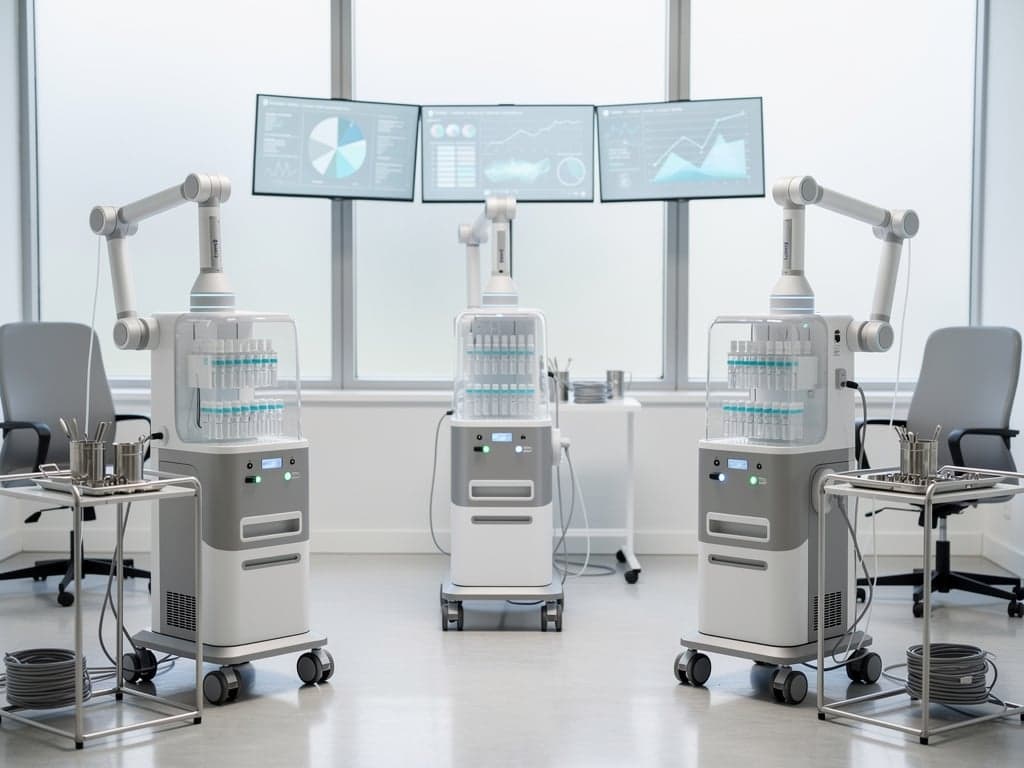
The U.S. Food and Drug Administration has cleared the first standalone robotic device capable of performing autonomous blood draws in outpatient settings, potentially offering relief to healthcare facilities struggling with critical phlebotomist shortages. Vitestro's Aletta system received authorization on August 19, 2026, through the De Novo pathway, establishing a new regulatory category for robotic phlebotomy systems.
The clearance follows results from the ADOPT multicenter trial published in Clinical Chemistry in April 2026, which demonstrated a 94.5% first-stick success rate across 1,633 patients at four Dutch outpatient sites. The study reported a 0.3% hemolysis rate—significantly below typical manual rates cited in literature—and adverse events in just 0.6% of cases, all classified as mild.
Clinical Performance Across Difficult-Access Populations
The ADOPT trial, conducted at Amsterdam University Medical Center, St. Antonius Hospital, OLVG Lab, and Result Laboratory, showed the technology performed effectively across traditionally challenging patient populations. High-BMI patients saw a 97.4% success rate, while patients with self-reported difficult venous access achieved 92.7% success. Among patients over 65, the device recorded 93.4% first-stick success when a suitable vein was identified.
Patient acceptance proved strong, with 90% reporting less or similar pain compared to manual draws. Eighty-two percent indicated they would prefer Aletta or had no preference for future blood draws. A separate Mayo Clinic survey found 86% of U.S. patients willing or very willing to try the robotic system.
The device uses near-infrared light, Doppler ultrasound, and artificial intelligence for vein selection, employing a fixed butterfly needle design. According to the company, one trained phlebotomist supervisor can monitor up to three units simultaneously, potentially tripling capacity without proportional staffing increases.
Addressing Healthcare Workforce Gaps
"Aletta addresses acute phlebotomist shortages by enabling one supervisor to manage three units," researchers noted in the trial documentation. The technology aims to improve preanalytical standardization while reducing hemolysis-related sample rejections—a persistent quality issue in manual blood collection.
Dr. Michelle Tarver, Director of the FDA's Center for Devices and Radiological Health, participated in the clearance announcement, though specific regulatory commentary was not detailed in available materials.
Utrecht-based Vitestro, led by CEO Toon Overbeeke and CMO Dr. Luuk Giesen, has raised $22 million in funding led by Sonder Capital and NYBC Ventures. The company already holds CE marking for European deployment, with Odense University Hospital in Denmark serving as the first international customer with three units.
Vitestro has established partnerships with major U.S. health systems, including a multi-year collaboration with Northwestern Medicine announced in March 2025 and validation studies with Mayo Clinic. The company plans multicenter U.S. trials for 2027.
The FDA clearance creates a regulatory pathway that could lower barriers for competitors while validating the commercial viability of AI-driven vascular access automation. Historical context includes a 2020 Rutgers-led robot that achieved 87% overall success rates, reaching 97% for patients with easily accessible veins.
The technology's ability to reduce wait times, improve first-stick success rates, and decrease patient anxiety in high-volume outpatient settings positions it as a potential solution to workforce constraints affecting healthcare facilities nationwide.
Sources
Reporting & accountability
How we maintain accuracy
Health AI Central separates reported facts, analysis, and public-source data. Readers can review our standards, request a correction, or consult the relevant research methodology before relying on a claim.