

Privacy-Preserving Quantum AI Achieves 99% Accuracy in Alzheimer's Detection Without Sharing Patient Scans
Indian researchers combine quantum computing with federated learning to classify brain MRIs while keeping sensitive medical data locked at local institutions.
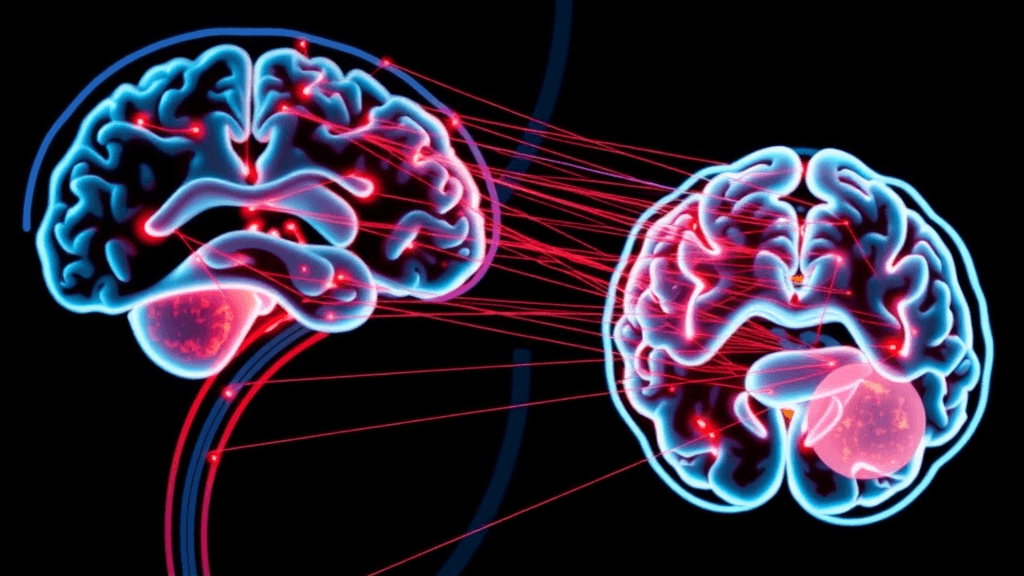
A team of researchers from Indian institutions has developed a novel artificial intelligence framework that diagnoses Alzheimer's disease from brain scans with near-perfect accuracy while ensuring patient data never leaves its home institution—a breakthrough that could reshape how hospitals collaborate on medical AI development without compromising privacy.
The Federated Hybrid Quantum Convolutional Neural Network (FH-QCNN), developed by scientists from Central Institute of Technology Kokrajhar and Indian Institute of Technology Guwahati, achieved 99.69% accuracy in distinguishing Alzheimer's patients from healthy individuals and 99.02% accuracy in classifying disease stages across benchmark MRI datasets, according to results published in Complex & Intelligent Systems in 2025.
Quantum Computing Meets Medical Privacy
The framework represents an architectural fusion of two cutting-edge technologies: quantum machine learning and federated learning. Traditional collaborative AI requires pooling patient data from multiple hospitals into centralized databases—a practice that raises significant privacy concerns and regulatory barriers under healthcare confidentiality laws.
The research team's solution embeds parametric quantum circuits using 4 and 8 qubits into classical convolutional neural network layers. In their federated setup, three simulated institutional clients trained the model collaboratively by sharing only mathematical model parameters with a central server, never transmitting raw MRI scans. The quantum components process features extracted from brain imaging data, while the federated architecture ensures sensitive patient information remains locally stored.
Lead researchers Jahnabi Medhi, Amitava Nag, Anup Kumar Barman, and Sukumar Nandi tested their system on publicly available Kaggle MRI benchmark datasets, demonstrating maintained performance even under challenging real-world conditions including non-independent and identically distributed (non-IID) data across institutions and simulated noise from NISQ (Noisy Intermediate-Scale Quantum) devices.
From Simulation to Clinical Reality
The team incorporated explainability features using Gradient-weighted Class Activation Mapping (Grad-CAM), which confirmed the model focused attention on anatomically relevant brain regions associated with Alzheimer's-related atrophy—a critical requirement for clinical trust and adoption.
However, substantial gaps remain between benchmark performance and clinical deployment. The current implementation relies on simulated quantum hardware rather than physical quantum processors, and validation on real-world multi-institutional clinical workflows has not yet occurred. The study used secondary, anonymized benchmark data rather than prospective patient populations across actual hospital networks.
Implications for Healthcare AI
For healthcare providers, the framework offers a potential pathway to participate in collaborative diagnostic AI development without violating patient confidentiality regulations—addressing a major barrier that has historically limited multi-institutional medical research.
For health technology companies, the convergence of quantum computing and federated learning represents an emerging competitive frontier in medical AI, particularly for firms developing diagnostic imaging tools or privacy-preserving healthcare analytics platforms. Early movers in quantum-enhanced federated architectures may gain advantages as quantum hardware matures, though current implementations remain simulation-based.
For patients, privacy-preserving collaborative AI could accelerate development of more accurate early Alzheimer's detection tools by enabling models to learn from diverse, multi-institutional datasets without exposing individual medical records. Early detection remains critical since neurodegeneration often advances years before symptoms become clinically obvious, potentially expanding treatment windows for interventions.
The research demonstrates architectural feasibility of combining quantum and federated approaches for medical imaging AI, though the path from 99%+ benchmark accuracy in simulation to validated clinical deployment will require addressing hardware maturation, regulatory validation, and real-world multi-site implementation challenges.
Sources
Reporting & accountability
How we maintain accuracy
Health AI Central separates reported facts, analysis, and public-source data. Readers can review our standards, request a correction, or consult the relevant research methodology before relying on a claim.