

Nearly Half of Distressed Adults Now Turn to ChatGPT for Mental Health Help, Study Reveals
New research shows 47% of people experiencing severe psychological distress are using generative AI for emotional support, raising urgent questions about clinical oversight and patient safety.
A striking new pattern is emerging in how people seek mental health support: nearly one in three adults who use generative AI tools like ChatGPT and Gemini are turning to them for emotional and psychological help, according to research published in Cyberpsychology, Behavior, and Social Networking. Among those experiencing severe psychological distress, that figure jumps to 47%.
The study, led by Dr. Dorit Hadar Shoval from Tel-Hai College in Israel, surveyed 584 adults with a mean age of 43.46 years who had used generative AI tools at least once in the previous year. Data was collected in November 2025, capturing a snapshot of how mainstream AI adoption is reshaping mental health support-seeking behavior.
Who's Using AI for Emotional Support?
The research identified clear demographic and psychological patterns. Women were significantly more likely than men to use AI for mental health purposes (OR = 1.81), as were younger users (OR = 0.96 per year of age). Psychological distress emerged as a powerful predictor, with each standard deviation increase in distress associated with 46% higher odds of AI mental health use.
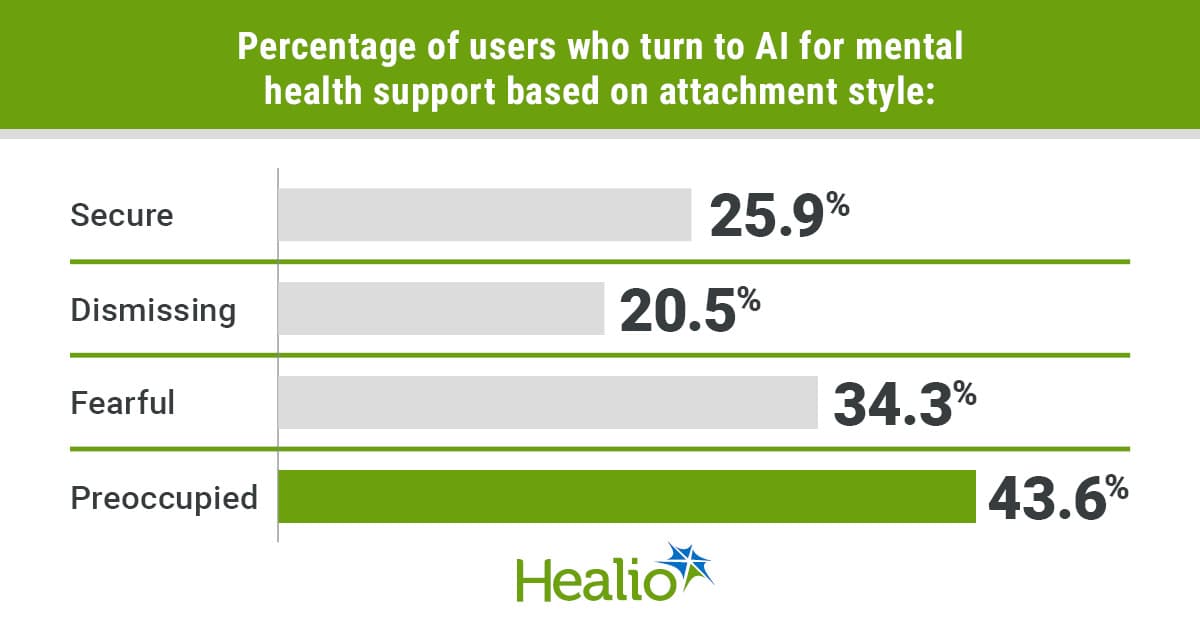
Attachment style also played a crucial role. Users with preoccupied attachment patterns showed the highest usage rates at 43.6%, followed by fearful attachment at 34.3%, secure attachment at 25.9%, and dismissing attachment at 20.5%. The study found a moderate correlation (r = 0.5) between attachment anxiety and psychological distress, suggesting that those most vulnerable may be most likely to seek AI support.
The most common applications included seeking personal advice (63%), relationship guidance (46%), personal development (37%), communication assistance (36%), self-understanding (35%), and emotion management (32%). Notably, 36% reported using AI during severe personal crises, most often relationship crises.
The Appeal and the Risks
Users cited three primary motivations for turning to AI: 24/7 availability (82%), anonymity (53%), and quick relief (53%). These factors address real barriers to traditional mental health care, including provider shortages, stigma, and cost.
However, the findings raise significant clinical concerns. These general-purpose AI tools lack clinical oversight, may provide confident but incorrect advice, cannot appropriately manage acute crises, and may store sensitive personal information. The researchers assessed psychological distress using the Depression Anxiety Stress Scales-21 (DASS-21) and attachment patterns through the Experiences in Close Relationships-Relationship Structures questionnaire.
Clinical Implications
Dr. Shoval's research suggests clinicians should routinely ask patients about AI use for mental health support with curiosity and without judgment, similar to inquiring about sleep patterns or supplement use. The therapeutic relationship now includes what researchers call an "artificial third" that can reveal attachment patterns, unmet needs, and relationship dynamics.
Healthcare providers must help patients critically evaluate AI-generated advice, safeguard privacy by keeping identifiable information out of commercial AI systems, and ensure AI doesn't replace necessary human contact. For health tech companies, the study validates a significant market for AI-driven mental health support while highlighting urgent needs for clinical safeguards, crisis management protocols, and regulatory oversight.
The findings suggest AI tools may serve as a first step toward professional care, particularly when traditional barriers exist. However, the researchers emphasize that users should understand these systems' limitations and view them as complements to, not replacements for, professional mental health care.
Sources
Follow Health AI Central
Keep up with health AI where you already read
On LinkedIn
The day’s strongest health AI stories in your feed, one or two each weekday.
On Google
Choose Health AI Central as a preferred source, and Google is more likely to show our reporting in Top Stories.
Reporting & accountability
How we maintain accuracy
Health AI Central separates reported facts, analysis, and public-source data. Readers can review our standards, request a correction, or consult the relevant research methodology before relying on a claim.