

The Unexpected Mental Health Tool Reaching Men Who Refuse Therapy: AI Chatbots Show Promise Where Traditional Care Falls Short
As men account for 80% of suicide deaths yet avoid treatment at alarming rates, millions are turning to AI chatbots for emotional support—prompting researchers to investigate whether digital conversations can bridge a deadly care gap.
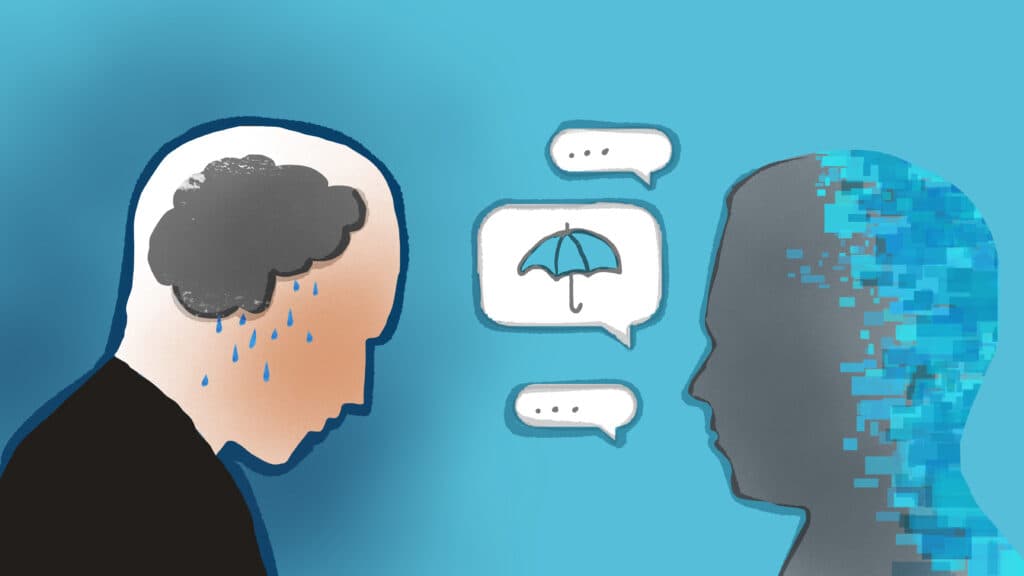
A silent crisis in men's mental health may have found an unlikely intervention point. While men represent up to 80% of suicide deaths globally—even in countries with lower gun ownership than the United States—they remain nearly 50% less likely than women to receive mental health treatment of any kind. Now, millions are bypassing traditional therapy entirely and turning instead to AI chatbots, a trend that's capturing the attention of mental health researchers who see both promise and peril in this digital shift.
According to a 2026 Pew Research Center survey, 8% of men now use chatbots for emotional support, with 4% using them for companionship. Perhaps most striking: 9% of men reported that chatbot use improved their happiness. Unlike traditional mental health services, where men lag significantly behind women in utilization, AI products are being accessed by men at rates similar to or slightly higher than women.
Breaking Through the Stigma Barrier
The appeal appears rooted in what these tools eliminate rather than what they provide. Michael Heinz, an assistant professor of psychiatry and practicing psychiatrist at Dartmouth, noted that AI tools reduce stigma barriers that have long prevented men from seeking help. The 24/7 availability, anonymity, and lack of human judgment create a low-threshold entry point for emotional support that sidesteps masculine social norms around vulnerability.
John Torous, professor of psychiatry at Beth Israel Deaconess Medical Center and Harvard Medical School, has applied for grant funding to study whether chatbot-induced mental health improvements are temporary or lasting—a critical question as adoption accelerates. The technology exists on a continuum of care, potentially serving as a gateway intervention rather than a therapy replacement.
Early Evidence and Critical Questions
Nick Jacobson, an associate professor at Dartmouth spanning biomedical data science, psychiatry, and computer science, published a 2025 randomized clinical trial of Therabot that's been described as "psychiatry's ChatGPT moment." The study included approximately 200 participants—100 in the treatment group and 100 in a waitlist control—with depression, anxiety, or eating disorder risk. Therabot users showed significant symptom reduction compared to controls, with high utilization rates.
However, the study received criticism for methodology and participant selection, highlighting the evidence gap that remains. Jacobson reported that "hundreds of thousands of human hours" were invested in developing the Therabot system and training data, underscoring the complexity of creating clinically validated therapeutic AI versus general-purpose chatbots.
The Integration Imperative
Jenna Glover, chief clinical officer at Headspace, coined the term "omnibot" for integrated emotional support chatbots—reflecting a broader industry trend. Thousands of mental health apps, including Talkspace, now incorporate AI elements, blurring the lines between companionship tools and clinical interventions.
For healthcare providers, this represents both opportunity and responsibility. These tools may serve as first-contact points that eventually lead men toward professional treatment, but the distinction between general chatbots and clinically validated therapeutic AI remains poorly understood by users. Mental health experts emphasize the need for rigorous evidence and safety guardrails before widespread clinical adoption, particularly given current dangers in unregulated chatbot interactions.
As millions of men continue engaging with AI for emotional support, the question isn't whether this trend will continue—it's whether the healthcare system can develop the frameworks to harness its potential while protecting vulnerable users navigating mental health challenges in an increasingly digital landscape.
Sources
Companies in this article

Google Search
Follow Health AI Central on Google
Choose Health AI Central as a preferred source, and Google is more likely to show our reporting in Top Stories.
Reporting & accountability
How we maintain accuracy
Health AI Central separates reported facts, analysis, and public-source data. Readers can review our standards, request a correction, or consult the relevant research methodology before relying on a claim.