

Machine Learning System Aims to Predict Pediatric Emergencies Hours Before Symptoms Surface
Georgia Tech and Children's Healthcare of Atlanta are developing ACCORD, an AI early warning system designed to detect life-threatening deterioration in hospitalized children before clinical signs become visible.
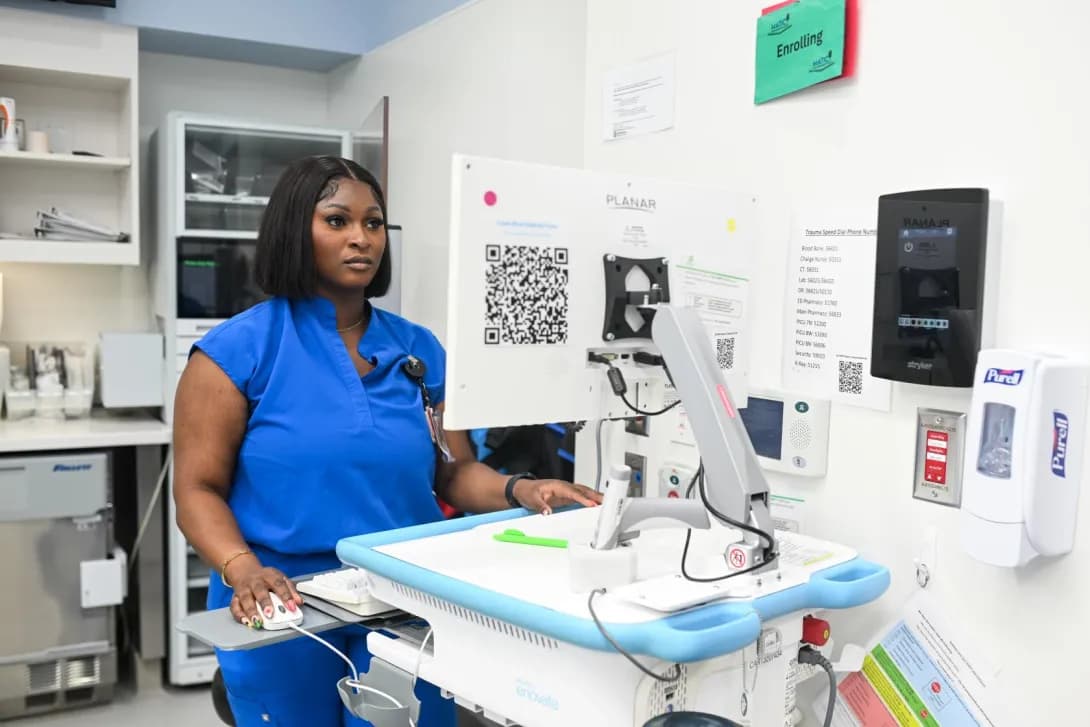
Hospitalized children can appear stable one moment and crash the next—a phenomenon that sends them racing to intensive care with breathing tubes and blood pressure medications, facing mortality rates far higher than patients admitted to the ICU under controlled circumstances. Now, researchers at Georgia Tech and Children's Healthcare of Atlanta are developing an artificial intelligence system designed to sound the alarm hours before these emergencies unfold.
The three-year project, called ACCORD (Algorithm for Counteracting the Clinical Onset of Rapid Deterioration), represents a departure from the basic scoring rubrics hospitals currently use to flag at-risk patients. Instead of summing a handful of data points into binary high-risk or low-risk categories, ACCORD analyzes dozens of data streams from electronic health records to identify subtle patterns that signal imminent respiratory failure, shock, or neurological decline.
Bridging the Gap Between Research and Bedside
ACCORD is funded by the Children's Healthcare of Atlanta Pediatric Technology Center at Georgia Tech (PTC), with project co-principal investigators Dr. Mark Mai, a pediatric intensivist at Children's Healthcare of Atlanta, and Kai Wang, an assistant professor in Georgia Tech's School of Computational Science and Engineering. The team also includes machine learning Ph.D. student Himadri Pandey, Dr. Claire Stokes from the Aflac Cancer and Blood Disorders Center at Children's, and Christina Roberts, program manager for the PTC and Health Informatics Core.
Unlike many academic AI projects that prioritize publication over deployment, ACCORD was designed from inception for real hospital use. The system will integrate directly into Children's electronic health record system with a single dashboard interface. Frontline nurses have been involved from the project's beginning to ensure the tool fits existing workflows rather than disrupting them.
Wrestling With Messy Real-World Data
Training ACCORD presents significant technical challenges. The system must learn from continuously collected vital signs alongside irregularly recorded nursing observations pulled from Children's electronic health records—the kind of incomplete, messy data that characterizes actual clinical practice rather than idealized research datasets.
The AI analyzes vital signs, laboratory results, clinical observations, and dozens of other data streams to provide granular risk forecasting that goes beyond the capabilities of current early warning scores. This approach aims to catch the subtle precursors of deterioration that basic rubrics miss, potentially allowing intervention before a child's condition reaches emergency levels.
Timeline and Future Deployment
Clinical testing of ACCORD is expected to begin in 2027, with broader deployment contingent on validation in real-world hospital settings. The multi-year timeline from development to clinical use reflects both the technical complexity of building reliable predictive models and the rigorous safety standards required for pediatric care applications.
For families of hospitalized children, the promise is earlier intervention before deterioration becomes critical—potentially avoiding invasive emergency procedures and improving survival outcomes for high-risk patients. The project also offers a model for how academic-hospital partnerships can bridge the gap between AI research and clinical implementation, with institutional infrastructure specifically designed to support translational health technology development.
Sources
Google Search
Follow Health AI Central on Google
Choose Health AI Central as a preferred source, and Google is more likely to show our reporting in Top Stories.
Reporting & accountability
How we maintain accuracy
Health AI Central separates reported facts, analysis, and public-source data. Readers can review our standards, request a correction, or consult the relevant research methodology before relying on a claim.