

Deep Learning Model Measures Heart's Right Ventricle and Flags Mortality Risk from Routine Ultrasound
Mass General Brigham's DROID-RV AI estimates right ventricular size within 3 millimeters and identifies patients with doubled five-year mortality risk from echocardiogram videos.
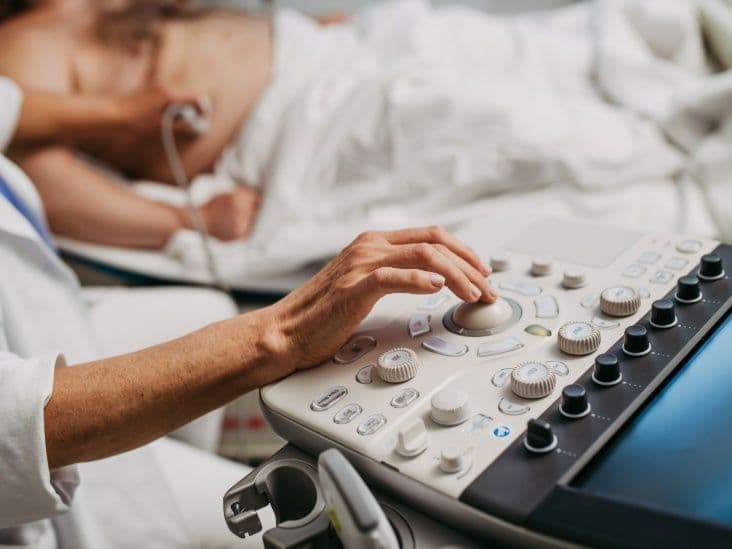
Researchers at Mass General Brigham and the Broad Institute have developed an artificial intelligence model that could transform how clinicians evaluate the heart's right ventricle—a chamber notoriously difficult to assess with standard ultrasound but critical for predicting patient outcomes. The deep learning tool, called DROID-RV, analyzes echocardiogram video clips to estimate right ventricular size and function with precision approaching that of expensive cardiac MRI scans.
The model demonstrated the ability to estimate right ventricular diameter to within approximately 3 millimeters on average and identified reduced right ventricular function with high accuracy. Perhaps most significantly, patients whose right ventricles the AI predicted as dilated showed twice the mortality risk within five years compared to those with normal-sized ventricles, according to findings published in October by lead authors Mostafa Al-Alusi, MD, MS, and Patrick Ellinor, MD, PhD.
Addressing a Critical Clinical Gap
The right ventricle presents unique imaging challenges that have long frustrated cardiologists. Its complex crescentic shape and position behind the sternum make it difficult to visualize clearly with standard echocardiography, despite the chamber's importance in predicting cardiac morbidity and mortality. Cardiac MRI remains the gold standard for right ventricular evaluation, but its cost and limited availability restrict routine use.
DROID-RV was trained on more than 380,000 echocardiogram video clips from approximately 17,000 patients at Mass General Brigham Heart and Vascular Institute, developed through collaboration with the Machine Learning for Health initiative at the Broad Institute of MIT and Harvard. The researchers validated the model on 9,100 primary care patients internally and 831 patients from a Hungarian hospital externally, demonstrating reproducibility across different clinical settings.
Predictive Power Beyond Measurement
The AI model's predictions showed associations with future heart failure, atrial fibrillation, and mortality risk—associations that persisted even after researchers adjusted for age, sex, and left ventricular function. This suggests DROID-RV captures clinically meaningful information about right ventricular health that extends beyond simple size measurements.
Clinical Implementation Potential
For healthcare providers, DROID-RV could accelerate echocardiogram interpretation by providing preliminary measurements and flagging abnormal studies requiring closer review. This capability might enable earlier diagnosis of underlying conditions such as lung disease or sleep apnea that affect the right ventricle, while allowing more targeted use of expensive cardiac MRI resources for patients most likely to benefit.
The model's validation across multiple datasets—including an international site—addresses a critical requirement for clinical AI tools: demonstrating performance across diverse clinical sites, echocardiographer skill levels, patient populations, and image quality conditions. However, the path from research validation to routine clinical integration typically requires additional technical and clinical hurdles, including regulatory clearance and workflow integration studies.
If implemented clinically, the technology could improve detection of right ventricular abnormalities that might otherwise be missed during standard echocardiogram interpretation, potentially leading to earlier treatment interventions and more appropriate allocation of advanced imaging resources to high-risk patients.
Sources
Google Search
Follow Health AI Central on Google
Choose Health AI Central as a preferred source, and Google is more likely to show our reporting in Top Stories.
Reporting & accountability
How we maintain accuracy
Health AI Central separates reported facts, analysis, and public-source data. Readers can review our standards, request a correction, or consult the relevant research methodology before relying on a claim.