

How AI That Remembers Your Medical History Could Finally Solve Screening's False Alarm Crisis
A new perspective in npj Digital Medicine argues that context-aware artificial intelligence—tracking changes within individual patients over time—can dramatically reduce unnecessary biopsies and procedures while catching serious disease early.
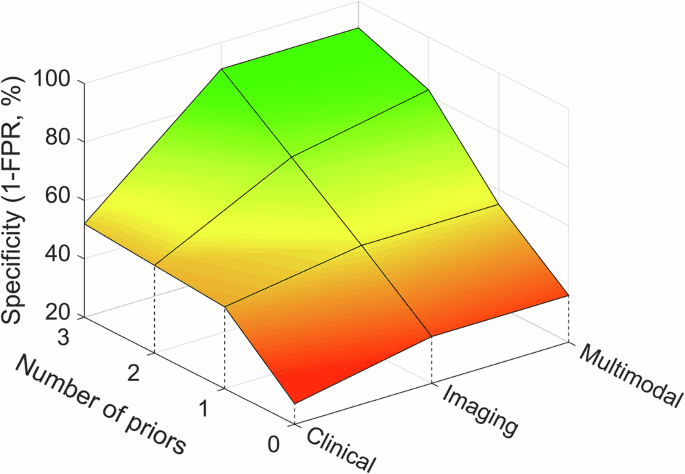
Comprehensive health screening has long faced a mathematical paradox: cast a wide net for early disease detection, and you inevitably snare huge numbers of false positives that lead to anxiety, unnecessary procedures, and real harm. Now, researchers writing in npj Digital Medicine propose that artificial intelligence systems designed to track individual patients longitudinally—rather than comparing single snapshots to population averages—may finally break this impasse.
The perspective article argues that "context-aware monitoring" integrating serial measurements, multimodal data sources, and within-person change tracking can overcome the false-positive burden that has historically limited comprehensive screening in healthy populations.
The Bayesian Mathematics Behind the Problem
False positives in screening stem directly from Bayes' Theorem: when testing asymptomatic populations for uncommon conditions, even highly accurate tests generate more false alarms than true detections. The authors note that the same mathematical framework suggests a solution—serial measurements and mechanistically distinct data sources can progressively refine probability estimates through Bayesian updating.
The distinction matters because traditional approaches like PSA velocity and doubling time failed to add predictive value beyond PSA levels alone, providing correlated rather than independent information. True gains require integrating data sources that capture different biological signals—imaging plus molecular markers plus clinical history.
Prostate Cancer as Preliminary Proof of Concept
The researchers present retrospective analysis from a single-center cohort of nearly 30,000 patients followed approximately one decade. When AI models incorporated prior imaging and clinical data rather than treating each PSA test in isolation, false positive rates dropped progressively while maintaining constant high sensitivity for cancer detection.
These results should be interpreted cautiously pending peer review and external validation. The findings, if confirmed through independent replication in diverse populations, would support the premise that multimodal longitudinal context can improve screening specificity. The deep learning model uses neural networks that learn complex temporal patterns from longitudinal data, achieving a functionally similar updating effect as additional context accumulates.
Molecular diagnostic panels showed similar promise. The Stockholm-3 model used as a reflex test after PSA ≥3 ng/mL avoided 33% of biopsies while accepting a 10% reduction in detection of Gleason ≥7 cancers—a deliberate trade-off compared to the 14% of biopsies avoided by simply raising the PSA threshold to the same sensitivity. The 4Kscore panel in a PSA-then-MRI pathway reduced MRI use by 41%, biopsies by 28%, and low-grade diagnoses by 23% while delaying detection of 4% of grade group ≥2 cancers.
This matters because prostate cancer screening exemplifies the overdiagnosis problem. The ERSPC trial's 23-year follow-up documented 27 excess prostate cancer cases per 1,000 men invited to screening, with broader estimates suggesting 20–50% of screen-detected cases represent overdiagnosis that would never have caused symptoms.
Understanding Real-World Performance Limits
The perspective acknowledges important technical considerations. Real-world gains in specificity prove smaller than theoretical maxima when successive tests share common noise sources or biological variability, violating the conditional independence assumptions that underpin Bayesian updating. This explains why empirical improvements are more modest than idealized models would predict.
The NHS-Galleri trial of a cfDNA methylation-based multi-cancer detection assay illustrated the broader challenge of comprehensive screening—the test did not demonstrate statistically significant reduction in late-stage cancer incidence at three years. The authors position context-aware monitoring, through serial measurement and integration with orthogonal modalities, as a potential approach to address this gap.
The source explicitly notes that the examples presented span different levels of evidence maturity—from validated reflex testing panels in clinical use (Stockholm-3 and 4Kscore) to early-stage research on longitudinal deep learning models. Each entails distinct regulatory, validation, and implementation requirements.
Infrastructure and Equity Implications
Implementing context-aware monitoring requires infrastructure for longitudinal data capture and integration across imaging, molecular, and clinical domains—a shift from episodic encounters to continuous monitoring paradigms. This creates competitive opportunities for AI developers who can integrate mechanistically distinct data sources rather than simply repeating correlated measurements.
However, the approach introduces new considerations around costs of serial testing, anxiety from continuous monitoring, liability when AI-flagged signals are missed, and equity concerns if longitudinal monitoring infrastructure distributes unevenly across socioeconomic groups. The promise of reduced false alarms comes with the requirement for sustained engagement with healthcare systems over time.
Sources
Reporting & accountability
How we maintain accuracy
Health AI Central separates reported facts, analysis, and public-source data. Readers can review our standards, request a correction, or consult the relevant research methodology before relying on a claim.