

Hospital Wound Care Gets AI Mission Control as CMS Tightens Reimbursement Scrutiny
Wound Care Advantage deploys AI platform built on 1 million patient encounters to automate documentation review and pressure injury prevention as new federal prior authorization rules take effect.
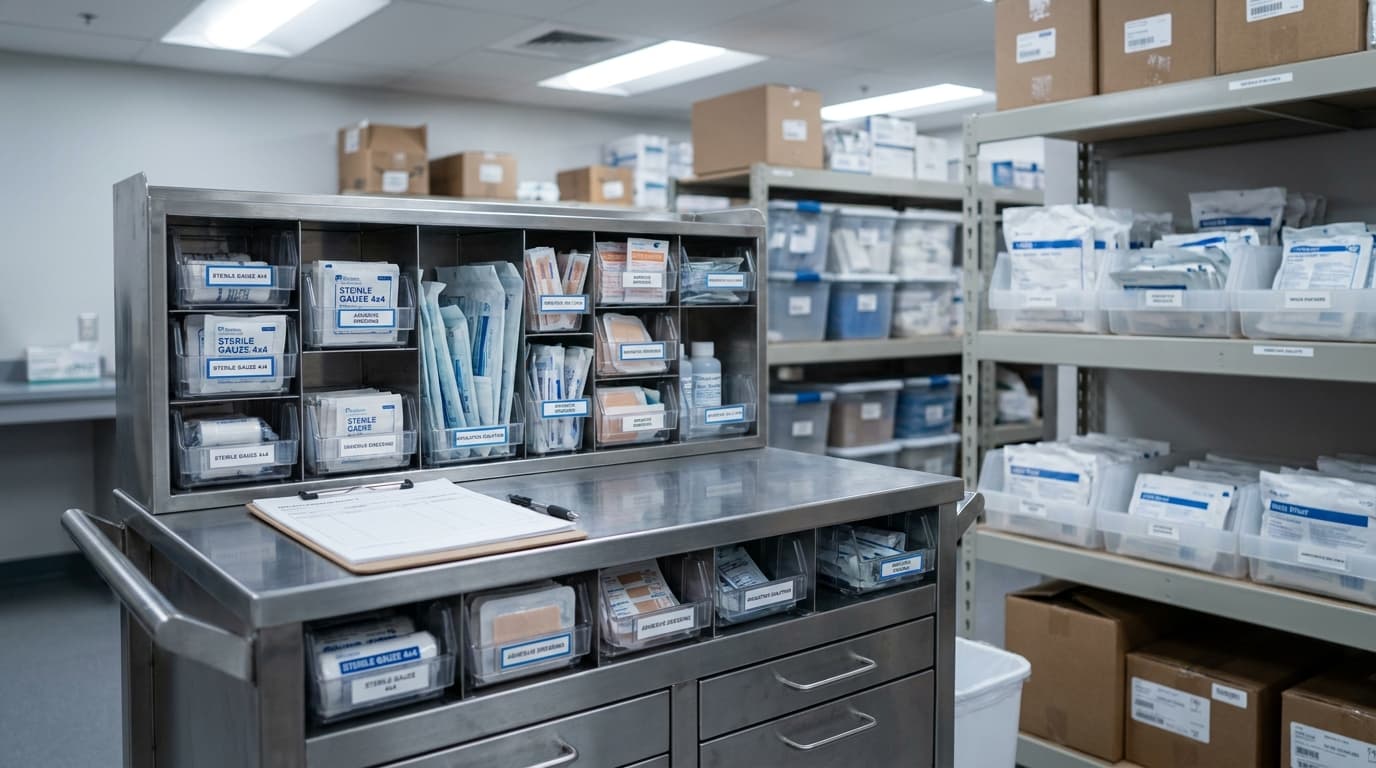
Illustration: AI-generated
Wound Care Advantage has launched Luvo Assist, positioning it as the first AI-assisted mission control platform for hospital wound care programs spanning both outpatient wound centers and inpatient pressure injury prevention. The platform arrives as hospitals face intensifying regulatory pressure from CMS, including new AI-assisted prior authorization requirements under the Wasteful and Inappropriate Service Reduction (WISeR) Model that launched January 1, 2026.
The timing reflects a collision of financial and regulatory forces: 72% of hospital CFOs report operating margins of 2% or less, according to an April 2026 LeanTaaS Hospital Financial Health Survey of 100 executives, while CMS expands mandatory pressure injury reporting to include Stage 2 injuries beginning January 1, 2028, under the Hospital IQR Program.
Platform Built on Two Decades of Wound Care Data
Luvo Assist integrates with existing hospital EMRs without requiring data migration, drawing on more than 1 million care encounters documented since Wound Care Advantage's founding in 2002. The company currently operates approximately 50 active programs and supports more than 200 hospital wound care programs, according to the announcement.
The platform targets three operational areas: automated pre-billing documentation review for outpatient centers, treatment criteria validation and GPO contract alignment, and inpatient pressure injury risk stratification with unit-level cost tracking. WCA founder and CEO Mike Comer positions the system as addressing a "critical operational blind spot" in wound care programs that typically rely on legacy specialty EMRs or third-party management companies with delayed data access.
Early Deployment Shows Pressure Injury Reduction
USC Verdugo Hills Hospital, a 158-bed facility within Keck Medicine of USC and a WCA inpatient partner since 2014, reported a 56% reduction in pressure injuries during the first year of deployment. The clinical impact carries significant financial weight: one serious hospital-acquired pressure injury adds approximately $50,000 to a hospital stay, according to research by Wassel CL et al. published in International Wound Journal in 2020 and adjusted to 2026 dollars.
The platform's emphasis on billing optimization and prior authorization alignment reflects the new regulatory environment. CMS's WISeR Model now includes AI-assisted prior authorization review of skin substitutes in selected states, creating compliance urgency alongside margin pressure for hospital wound care operations.
Operational AI Versus Clinical Measurement
Wound Care Advantage's approach differs from imaging-focused wound assessment AI by targeting operational workflow and financial performance rather than clinical measurement alone. The company's 20-year operational history and existing hospital relationships provide distribution advantages and training data depth that newer AI vendors may lack.
However, the "mission control" positioning suggests competition with broader hospital operations platforms, including Epic's analytics tools and specialized revenue cycle vendors, rather than just wound care point solutions. The claim of "first AI-assisted mission control" appears to reflect marketing positioning, as AI-assisted documentation review and risk stratification exist across multiple clinical domains.
The platform's dual focus on outpatient center efficiency and inpatient pressure injury prevention addresses previously siloed programs with unified enterprise reporting—a capability that becomes increasingly valuable as CMS expands reportable harm metrics and applies AI-assisted prior authorization scrutiny to wound care products and services.
Sources
Companies in this article
 LeanTaaSSanta Clara, CA, USALeanTaaS provides AI-powered capacity management solutions for hospitals and health systems. The company's iQueue platform optimizes operating rooms, infusion centers, and inpatient flow to increase revenue, reduce wait times, and improve staff utilization.View company profile →EpicVerona, WI, USA · Founded 1979Epic offers generative AI products embedded in its EHR for clinical documentation, patient engagement, and healthcare workflows.View company profile →
Reporting & accountability
How we maintain accuracy
Health AI Central separates reported facts, analysis, and public-source data. Readers can review our standards, request a correction, or consult the relevant research methodology before relying on a claim.