

FDA Greenlights First-Ever Brain Cancer Imaging Agent, Opening Door for AI-Enhanced Diagnostics
Telix Pharmaceuticals' Pixclara approval addresses a critical diagnostic gap in distinguishing tumor recurrence from treatment effects in approximately 24,000 annual U.S. glioma cases.
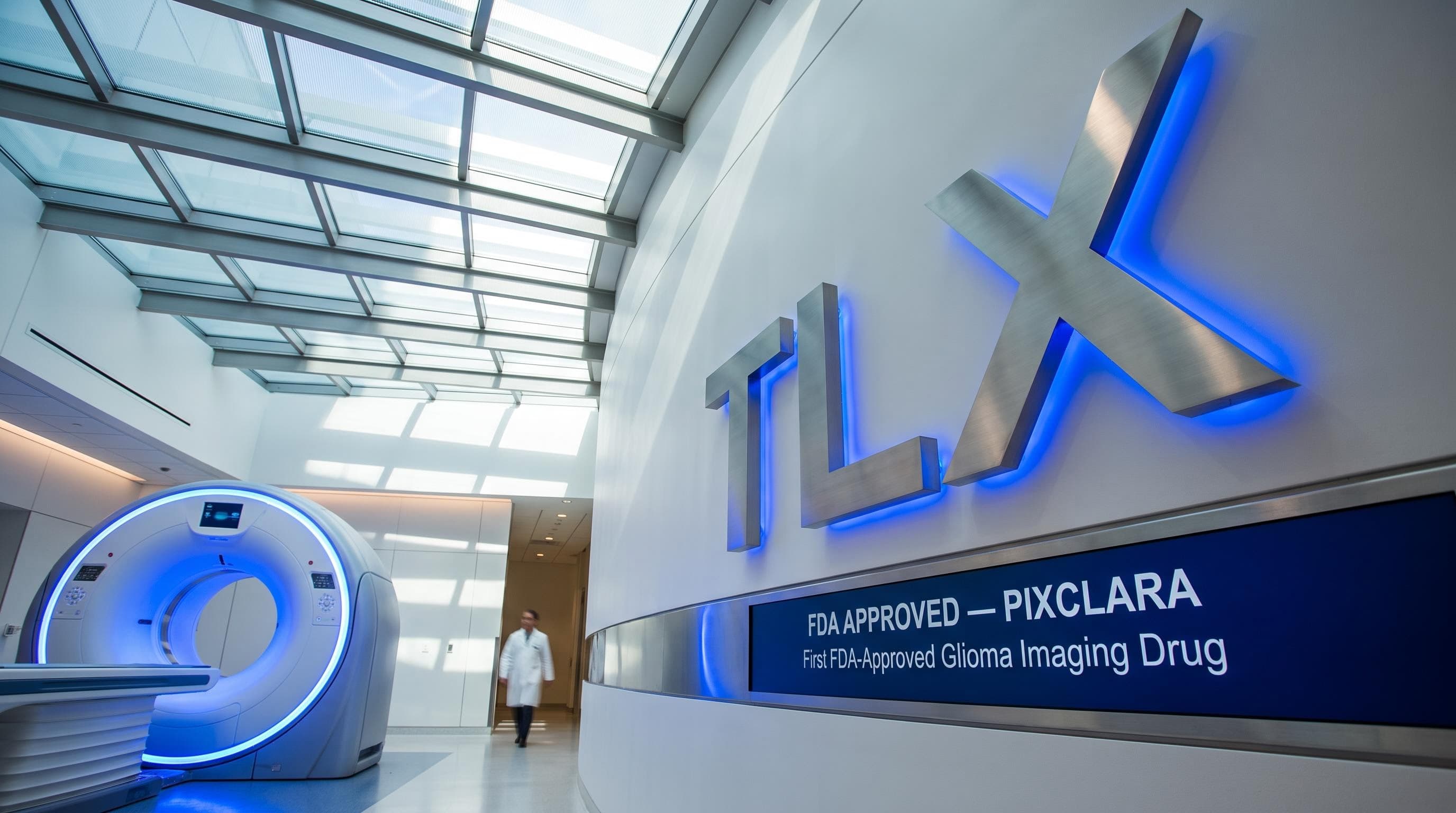
The FDA has granted landmark approval to Telix Pharmaceuticals' Pixclara (floretyrosine F 18), marking the first time a radiopharmaceutical imaging agent has received regulatory clearance specifically for glioma diagnosis. The approval addresses a longstanding clinical challenge in neuro-oncology: differentiating true tumor recurrence from treatment-related changes that can mimic progression on conventional imaging.
Pixclara is now approved for use in adults and pediatric patients aged 1 month and older, employing positron emission tomography (PET) to detect gliomas—brain cancers that represent approximately 30% of all brain and central nervous system tumors and 80% of malignant brain tumors. The agent works by targeting L-type amino acid transporters (LAT1 and LAT2) with a fluorine-18 radioactive label, enabling PET detection of metabolically active tumor tissue.
Addressing a Critical Diagnostic Gap
The approval comes after Telix resubmitted its New Drug Application in March 2026, providing additional data and statistical analysis to address a Complete Response Letter issued in April 2025. The regulatory milestone validates a diagnostic approach already endorsed by multiple medical societies—including NCCN, EANM, EANO, SNMMI, RANO, and pediatric neuro-oncology organizations—prior to FDA approval.
"This is a significant milestone for patients with glioma and their families, who have long needed better tools to understand their disease progression," said Kelly Sitkin, President and CEO of the American Brain Tumor Association. Patrick Wen, MD, from Mass General Brigham Cancer Institute, emphasized the clinical importance of distinguishing pseudoprogression from true tumor growth in treatment planning decisions.
Commercial and Pipeline Implications
Pixclara becomes Telix's third approved diagnostic product, joining Illuccix (approved in 22 countries including the U.S.) and Gozellix (FDA-approved for prostate imaging). The company reported Q1 2026 revenue of US$230 million and maintains full-year guidance of US$950-970 million, positioning the new approval within an expanding commercial portfolio.
The approval also creates infrastructure for potential AI-powered diagnostic tools. As amino acid PET imaging gains regulatory acceptance and clinical adoption in U.S. neuro-oncology, opportunities emerge for machine learning applications that integrate FET-PET data with MRI for multimodal diagnostic decision support, treatment response prediction, and radiomics-based outcome modeling.
Telix CEO Kevin Richardson noted the approval's significance for the company's theranostics strategy, which combines diagnostic imaging with therapeutic applications. The company has already cleared an IND in August 2026 for a Phase 3 registrational study (TLX101-Px) examining brain metastases diagnosis, while three pivotal-stage therapeutic trials are ongoing: TLX591-Tx for prostate cancer, TLX101-Tx for recurrent glioblastoma, and TLX250-Tx for kidney cancer.
Looking Ahead
For healthcare providers, Pixclara offers an FDA-approved complement to MRI that may enable more confident treatment planning decisions. For patients facing glioma diagnosis, the technology potentially reduces diagnostic uncertainty, though real-world clinical outcomes data will be needed to quantify patient-level benefits fully.
The approval establishes Telix's first-mover advantage in U.S. glioma imaging while potentially accelerating competitive development of alternative amino acid tracers or complementary neuro-oncology imaging agents from companies including Blue Earth Diagnostics, Lantheus, and Curium.
Sources
Google Search
Follow Health AI Central on Google
Choose Health AI Central as a preferred source, and Google is more likely to show our reporting in Top Stories.
Reporting & accountability
How we maintain accuracy
Health AI Central separates reported facts, analysis, and public-source data. Readers can review our standards, request a correction, or consult the relevant research methodology before relying on a claim.