

Dual-Vision AI Outperforms Traditional Staging by Reading MRI Scans and Tissue Slides Together to Forecast Cancer Treatment Success
A multimodal deep learning system achieved 80% accuracy predicting chemotherapy response in nasopharyngeal carcinoma by simultaneously analyzing imaging and pathology data before treatment begins.
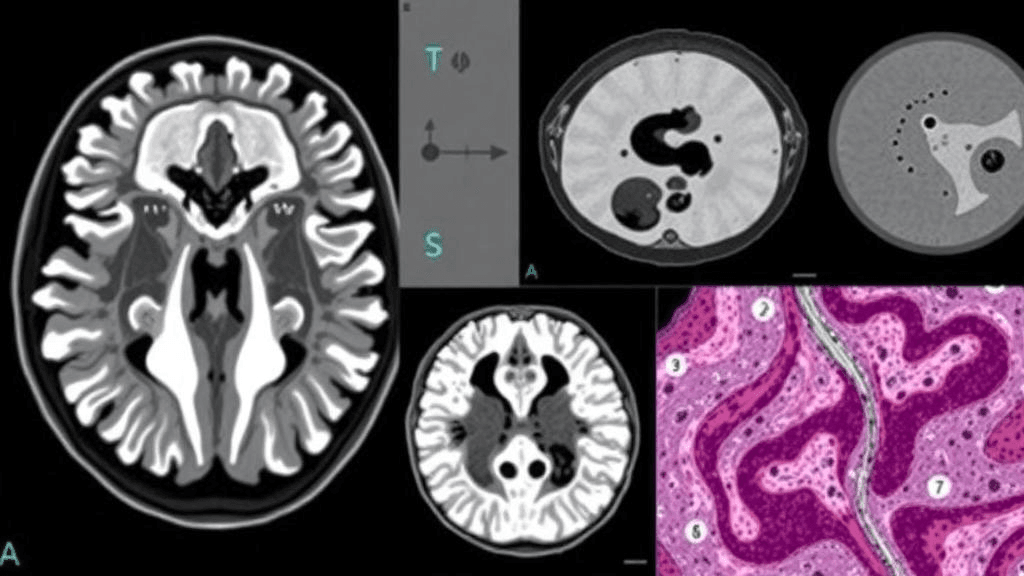
Oncologists treating locally advanced nasopharyngeal carcinoma face a critical decision: which patients will benefit from induction chemotherapy before standard treatment, and which will endure its toxicity without meaningful response? A new artificial intelligence system offers quantitative guidance by doing something human clinicians cannot—simultaneously processing pretreatment MRI scans and digitized tissue slides to predict both treatment response and long-term survival.
Researchers led by Jing Hou, Xiaochun Yi, and colleagues developed MoEMIL (multi-gate mixture-of-experts with multiple instance learning), a multi-task deep learning model that analyzes two fundamentally different data sources in parallel. In a 404-patient study published in PLOS Digital Health, the system achieved an area under the curve (AUC) of 0.801 for predicting chemotherapy response in an independent test set, significantly outperforming conventional TNM staging and single-modality AI models on both treatment response and overall survival endpoints.
How the Multimodal Architecture Works
MoEMIL extracts imaging features from MRI scans using two complementary approaches: PyRadiomics generates hand-crafted radiomics features capturing texture and shape characteristics, while a ResNet50 network learns deep representations directly from the images. For whole slide pathology images—gigapixel files too large to process as single inputs—the system employs clustering-constrained attention multiple instance learning, which identifies and weighs the most diagnostically relevant tissue patches.
The mixture-of-experts architecture then integrates these heterogeneous features through task-specific gating networks, allowing the model to learn which data sources matter most for predicting chemotherapy response versus long-term survival. This multimodal approach delivered significant improvement over pathology-only models for overall survival prediction (P = 0.0049) and borderline improvement for chemotherapy response (P = 0.064), demonstrating that imaging and tissue analysis provide complementary prognostic information.
Clinical Performance and Interpretability
The model successfully stratified patients into high-risk and low-risk survival groups with statistical significance (P < 0.05), achieving AUCs of 0.917 in training, 0.869 in validation, and 0.801 in independent testing for chemotherapy response prediction. Notably, the test cohort contained no progressive disease cases during induction chemotherapy—all poor responders showed stable disease, representing a real-world clinical scenario where distinguishing responders from non-responders remains challenging.
To address the black-box criticism often leveled at deep learning, the researchers incorporated interpretability mechanisms. Gradient-weighted class activation mapping highlights which MRI regions drive predictions, while attention weights reveal which pathology slide patches the model prioritizes, potentially offering clinicians insight into the biological basis of predictions.
Implications for Precision Oncology
For nasopharyngeal carcinoma patients, particularly in high-burden regions of East and Southeast Asia, this technology could enable earlier, more accurate prediction of treatment benefit, potentially sparing patients from ineffective chemotherapy cycles while ensuring those who need aggressive therapy receive it promptly. The multi-task learning framework—addressing multiple clinical endpoints from heterogeneous data sources—establishes a technical template for oncology AI development that balances performance with the interpretability requirements of clinical adoption.
The study's limitation to stable disease as the poor-response category and its single-institution design indicate that broader validation will be necessary before clinical deployment, but the demonstrated superiority over current staging systems suggests multimodal AI may soon inform treatment intensity decisions at a critical juncture in cancer care.
Sources
Reporting & accountability
How we maintain accuracy
Health AI Central separates reported facts, analysis, and public-source data. Readers can review our standards, request a correction, or consult the relevant research methodology before relying on a claim.