

Digital Health App Achieves 87% Retention While Cutting Blood Pressure in Rush University Trial
A year-long study shows AI-driven coaching integrated into clinical care delivered significantly better hypertension control than standard treatment, with stage 2 patients achieving 13.6 mmHg reductions.
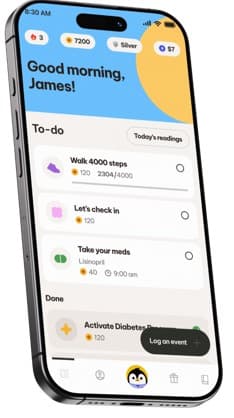
An AI-powered smartphone application developed by Nuna has demonstrated clinically meaningful blood pressure reductions when integrated into physician care plans, according to a study published in the Journal of General Internal Medicine. The year-long trial at Rush University Medical Center found that patients with uncontrolled stage 2 hypertension using the app achieved systolic blood pressure reductions of 13.6 mmHg compared to 9.0 mmHg in matched controls receiving standard care alone.
The study, which compared 425 app users to 425 demographically matched control patients, represents a potential advance in addressing a persistent public health challenge: nearly 50% of U.S. adults meet hypertension diagnostic criteria, yet fewer than 25% achieve adequate blood pressure control. The CDC estimates uncontrolled hypertension costs the healthcare system nearly $200 billion annually.
Sustained Engagement Defies Industry Norms
Perhaps equally significant as the clinical outcomes was the app's retention performance. While the median digital health app loses users within 30 days, Nuna maintained 87% of patients at six months, with approximately 75% continuing weekly usage. This sustained engagement translated directly into better outcomes: weekly app users had 2.5 times the odds of achieving controlled blood pressure at six months compared to less frequent users, demonstrating a clear dose-response relationship.
Dr. Michael Gottlieb, an emergency medicine physician and vice chair of research at Rush who served as co-lead author, and Dr. Kristin Pallok, a Rush internal medicine specialist and co-lead author, designed the study to evaluate real-world integration of AI coaching into clinical workflows. The app combines blood pressure tracking, personalized reminders, gamification elements, and behavioral economics principles with a provider dashboard for remote monitoring.
From Research to Routine Care
Following the study's results, Rush has expanded deployment from the research cohort to over 1,700 patients, extending use beyond hypertension to prediabetes, diabetes, and other cardiometabolic comorbidities. This scaling reflects a partnership between Rush CEO Dr. Omar Lateef and Nuna CEO and co-founder Jini Kim focused on extending care teams beyond clinic walls without proportionally increasing clinician workload.
The study's design included safeguards for independence: Nuna provided no funding and was not involved in statistical analysis decisions. Patient testimonials cited in the source material suggest the AI coaching creates sustained behavior change through relationship-building rather than mere data tracking, addressing the documented challenge that patients typically see physicians only every few months with limited visibility into day-to-day management.
Implications for Value-Based Care
The results arrive as healthcare systems increasingly adopt value-based care models that reward outcomes over volume. The combination of improved hypertension control rates and high retention without requiring additional clinician time addresses a gap in chronic disease management infrastructure. With established correlations between blood pressure reductions of this magnitude and decreased heart attack and stroke rates, the study positions AI-driven remote monitoring as a scalable intervention for population health management.
The app's features—AI-driven health coaching, personalized behavioral nudges, and clinical workflow integration—represent a departure from passive tracking tools that have struggled with engagement. By translating episodic clinical care into daily actionable guidance, the platform demonstrates how artificial intelligence can augment the physician-patient relationship in managing chronic conditions.
Sources
Google Search
Follow Health AI Central on Google
Choose Health AI Central as a preferred source, and Google is more likely to show our reporting in Top Stories.
Reporting & accountability
How we maintain accuracy
Health AI Central separates reported facts, analysis, and public-source data. Readers can review our standards, request a correction, or consult the relevant research methodology before relying on a claim.