

Could an Overlooked Immune Organ Hold the Key to Better Cancer Survival? AI Analysis Reveals Surprising Radiation Risk
Mass General Brigham researchers used artificial intelligence to discover that incidental radiation damage to the thymus during lung cancer treatment significantly worsens survival and undermines immunotherapy effectiveness.
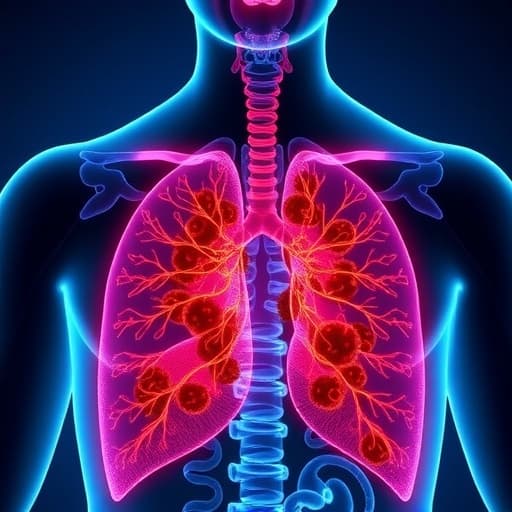
For decades, oncologists have assumed the adult thymus—a small immune organ tucked behind the breastbone—was essentially retired from active duty. That assumption may have cost lives. New research from Mass General Brigham suggests that protecting the thymus during cancer treatment could dramatically improve patient outcomes, particularly for those receiving cutting-edge immunotherapy drugs.
Using artificial intelligence to analyze CT scans from over 1,000 patients with locally advanced non-small cell lung cancer, researchers discovered a troubling pattern: patients whose thymus received higher doses of incidental radiation during treatment experienced significantly worse overall survival, increased rates of distant metastasis, and reduced benefit from immunotherapy. The findings, published in Annals of Oncology, challenge long-held beliefs about immune organ function in adults and point toward a potentially transformative shift in how radiation therapy is planned.
The Thymus: An Immune Powerhouse Hiding in Plain Sight
The thymus produces and educates T cells, the specialized immune cells that recognize abnormal cells and coordinate immune responses against cancer. While the organ does undergo involution—shrinking and fatty replacement with age—the new research demonstrates it retains measurable structure and function in many adults, making it far from the inactive remnant it was once believed to be.
The Mass General Brigham team deployed AI algorithms to quantitatively assess thymic health from routine CT scans taken before and after treatment across their patient cohort. This automated analysis revealed that patients with preserved thymic health before treatment who subsequently received higher radiation doses to the organ experienced markedly worse outcomes. Follow-up imaging showed thymic health declined after treatment in those receiving greater radiation exposure, suggesting a direct treatment effect on immune capacity.
Immunotherapy Connection Raises the Stakes
The association between thymic radiation and poor outcomes proved particularly pronounced in patients treated with durvalumab, a PD-L1 checkpoint inhibitor that has become standard care for many lung cancer patients. This finding suggests that the efficacy of these immunotherapy drugs may depend partly on preserving the very immune organs they're designed to activate.
The thymus sits in the upper chest, often within or near radiation treatment fields for thoracic cancers, making incidental exposure nearly inevitable under current planning protocols. Radiation oncologists already balance multiple competing priorities when designing treatment plans—ensuring adequate tumor coverage while limiting doses to the heart, lungs, and spinal cord. Adding the thymus to this list of organs-at-risk would require new protocols and potentially more complex planning.
From Observation to Action
This observational research provides large-scale clinical evidence that the thymus may be an overlooked but important component of cancer treatment response. The same Mass General Brigham research group has previously published work in Nature demonstrating associations between healthier thymuses and lower mortality, reduced cardiovascular disease and cancer risks, and better responses to immune checkpoint inhibitors, building a compelling case for thymic preservation.
However, the researchers acknowledge that prospective trials are needed to confirm causality and determine whether thymus-sparing radiation protocols actually improve outcomes when implemented intentionally. Such trials would need to demonstrate that limiting thymic dose doesn't compromise tumor control—a critical safety consideration.
For health AI companies, the study demonstrates a high-value clinical application: automated thymic assessment from routine CT scans could be integrated into treatment planning systems to alert clinicians when significant exposure is anticipated. For oncology practices, validated thymus-sparing protocols could become a new standard of care, requiring investment in advanced planning software and staff training but potentially delivering meaningful survival benefits.
The findings suggest a broader principle for precision oncology: effective cancer treatment may require not just attacking the tumor, but actively protecting the immune system's capacity to fight back.
Sources
Reporting & accountability
How we maintain accuracy
Health AI Central separates reported facts, analysis, and public-source data. Readers can review our standards, request a correction, or consult the relevant research methodology before relying on a claim.