Artificial Intelligence Doubles Diagnostic Accuracy in Heart Disease Detection, Major Trial Shows
The PARAMOUNT trial reveals AI-powered CT scanning outperforms traditional stress tests while reducing unnecessary invasive procedures in patients with suspected coronary artery disease.
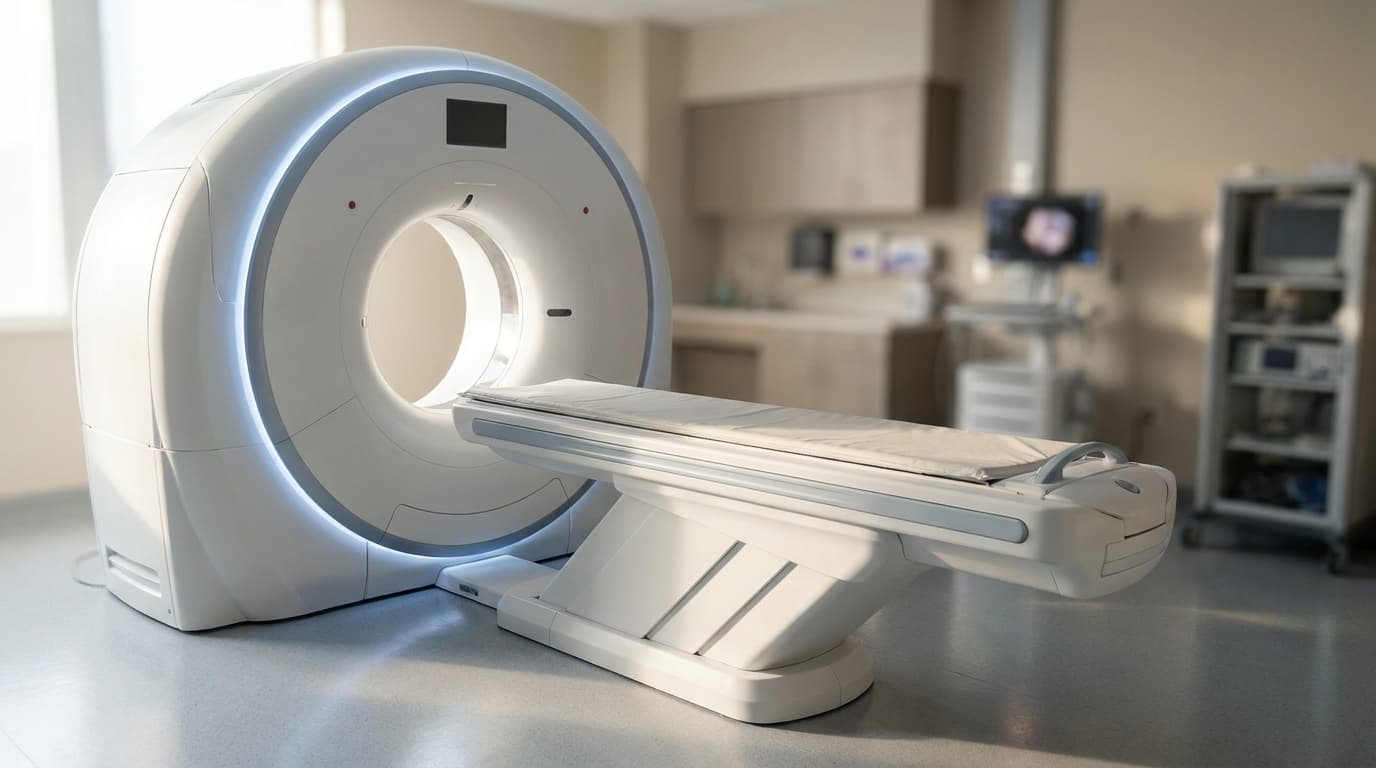
Illustration: AI-generated
An artificial intelligence-enabled coronary CT analysis system has demonstrated superior diagnostic performance compared to conventional functional testing in patients with suspected coronary artery disease, according to results from the PARAMOUNT trial presented at the American Heart Association Scientific Sessions in Chicago.
The randomized trial of 523 symptomatic patients showed that Cleerly's AI-enabled quantitative coronary CT (AI-QCT) strategy achieved a win ratio of 2.0 for the composite primary endpoint, representing a 23.35 percentage point advantage over usual care functional testing. The findings suggest AI-powered cardiac imaging could fundamentally reshape how clinicians diagnose and manage suspected heart disease.
AI System Delivers Dual Benefits: Better Diagnosis and Treatment
The PARAMOUNT trial enrolled patients with a median age of 57 years—57% of whom were women—who had suspected coronary artery disease, no prior CAD history, and LDL cholesterol levels of at least 100 mg/dL. Participants were randomized to either the AI-QCT strategy or usual care functional testing.
The AI system analyzes coronary CT scans to assess stenosis severity, quantify total plaque volume, differentiate between calcified and noncalcified plaque, stage disease across four severity levels, and estimate ischemia likelihood using more than 25 features.
Results showed that 40% of patients in the AI-QCT group achieved increased diagnostic certainty compared to just 19% in the usual care group. Additionally, the AI-QCT strategy produced significantly greater LDL cholesterol reduction—22.7 mg/dL versus 15.1 mg/dL in usual care at 180 days.
"The AI-QCT provides a comprehensive 'all-in-one' diagnostic tool," noted Todd C. Villines, MD, FACC, FAHA, MSCCT, Donald C. Barnes Professor of Cardiology at the University of Virginia, who presented the findings.
Fewer False Positives, More Accurate Referrals
The AI system's ability to reduce unnecessary testing while improving accuracy for invasive procedures was particularly notable. The AI-QCT assessed 90.3% of patients as unlikely to have ischemia, with only 9.7% showing evidence of ischemia compared to 26% abnormal stress tests in the usual care group.
Among patients who proceeded to invasive angiography, 71.4% in the AI-QCT group had obstructive CAD confirmed versus just 40% in the usual care group—a statistically significant difference that suggests the AI approach substantially reduces low-yield catheterizations.
The trial also revealed that LDL reduction was greatest in patients with the highest plaque burden, with no relationship between LDL reduction and stress test results. This finding supports a paradigm shift toward plaque-guided rather than ischemia-guided lipid management.
Safety Profile and Clinical Implications
The trial reported no deaths, strokes, or adverse events related to CT scanning or invasive angiography. There were three nonfatal myocardial infarctions in the AI-QCT group versus two in usual care, and one unstable angina hospitalization in each group.
In the usual care arm, 73.9% of patients had normal functional test results, with nuclear stress testing combined with exercise being the most common modality.
The technology addresses growing workflow concerns as CT volumes increase, offering standardized automated interpretation that reduces reader burden while providing patients with quantifiable disease staging. For health systems and payers, the data suggests AI-QCT could improve catheterization lab efficiency and reduce costs associated with false-positive stress tests.
Sources
Companies in this article

Follow Health AI Central
Keep up with health AI where you already read
On LinkedIn
The day’s strongest health AI stories in your feed, one or two each weekday.
On Google
Choose Health AI Central as a preferred source, and Google is more likely to show our reporting in Top Stories.
Reporting & accountability
How we maintain accuracy
Health AI Central separates reported facts, analysis, and public-source data. Readers can review our standards, request a correction, or consult the relevant research methodology before relying on a claim.