

AI Surveillance Tool Hunts Hidden Heart Disease in Hospital Records Before Symptoms Turn Deadly
Multicenter study validates machine learning algorithm that screens electronic health records to catch cardiac amyloidosis years earlier than traditional diagnosis.
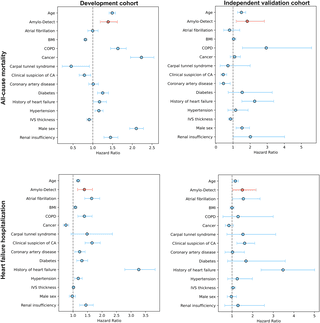
Cardiac amyloidosis, a progressive disease caused by abnormal protein deposits in heart tissue, often hides in plain sight for years before diagnosis—typically emerging only after irreversible damage has occurred. Now, researchers from the Medical University of Vienna and University Hospital Essen have developed and validated a machine learning model that automatically screens electronic health records to identify at-risk patients, potentially transforming detection of this frequently missed condition.
The multicenter study demonstrates how artificial intelligence can flag high-risk individuals from routine clinical data already captured in hospital information systems, addressing what investigators describe as a critical diagnostic gap in cardiology.
Passive Surveillance for a Stealthy Killer
The research team, led by Clemens P. Spielvogel from Vienna's Division of Nuclear Medicine and Christian Nitsche from the Division of Cardiology, trained their algorithm on structured EHR data to recognize patterns associated with cardiac amyloidosis risk. The condition remains significantly underdiagnosed because its symptoms—fatigue, shortness of breath, fluid retention—overlap with more common heart conditions, leading to diagnostic delays averaging 2-4 years from symptom onset.
External validation was performed across multiple centers in Vienna and Essen, Germany, testing whether the model could generalize across different European healthcare systems. The approach requires no new data collection, instead leveraging existing hospital infrastructure to conduct continuous, automated risk stratification without requiring physician action.
The study involved collaboration between the West German Amyloidosis Center, the Comprehensive Center for Artificial Intelligence in Medicine at the Medical University of Vienna, and the Institute for Artificial Intelligence in Medicine at University Hospital Essen. Funding came from the FWF Austrian Science Fund and the Christian Doppler Laboratory for Applied Metabolomics.
Clinical Implications and Earlier Intervention
The screening tool addresses timing that can mean the difference between treatment success and advanced heart failure. Newer therapies for transthyretin (ATTR) amyloidosis, including tafamidis, and emerging treatments for light-chain (AL) amyloidosis are most effective when initiated before extensive myocardial damage develops. Automated EHR surveillance could prompt earlier referral for confirmatory testing—bone scintigraphy or cardiac MRI—enabling therapeutic intervention at more treatable disease stages.
For healthcare systems, the model represents a scalable approach to rare disease detection that integrates into existing clinical workflows. For patients currently experiencing what researchers characterize as a diagnostic odyssey, such passive monitoring could substantially reduce the time between symptom onset and accurate diagnosis.
Multiple study authors disclosed consulting or speaking relationships with pharmaceutical companies including Pfizer, Bayer, Prothena, Böhringer Ingelheim, and AstraZeneca, though none were involved in study funding or design. Co-investigator Tienush Rassaf is co-founder of mycor GmbH, a company developing ECG algorithms for amyloidosis identification.
Beyond Cardiac Amyloidosis
The validation of this EHR-based screening approach may have implications extending beyond a single rare disease. The methodology demonstrates feasibility for AI-driven surveillance systems that identify patients with characteristic clinical patterns across multiple underdiagnosed conditions, potentially establishing a template for passive monitoring in other areas where diagnostic inertia contributes to delayed treatment and worse outcomes.
Sources
Reporting & accountability
How we maintain accuracy
Health AI Central separates reported facts, analysis, and public-source data. Readers can review our standards, request a correction, or consult the relevant research methodology before relying on a claim.