

AI Startup Targets Untapped Breast MRI Market as Dense Tissue Screening Rules Create Bottleneck"Catch cancer earlier": PinkStar's AI for breast MRI hopes to relieve overwhelmed sector
PinkStar Technologies is raising $3 million to bring the first FDA-cleared AI decision support tool for breast MRI to US radiologists struggling with surging scan volumes.
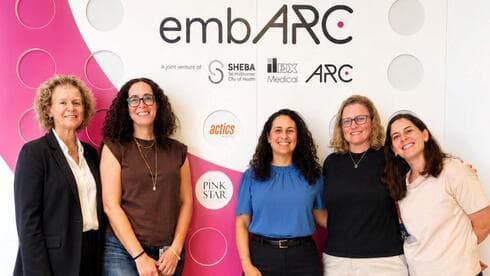
Nearly half of all women have dense breast tissue, a condition that significantly increases breast cancer risk while simultaneously making tumors harder to detect on standard mammograms. As new US and European regulations push more of these women toward MRI screening, a critical bottleneck has emerged: there aren't enough specialized radiologists to interpret the flood of complex breast MRI scans. PinkStar Technologies, an Israeli startup founded in August 2025 in collaboration with Sheba Medical Center, believes AI can solve this capacity crisis while improving early cancer detection.
Addressing a $6 Billion Gap in Breast Cancer Screening
PinkStar is developing an AI-powered decision support platform specifically for breast MRI interpretation, targeting what the company estimates as a $6 billion global market opportunity, with $2.5 billion in the US alone. The technology aims to help radiologists work more efficiently while reducing both missed cancers and unnecessary biopsies.
The clinical need is substantial. According to the company, mammograms miss a large percentage of cancers in women with the densest breast tissue. Yet breast MRI interpretation requires specialized expertise that remains scarce as screening volumes increase under new dense breast notification regulations.
Currently, no commercial AI decision support software for breast MRI has received FDA clearance in the US market. While competitors like ScreenPoint Medical and RadNet/iCAD focus on mammography AI, and Spain's Quibim received European clearance for breast MRI AI in early 2026, PinkStar is positioning itself as a potential first-mover in the American market.
From Sheba to Mount Sinai: Building Clinical Validation
The company's core technology was built on a longitudinal dataset from Sheba Medical Center, where co-founder Prof. Miri Sklair serves as a senior breast radiologist and chief medical officer. To prepare for US regulatory approval, PinkStar has secured a collaboration agreement with Mount Sinai Health System for clinical data validation.
PinkStar is currently preparing to raise $3 million, building on $1 million in SAFEs and approximately $450,000 (1.65 million NIS) from the Israel Innovation Authority. The company received pre-seed investment from embARC Ventures in April 2026 and now employs nine people.
The founding team combines healthcare technology experience with clinical and technical expertise. CEO Sivan Sadan brings 30 years of healthcare technology experience, while Dr. Debbie Anaby, the company's CTO, contributes medical imaging and AI expertise alongside Prof. Sklair's radiological perspective.
Racing Toward FDA Clearance
The product remains in the research and development stage, with no FDA clearance yet obtained. The company's immediate priorities center on completing clinical validation studies and navigating the regulatory pathway to bring its platform to market.
For healthcare providers facing radiologist shortages and surging MRI volumes, PinkStar's technology could offer a way to scale specialized expertise without proportional increases in staffing. For the estimated 50% of women with dense breast tissue, AI-assisted MRI interpretation may expand access to more effective screening as regulatory momentum builds behind supplemental imaging recommendations.
Whether PinkStar can maintain its first-mover advantage and successfully navigate FDA clearance will likely influence how the broader breast MRI AI category develops in the coming years.
Sources
Companies in this article
 QuibimQuibim designs AI-powered tools that unlock medical imaging data to improve patient outcomes. The company provides a cloud-based, tissue-agnostic platform for extracting radiomics features from large imaging registries, serving biopharma, healthcare providers, and research institutions.View company profile →
Reporting & accountability
How we maintain accuracy
Health AI Central separates reported facts, analysis, and public-source data. Readers can review our standards, request a correction, or consult the relevant research methodology before relying on a claim.