

AI Mammography Tool Now Quantifies Heart Risk: CureMetrix Wins FDA Nod for Enhanced Cardiovascular Screening
CureMetrix's cmAngio 2.0 receives FDA clearance to quantify breast arterial calcification and provide age-based percentile scoring against a reference library of over 170,000 mammography studies.
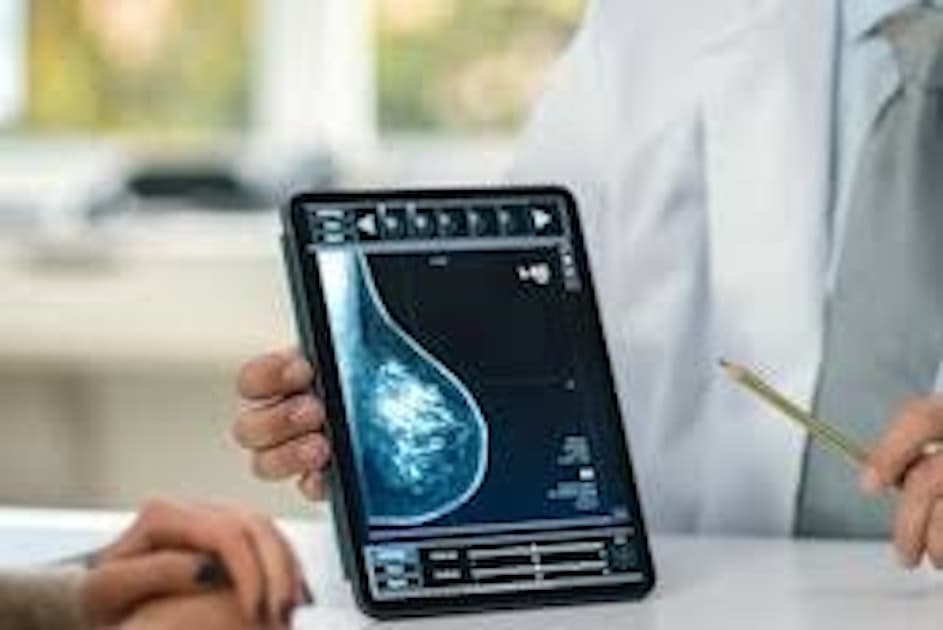
CureMetrix, a San Diego-based AI medical imaging company, has secured FDA 510(k) clearance for cmAngio 2.0, an enhanced version of its cardiovascular risk assessment software that analyzes breast arterial calcification (BAC) detected in standard mammography images.
The clearance marks an upgrade from simple detection to quantitative measurement of arterial calcification visible on routine breast cancer screening mammograms.
From Detection to Quantification
The second-generation cmAngio 2.0 introduces three key enhancements over its predecessor: BAC quantification capabilities, age-based percentile scoring, and age-based BAC prevalence reporting. Rather than simply flagging the presence of arterial calcification, the updated software now measures the extent of calcification and benchmarks each patient's results against a reference library comprising over 170,000 mammography studies.
This quantitative approach provides clinicians with measured data on the extent of breast arterial calcification, contextualized within age-appropriate demographic comparisons through percentile scoring.
Validation Performance
In validation testing, cmAngio 2.0 demonstrated an area under the curve of 0.98 to 0.99 across digital breast tomosynthesis and full-field digital mammography in women ages 40 to 90, according to CureMetrix. The software was validated on GE HealthCare and Hologic mammography systems.
System Integration and Availability
The AI-powered tool integrates with any DICOM-compliant viewer, allowing deployment across diverse imaging infrastructure without requiring proprietary viewing systems. The software is now available to imaging centers and healthcare facilities in the United States following the FDA clearance.
CureMetrix's reference database of more than 170,000 mammography studies provides the data foundation for the software's age-based percentile scoring and prevalence reporting capabilities.
Sources
Companies in this article
 CureMetrixCureMetrix develops FDA-cleared artificial intelligence solutions for mammography screening and diagnosis. Their flagship product, cmAngio, assists radiologists in detecting breast cancer earlier and more accurately through advanced AI-powered image analysis.View company profile →
 GE HealthCareChicago, IL, USA · Founded 2023GE HealthCare is a global medical technology company providing imaging systems, ultrasound, patient monitoring, pharmaceutical diagnostics, and AI-powered software solutions. The company serves healthcare providers, payers, and life sciences organizations worldwide with advanced medical devices and digital health platforms.View company profile →
Reporting & accountability
How we maintain accuracy
Health AI Central separates reported facts, analysis, and public-source data. Readers can review our standards, request a correction, or consult the relevant research methodology before relying on a claim.