

AI Detects Hidden Heart Attack Risk in Half of Patients Traditional Scans Miss
Oxford-born Caristo Diagnostics wins FDA clearance for first AI platform that measures coronary inflammation from routine CT scans, targeting the 50% of cardiac patients misclassified as low-risk.
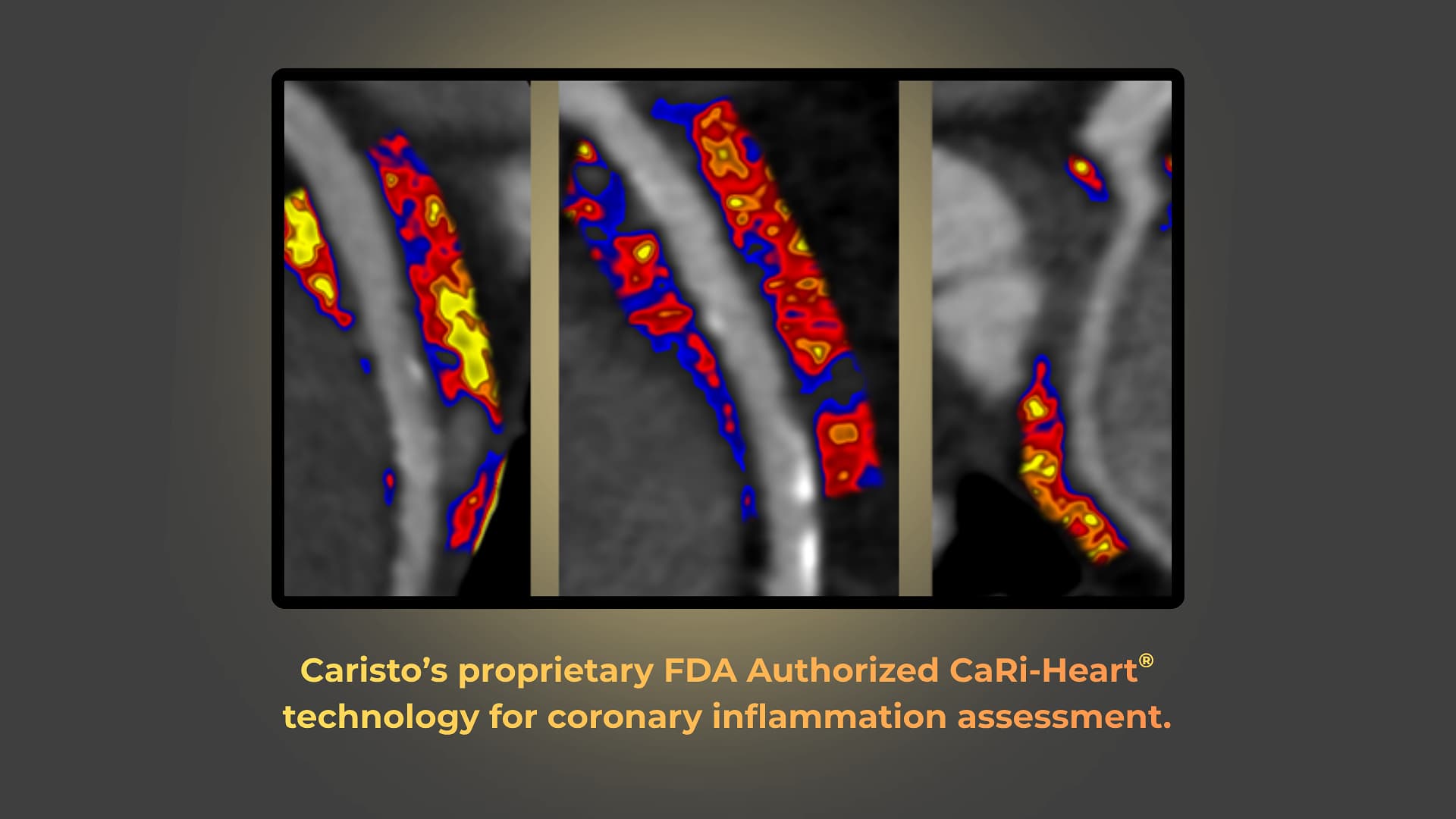
Approximately half of all first-time heart attacks strike patients previously deemed low-risk by conventional cardiac imaging—a diagnostic blind spot that has persisted despite advances in CT scanning technology. Now, an AI platform from Oxford University spin-out Caristo Diagnostics has received FDA De Novo authorization to address this critical gap by quantifying coronary inflammation invisible to traditional assessment methods.
The CaRi-Heart® system represents the first and only FDA-authorized technology capable of measuring coronary inflammation from routine Coronary CT Angiography (CCTA) scans, transforming existing cardiac imaging into a predictive tool for cardiovascular mortality risk over the next decade.
Beyond Calcium Scoring: The Inflammation Advantage
Traditional cardiac risk assessment relies heavily on calcium scoring and anatomical plaque visualization through CCTA scans. While these methods effectively identify structural disease, they fail to detect the biological inflammation that drives many cardiac events in patients with minimal visible plaque burden.
CaRi-Heart addresses this limitation through its proprietary Fat Attenuation Index Score (FAI-Score™), which uses advanced spatial computer vision algorithms to analyze inflammation-driven changes in pericoronary adipose tissue—the fat surrounding coronary arteries. This tissue acts as a biological sensor, reflecting inflammatory activity within vessel walls that precedes structural changes visible on conventional imaging.
The technology generates a personalized CaRi-Heart® Risk Score estimating 10-year cardiovascular mortality risk, validated through the Oxford Risk Factors And Non-invasive imaging (ORFAN) study tracking up to 250,000 patients globally. Results published in The Lancet demonstrate the platform's ability to reclassify risk in patients who would otherwise receive false reassurance from normal calcium scores.
Immediate Reimbursement Pathway Accelerates Adoption
Unlike many novel AI diagnostics that face years of reimbursement uncertainty, CaRi-Heart enters the U.S. market with pre-established billing infrastructure. The American Medical Association assigned Category III CPT codes 0992T and 0993T effective January 1, 2026, enabling healthcare systems to immediately bill for coronary inflammation analysis.
This reimbursement readiness removes a primary adoption barrier and positions early-adopting imaging centers and cardiology programs to capture additional revenue from existing CCTA volumes. The technology requires no additional radiation exposure, contrast injection, or imaging time—it analyzes scans already performed for anatomical assessment, fitting seamlessly into established radiology and cardiology workflows.
Dr. Ron Blankstein of Harvard Medical School and Brigham and Women's Hospital emphasized that "measuring coronary inflammation completes the picture of cardiovascular risk assessment," suggesting the technology addresses a recognized clinical need rather than creating a new diagnostic category.
Strategic Market Positioning
Caristo's dual-product strategy combines CaRi-Heart's inflammation quantification with its previously FDA-cleared CaRi-Plaque® software for structural plaque assessment, creating a comprehensive cardiac risk platform that evaluates both anatomical burden and biological activity. The De Novo authorization pathway—reserved for novel devices with no predicate—establishes coronary inflammation quantification as a distinct FDA-recognized diagnostic category, potentially creating regulatory barriers for competitors attempting to enter this space through traditional 510(k) clearances.
For patients currently classified as low-risk despite underlying inflammatory disease, the technology may enable earlier preventive interventions including intensive lipid management, anti-inflammatory therapies, and lifestyle modifications—potentially preventing cardiac events in a population that has historically fallen through diagnostic cracks.
Sources
Companies in this article

Reporting & accountability
How we maintain accuracy
Health AI Central separates reported facts, analysis, and public-source data. Readers can review our standards, request a correction, or consult the relevant research methodology before relying on a claim.