

AI Detects Hidden Fall Risk by Watching Seniors Walk and Talk Simultaneously
New machine learning approach analyzes gait changes during distraction to predict falls before they happen in older adults living independently.
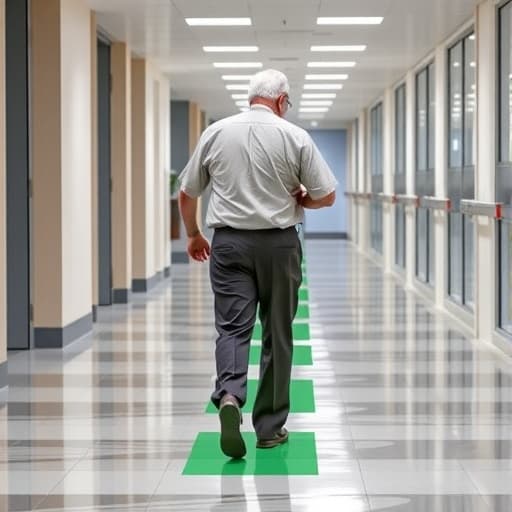
Falls represent one of the most serious health threats facing older adults, with one in four Americans over 65 experiencing a fall each year. Yet traditional clinical assessments often fail to identify at-risk individuals until after a dangerous fall has already occurred. Now, researchers have demonstrated that machine learning algorithms can predict fall risk by analyzing how seniors walk while simultaneously performing mental or physical tasks—revealing vulnerabilities that remain invisible during standard gait tests.
The study, published in BMC Geriatrics by Dong, Hu, Guo and colleagues, focuses on community-dwelling older adults who live independently but may harbor subtle mobility deficits. The research team measured spatiotemporal gait parameters—including walking speed, stride length, step time, cadence, stance duration, and step-to-step variability—while participants performed secondary cognitive tasks like counting backward or motor activities such as carrying objects.
Why Dual-Task Testing Reveals What Standard Assessments Miss
The key innovation lies in the dual-task paradigm itself. In clinical settings, older adults typically walk under ideal conditions: distraction-free environments with full attention devoted to mobility. But real-world walking rarely happens in isolation. Navigating a grocery store while reading a shopping list, crossing a street while monitoring traffic, or walking to the bathroom at night while still drowsy all require divided attention.
Dual-task cost—the measurable deterioration in gait parameters when attention is split—appears to expose fall susceptibility that single-task assessments cannot detect. Some individuals maintain stable gait patterns when focused solely on walking but show significant changes in stride length, walking speed, or step variability when cognitively challenged. These changes may indicate reduced cognitive reserve, impaired executive function, or compromised automatic motor control—all factors associated with elevated fall risk.
Machine Learning Identifies Complex Risk Patterns
Traditional fall risk assessment relies on clinician observation, patient-reported fall history, and simple screening tools that often lack predictive accuracy. Machine learning algorithms offer a fundamentally different approach by processing multiple gait variables simultaneously to detect nonlinear relationships and interaction effects that human observers cannot perceive.
The algorithms analyze patterns across numerous spatiotemporal parameters, identifying subtle combinations of gait changes during dual-task conditions that correlate with future fall events. This data-driven approach moves fall prevention from reactive—responding after falls occur—to proactive, enabling targeted interventions before serious injuries happen.
Clinical Implementation and Future Directions
For healthcare providers, this research supports integrating objective, technology-enabled gait assessment into routine geriatric care. Dual-task gait testing combined with AI-powered risk prediction could enable clinicians to stratify patients more accurately and prescribe personalized interventions such as balance therapy, strength training, medication review, or home modifications.
Health technology companies are positioned to develop commercial platforms combining wearable sensors, pressure-sensitive walkways, or computer vision systems with embedded machine learning models. However, clinical adoption requires validation across diverse populations, standardized measurement protocols, regulatory clearance, and demonstration of real-world effectiveness beyond research settings.
For older adults maintaining independence, this approach offers earlier identification of fall vulnerability through non-invasive testing that captures realistic mobility challenges—potentially preserving autonomy and preventing the devastating cascade of complications associated with serious falls.
Sources
Reporting & accountability
How we maintain accuracy
Health AI Central separates reported facts, analysis, and public-source data. Readers can review our standards, request a correction, or consult the relevant research methodology before relying on a claim.