

Weill Cornell Medicine Launches AI-Powered Biomedicine Department to Merge Genomics, Wearables, and Clinical Data
Cancer researcher and C2i Genomics founder Dr. Dan Landau will lead the new department backed by $20 million in philanthropic funding, with plans to recruit up to nine computational biology faculty.
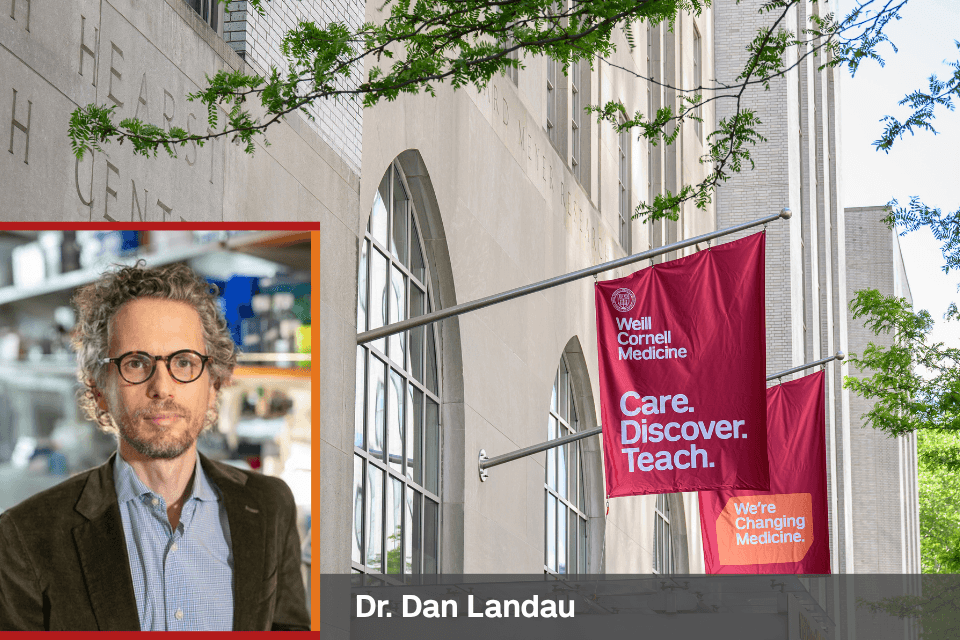
Weill Cornell Medicine is consolidating its computational biology resources under a newly established Department of Systems and Computational Biomedicine, signaling a major institutional bet on artificial intelligence as the connective tissue between genomics, wearable health data, electronic medical records, and clinical outcomes. The department, operational September 1, 2026, will be led by Dr. Dan Landau, a cancer researcher and geneticist whose company C2i Genomics was acquired by diagnostics firm Veracyte in 2024.
The initiative is supported by a $20 million gift from philanthropists Andrew and Ann Tisch to Cornell University, which also endows Dr. Landau's professorship. According to Weill Cornell Medicine's announcement, the department consolidates elements from the Department of Physiology and Biophysics, the Institute for Computational Biomedicine, and other computational and systems biology faculty across the institution.
From Academic Research to Commercial Diagnostics
Dr. Landau brings a track record of translating computational biology research into clinical products. He co-founded C2i Genomics in 2019 to develop a whole-genome cancer monitoring platform that combines genomics with machine learning. Following Veracyte's acquisition of the company in 2024, the diagnostics firm launched TrueMRD™, a minimal residual disease test for muscle-invasive bladder cancer that detects tumor DNA in blood samples. Veracyte has indicated plans for additional applications of the technology.
Dr. Landau currently serves as the Bibliowicz Family Professor of Medicine and holds appointments at the Sandra and Edward Meyer Cancer Center, the Englander Institute for Precision Medicine, and the New York Genome Center. He also practices as an oncologist at NewYork-Presbyterian/Weill Cornell Medical Center.
Recruitment and Infrastructure Plans
The new department plans to recruit five to seven junior faculty members and one to two mid-career investigators focused on computational biology and artificial intelligence. It will also establish dedicated laboratory space at 1334 York Avenue for what the institution describes as a "molecular innovation laboratory."
The department's stated mission centers on integrating large-scale, multi-modal patient datasets—including DNA sequencing, molecular profiling, wearable device data, electronic health records, medical imaging, and clinical outcomes—with AI models to advance disease prediction, prevention, and personalized treatment strategies.
Implications for Precision Medicine Infrastructure
The consolidation reflects a broader trend in academic medicine toward centralizing computational expertise rather than distributing it across traditional departmental silos. By housing single-cell profiling technologies, AI-powered liquid biopsy development, and molecular measurement platforms under one administrative structure, Weill Cornell Medicine appears to be positioning itself as a testing ground for integrated precision medicine workflows.
For the diagnostics industry, Dr. Landau's dual role as department chair and former biotech founder may accelerate the pipeline from academic AI-genomics research to commercial products. The TrueMRD™ test's launch demonstrates one pathway; the department's planned innovation laboratory suggests infrastructure designed to support similar translational efforts across multiple disease areas.
The appointment takes effect September 1, 2026, with Dr. Landau holding the title of Andrew H. and Ann R. Tisch Professor in addition to his departmental leadership role.
Sources
Companies in this article
 VeracyteVeracyte develops high-performing molecular diagnostic tests that assess the unique biology of each patient's tumor to guide cancer care decisions. The company's genomic tests help clinicians make confident treatment decisions for thyroid, prostate, breast, bladder, and lung cancer patients.View company profile →
 C2i GenomicsC2i Genomics develops AI-powered whole genome sequencing technology for cancer detection and monitoring. The company's platform enables ultra-sensitive minimal residual disease detection and early cancer screening through comprehensive genomic analysis.View company profile →
Reporting & accountability
How we maintain accuracy
Health AI Central separates reported facts, analysis, and public-source data. Readers can review our standards, request a correction, or consult the relevant research methodology before relying on a claim.