

AI Safety Stance Triggers Federal Blacklist: Anthropic's Pentagon Battle Tests Limits of Ethical Guardrails
The maker of Claude AI is asking a federal appeals court to reconsider a ruling that upheld the Pentagon's designation of the company as a supply chain risk after it refused to allow its models for mass surveillance and autonomous weapons.
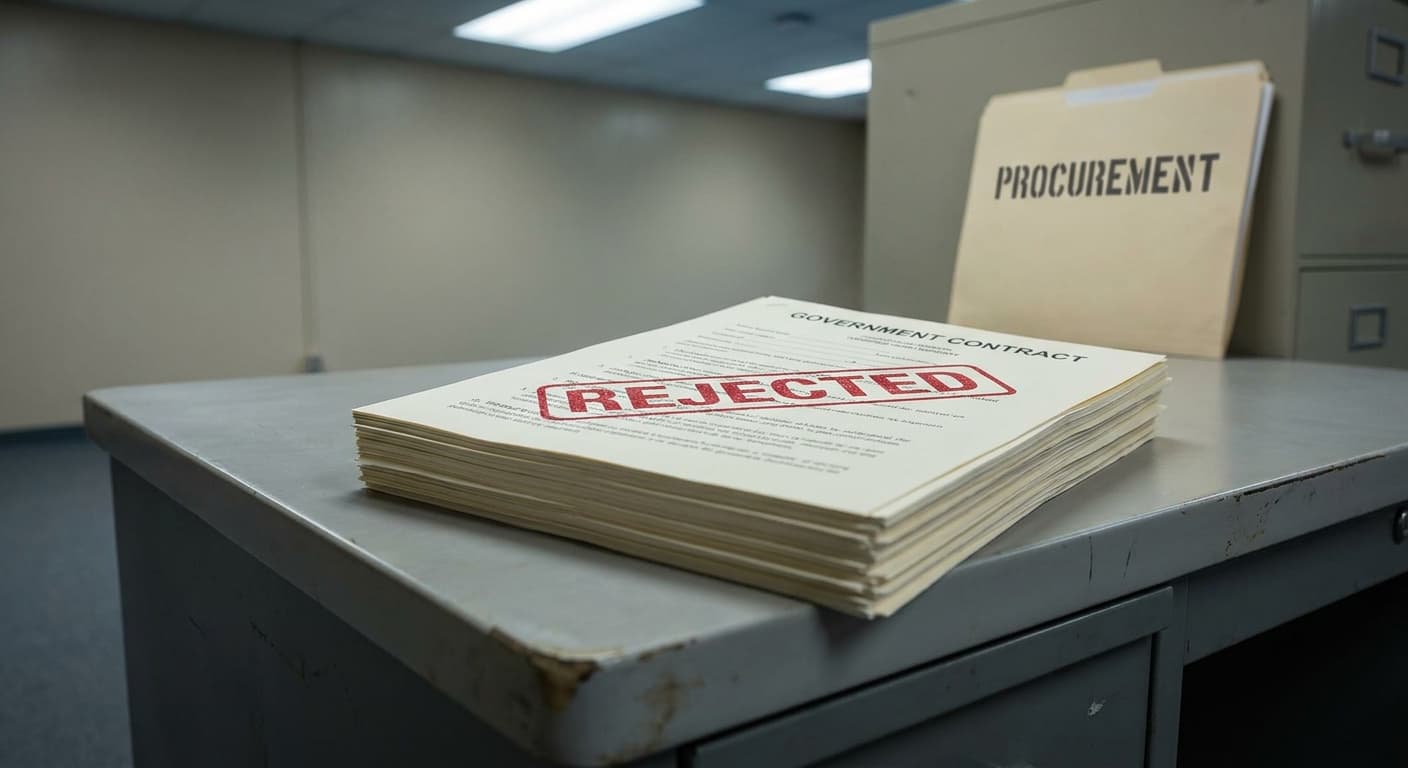
Illustration: AI-generated
Anthropic, the artificial intelligence company behind the Claude family of large language models, has filed a petition asking a federal appeals court in Washington, D.C. to rehear its challenge to a Pentagon blacklisting that has blocked defense contractors from using its technology. The move represents the latest chapter in a high-stakes legal battle over whether AI companies can enforce ethical use restrictions when contracting with federal agencies.
The Blacklisting and Its Origins
In March 2026, the Secretary of War designated Anthropic's Claude AI models as a "supply chain risk," effectively barring defense contractors from incorporating the technology into Department of Defense work. The blacklisting came after negotiations broke down in September 2025 over how the military could use Claude on the DOD's GenAI.mil AI platform.
The breakdown centered on Anthropic's refusal to permit its models for two specific use cases: mass surveillance of Americans and lethal autonomous warfare. The company had previously signed a $200 million contract with the Pentagon in July 2025 and served as an early partner across multiple U.S. agencies including the DOD.
In September 2026, a D.C. Circuit Court upheld the Pentagon's blacklisting in a 2-1 decision, rejecting Anthropic's argument that the Department of Defense's ban on its Claude models was arbitrary, unauthorized and unconstitutional. Anthropic is now urging the court to rehear the appeal.
Anthropic's Legal Arguments
In the petition filed Tuesday, Anthropic attorneys argued that "the Secretary of War branded Anthropic — an American AI company whose models help defend the nation— a national-security 'supply chain risk' because it declined to permit its models to be used for mass surveillance of Americans or lethal autonomous warfare and publicly explained those AI-safety commitments."
The attorneys contended that the court ignored "straightforward evidence the designation was retaliation for Anthropic's speech about AI safety."
Conflicting Court Rulings Create Legal Uncertainty
The case has produced divergent judicial opinions. While the D.C. Circuit upheld the blacklisting, a San Francisco federal judge ruled in August 2026 that the DOD had violated Anthropic's First Amendment rights, and that its supply chain risk designation amounted to illegal retaliation. This split creates legal uncertainty around the boundaries of government contracting and corporate speech on AI safety.
A representative from Anthropic declined to comment beyond the filing. A Pentagon spokesperson said the agency doesn't comment on pending or ongoing litigation.
Sources
Reporting & accountability
How we maintain accuracy
Health AI Central separates reported facts, analysis, and public-source data. Readers can review our standards, request a correction, or consult the relevant research methodology before relying on a claim.